What Does “Han” Mean in Korean? Grief, Endurance, and a Contested Word
A word for sorrow that settles and stays—real in speech, contested as national essence.
- Hangul
- 한
- Romanization
- han
- Pronunciation
- hahn
- Category
- Culture
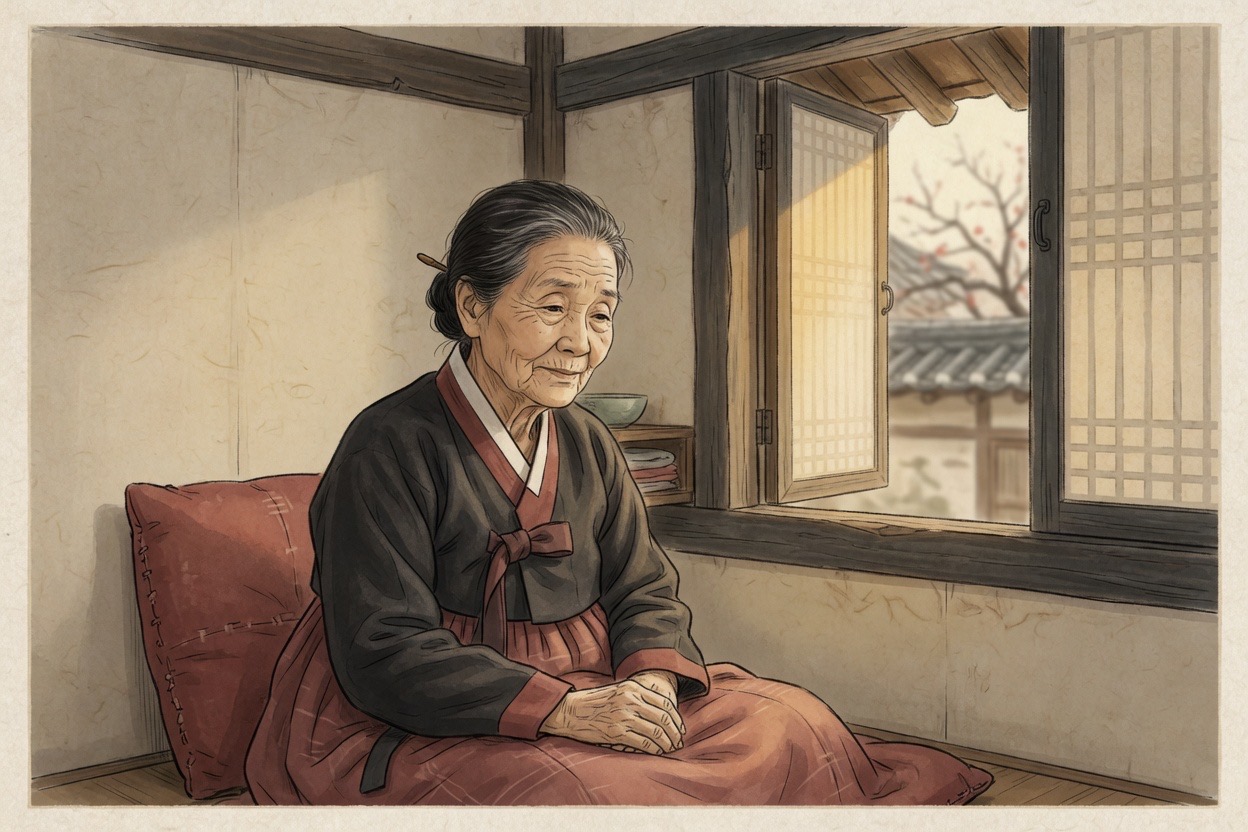
Han (한, pronounced hahn) is a Korean word for a knot of accumulated grief, resentment, and endurance that has nowhere to discharge—unresolved sorrow carried across time, not a single bad afternoon. People use it when hardship has settled into the body and the story: something lost, delayed, denied, or never fully mourned. One-sentence definition: han is lasting sorrow with no clean exit, held long enough that it starts to feel like part of you.
English often reaches for “bitterness,” “grief,” or “resentment,” and each catches a corner. None fully tracks the storage sense—the idea that pain can knot (맺히다) and later loosen (풀다). What han is not: a free pass to declare that every Korean shares one mystical soul, or that a foreign reader has “understood Korea” after learning one noun. The word is real in speech and song. The national-essence packaging is contested.
Quick facts
| Hangul | 한 |
| Romanization | han |
| Pronunciation | hahn |
| Core sense | accumulated, unresolved grief / resentment / endurance |
| Key verbs | 한이 맺히다 (to knot), 한을 풀다 (to release) |
| Common rooms | family hardship talk, pansori and trot, older-generation life stories |
| Not the same as | everyday stress, temporary sadness, “Korean DNA” |
| Often contrasted with | jeong (정) — attachment that builds between people |
How do you pronounce han?
Han is one short syllable: hahn. Keep it clean and light on the tongue. English speakers sometimes stretch it into a theatrical sigh—haaan—because the concept is heavy. Spoken Korean does not need the performance. The weight lives in the situation, not in elongating the vowel.
You may also meet han as a family name or as the Sino-Korean element meaning “Korea / Korean” in compounds. Context sorts them. This page is about the emotional 한, not the surname and not the ethnic label in isolation.
What does han mean? (The everyday answer)
When someone says they have han, they are rarely describing a mood that coffee will fix. They are naming something closer to:
- grief that never got a full ending
- resentment that had no safe place to land
- a long-held sense of being wronged, delayed, or unfinished
- endurance that cost something and still aches
The image Koreans often reach for is a knot—something that forms and tightens inside. That is why the collocations matter more than a dictionary synonym list:
- 한이 맺히다 — hani maechida — han forms / knots
- 한이 풀리다 / 한을 풀다 — hani pullida / haneul pulda — han is released / you release han
So if you searched “han korean meaning” or “what does han mean,” hold this first: han is not generic sadness; it is sorrow and bitterness that accumulated because they could not fully leave.
It can be personal (a career blocked for decades, a family wound never spoken cleanly). It can be shared in a household story (poverty years, a forced separation, a dream postponed until it calcified). What careful speech does not require is claiming that every Korean carries the same eternal knot as a racial inheritance.
The contested part: “essence of the Korean soul”
Here is where many English explainers go soft and many Korean scholars get sharp.
Popular framing (you have heard this):
Han is the unique, almost spiritual core of Korean feeling—the national sorrow that explains music, history, personality, and art in one package. Tourist copy, some older cultural essays, and a lot of foreign-language media lean this way because it is emotionally tidy. One word, one people, one tragic beauty.
Critical framing (take this seriously):
A significant line of Korean scholarship argues that this “han as the essence of the Korean soul” framing was shaped and popularized during the colonial period and afterward—not as a neutral timeless truth that simply floated up from every village kitchen. In that reading, han became a usable national story: useful for art, identity talk, and external explanation, but risky when it freezes living people into a permanent mood.
Both can be true at once without magic:
- The word works in ordinary Korean for real hardship and long-held ache.
- The brand version—han as mystical national essence—is a contested cultural construction, not a lab result.
Have Nunchi’s job is not to pick a team jersey for your thesis. It is to stop you from doing trauma tourism with a vocabulary sticker. You can respect the emotion without declaring that you have located the Korean soul.
If your nunchi is working, you will hear the difference between:
- “My grandmother still talks about those years with han in her voice,” and
- “Koreans are a han people; that is why the music sounds like that.”
The first is a person. The second is a costume for 50 million individuals.
한이 맺히다 / 한을 풀다 — the verb patterns that matter
Memorize the noun if you must. Learn the verbs if you want the word to behave.
한이 맺히다 — the knot forms
맺히다 is the language of something coagulating, knotting, getting stuck. When han “maechinda,” a hardship has stopped being a single event and started being a long-term resident.
Typical flavor (not fixed scripts):
- years of unrewarded labor
- a family story that never received apology or closure
- a loss you had to swallow because survival came first
People do not usually announce 한이 맺혔어 the way they announce lunch. When it appears, it often sounds like reflection after the fact—someone naming why a topic still hurts.
한을 풀다 / 한이 풀리다 — the knot eases
풀다 is “to untie / loosen / resolve.” 한을 풀다 can mean releasing that stored ache—through success that finally arrives, a confrontation that clears the air, art that says the unsayable, revenge fantasies in fiction, a quiet reconciliation, or simply time and being believed.
Notice the grammar flexibility:
| Pattern | Rough English | Feel |
|---|---|---|
| 한이 맺히다 | han knots / forms | passive accumulation |
| 한을 풀다 | (someone) releases han | active untying |
| 한이 풀리다 | han comes undone | relief that happens to you |
English “I got over it” is thinner. Han-release language often still honors that the knot was real and heavy before it moved.
Where you will actually hear han now
Foreign articles sometimes write as if every Seoul café conversation is a seminar on national sorrow. That is not how speech density works.
You are more likely to meet han in:
-
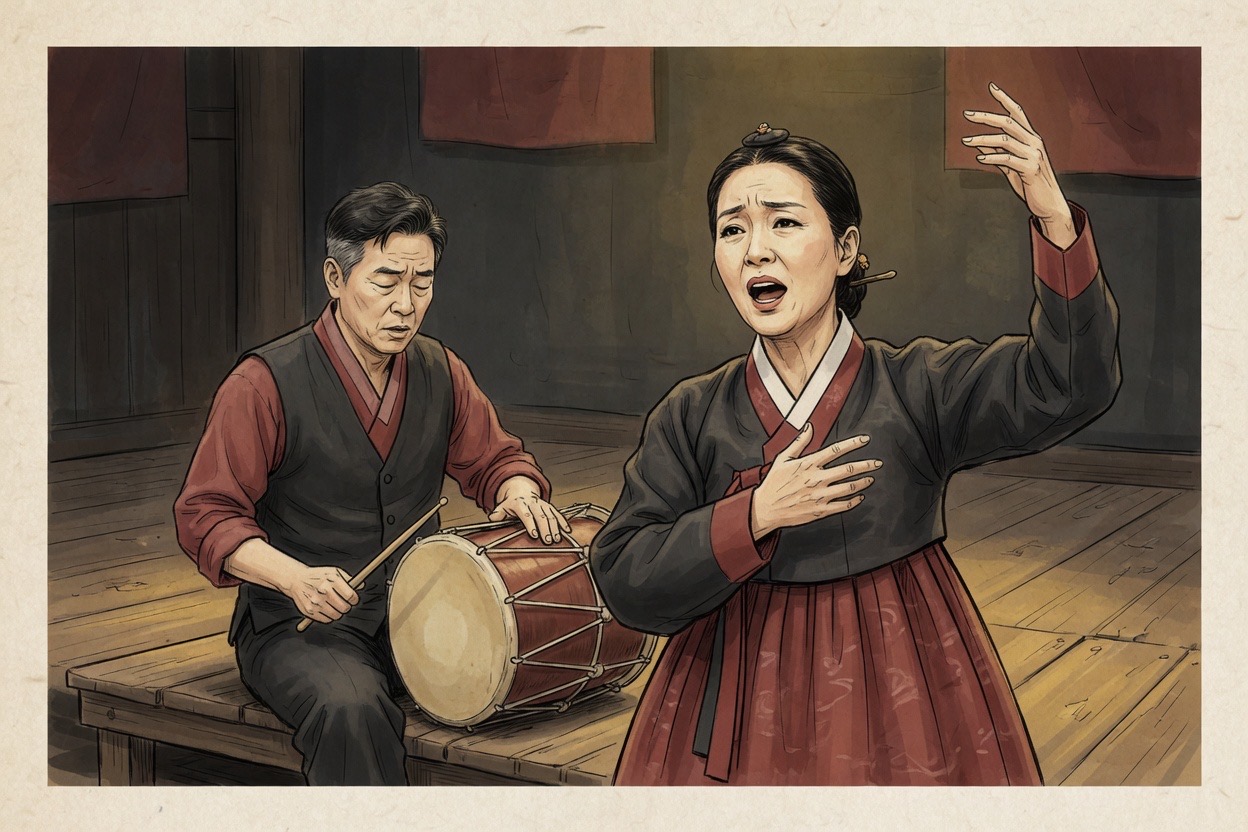
Pansori and related performance traditions
Narrative singing where hardship, injustice, and release are dramatic material. The stage can hold big emotion without pretending every bus passenger is monologuing. -
Trot and older popular song
Melodrama that knows how to hold longing, regret, and survival pride in the same chorus. Listeners may say a song “풀어 준다”—it helps the feeling move. -
Older generations describing hard years
Parents and grandparents narrating poverty, war aftermath, migration, factory decades, or family sacrifice. The word can surface as summary, not as daily small talk. For family address patterns around those elders, see grandma in Korean and mom in Korean—the titles are ordinary; the life stories are where han sometimes enters. -
Literature, film, and cultural essays
Places where people analyze feeling. Essay han and dinner-table han are related but not identical species.
You are less likely to hear it as:
- a teen’s synonym for “my phone died and I am devastated”
- a default greeting emotion
- something every coworker names weekly in standup meetings
Younger urban speech often prefers more specific, less mythic words for stress and disappointment. That does not erase han. It means frequency and register matter. A word can be culturally famous and still not be the most common lunch-break noun.
Han vs jeong — inside one person, between people
English explainers love pairing han and jeong as twin keys to “the Korean heart.” The pair is useful if you keep the geometry honest.
| Han (한) | Jeong (정) | |
|---|---|---|
| Where it gathers | Inside one person (and sometimes a shared family story) | Between people |
| What accumulates | Unresolved grief, resentment, unfinished hurt | Warm attachment, familiarity, bond |
| Default motion | Knot → wants release | Build → wants maintenance |
| Risk when mistranslated | Mystical national sadness | Forced “Koreans are so emotional” |
Jeong is the glue of repeated shared life—neighbors, classmates, teammates, long marriages, the friend who became family without paperwork. Han is the residue of what could not be fixed or fully cried out.
They can coexist in one biography. A person can feel deep jeong for the family that survived a hard era and still carry han about what that era cost. They are not synonyms, and neither is a personality test result stamped on a passport.
If you only remember one contrast: jeong accumulates between people; han accumulates inside one.
How it shows up in family talk
Family is where han often sounds least like a museum label and most like a person finishing a sentence they have practiced for years.
Someone of an older generation might not give a TED definition. They might tell a concrete story—money that never came, a chance that vanished, a relative who left, a body that worked past its limit—and land on han as the summary word. Younger listeners may nod, change the subject carefully, or ask one more question. Korean honorifics still sort the room: the emotion does not cancel speech level. You can hear a heavy story and still answer with the right endings.
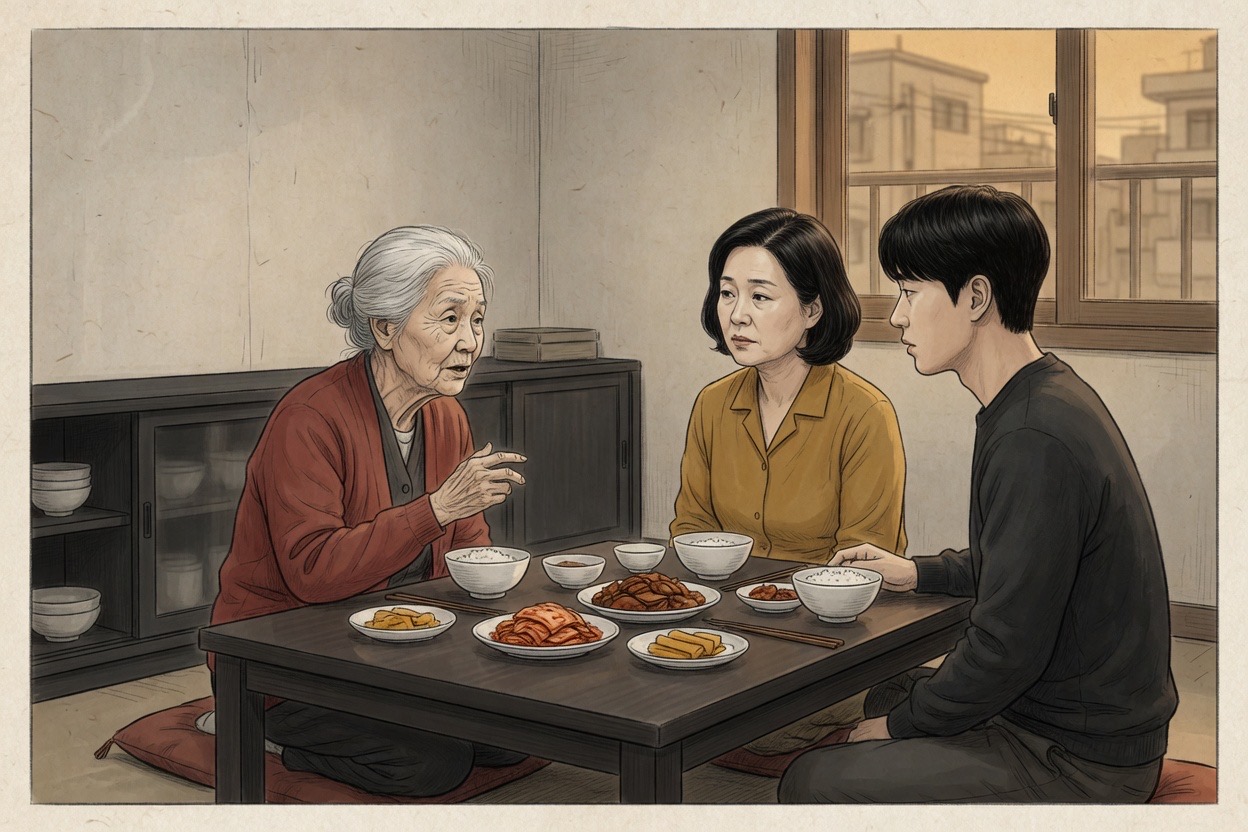
Good listening here is not “extract the cultural concept.” It is do not perform enlightenment on someone else’s past. If they did not invite analysis, do not turn their timeline into your content.
Example dialogues
1. After dinner, mother and adult child (banmal)
The dishes are done. The TV is low. A memory has entered the room.
- Mother: 그 시절 생각하면 아직도 한이 맺혀.
Geu sijeol saenggakhamyeon ajikdo hani maechyeo.
When I think of those days, the han is still knotted up. - Adult child: 엄마, 그때 진짜 힘들었겠다.
Eomma, geuttae jinjja himdeureotgetda.
Mom, that time must have been really hard. - Mother: 그냥 버틴 거지, 뭐. 풀릴 날은 아직 모르겠고.
Geunyang beotin geoji, mwo. Pullil nareun ajik moreugetgo.
We just endured, that’s all. I still don’t know when it will fully ease.
Gloss: Banmal at home. The child does not argue the feeling away. Acknowledgment first; philosophy later—or never.
2. Friends after a trot playlist (banmal)
Car ride, late, one chorus too honest.
- A: 이 노래 들으면 뭔가 한이 풀리는 느낌이야.
I norae deureumyeon mwonga hani pullineun neukkimiya.
When I hear this song, it feels like some of the han is releasing. - B: 우리 할머니가 이런 거 좋아하셨어. 웃으면서 울더라고.
Uri halmeoniga ireon geo joahasyeosseo. Useumyeonseo uldeorago.
My grandma liked this kind of thing. She’d laugh and cry at the same time. - A: 한이 있어야 풀지, 없인 뭘 풀어.
Hani isseoya pulji, eopsin mwol pureo.
You need han first to release it—without it, what’s there to untie?
Gloss: Casual peer talk. Han here is half serious, half cultural shorthand for “the heavy feeling this genre knows how to move.”
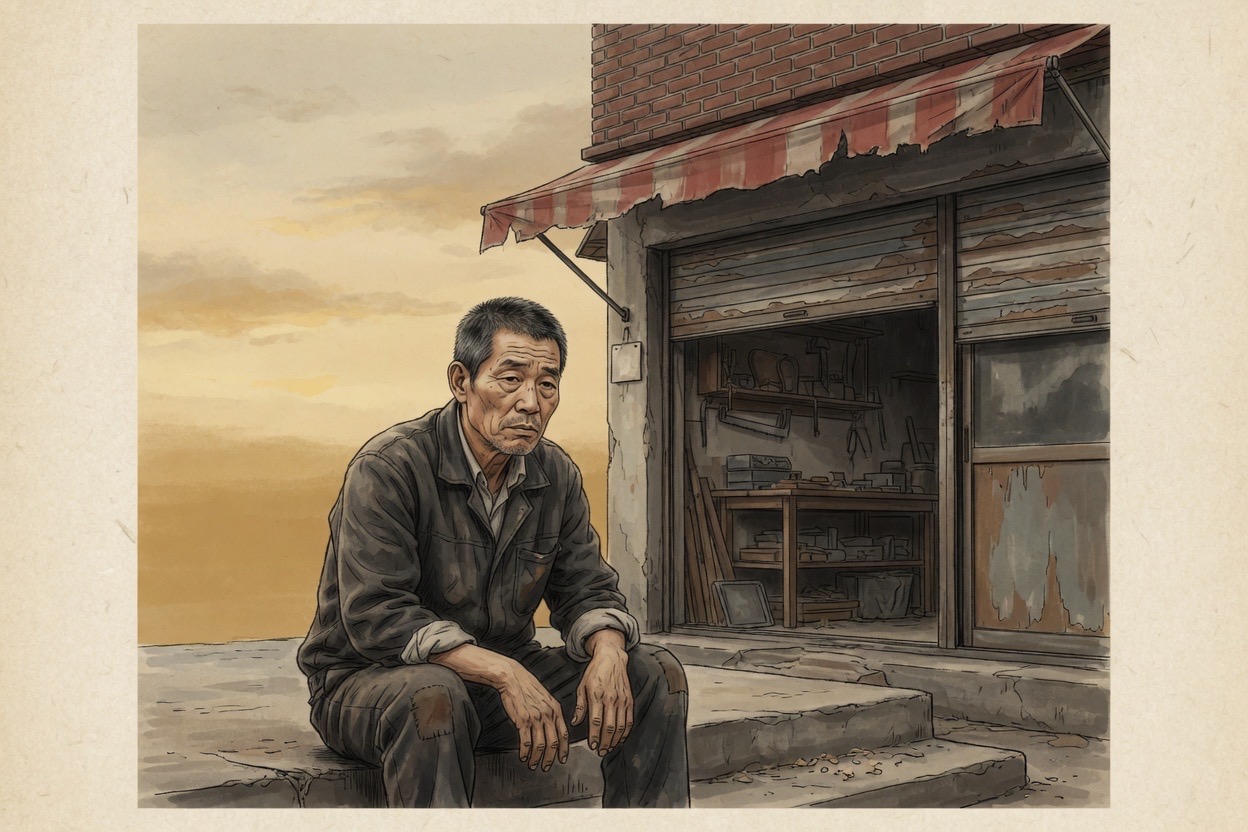
3. Outside a small workshop at dusk (mixed levels)
A man in his sixties has just closed for the day. A younger neighbor stops by.
- Neighbor: 아저씨, 오늘 일찍 문 닫으셨네요.
Ajeossi, oneul iljjik mun dadeusyeotneyo.
Sir, you closed early today. - Workshop owner: 응. 밀린 일 하나 끝냈어. 한이 좀 풀렸네.
Eung. Millin il hana kkeunnaesseo. Hani jom pullyeonne.
Yeah. I finished one job that had been hanging over me. Feels like a bit of the han eased. - Neighbor: 고생 많으셨어요. 이제 좀 쉬세요.
Gosaeng maneusyeosseoyo. Ije jom swiseyo.
You’ve worked hard. Rest a little now.
Gloss: Neighbor stays in polite speech; owner answers in plain banmal. “Han” here is not national mythology—it is unfinished work and long pressure finally moving.
Good nunchi / Zero nunchi
Good nunchi
A Korean friend mentions that their parent still carries han about a decade of sacrifice. You listen, ask one careful question if invited, and do not convert the moment into a speech about “the Korean soul,” colonial aesthetics, or your favorite sad OST. You treat han as their family’s language for a real cost, not as proof you are now culturally fluent.
Zero nunchi
Same confession. You light up: “Yes! Han! The essence of Korean identity—I read an article.” You explain their parent’s life back to them, film your reaction for a story, and later tell classmates that Koreans are “defined by eternal sorrow.” You collected a keyword. You missed the person.
Do / Don’t
Do
- Define han as accumulated, unresolved grief/resentment/endurance—a knot, not a vibe.
- Learn the pair 맺히다 / 풀다 so the word has motion, not only mystique.
- Expect it more in song, family history, and reflective talk than in every casual chat.
- Hold the everyday use and the critique of national-essence framing in the same hand.
- Contrast it cleanly with jeong (between people vs inside one).
Don’t
- Announce that han is the mystical core of all Korean hearts.
- Invent historical anecdotes or claim what “all Koreans feel.”
- Use a stranger’s hardship as your culture-class demo.
- Treat every sad K-drama scene as a glossary entry for han.
- Confuse temporary stress with a multi-year knot just to sound deep.
Nearby ideas on Have Nunchi
- Nunchi (눈치) — reading whether this room wants analysis, quiet, or a subject change
- Grandma in Korean — address and warmth around elders who may carry the longest stories
- Mom in Korean — everyday mother terms; family talk is often where heavy words land
- Korean honorifics explained — speech levels still apply when the topic is grief
- Chaebol — another high-stakes Korean social keyword that English flattens if you only want drama tropes
A closing line
Han is a real word for a real shape of pain: what gathers when release never quite arrives. Use it with the precision of a listener, not the swagger of a tour guide.
Respect the knot. Question the myth that turns one knot into an entire nation’s permanent personality. That is the difference between understanding a Korean word and cosplaying a Korean soul.
FAQ
What does han mean in Korean?
Han (한) is a knot of accumulated grief, resentment, and endurance that has nowhere to discharge—unresolved sorrow carried over time, not a one-day bad mood.
How do you pronounce han?
Close to hahn—one short syllable, like the English word “on” with an h. It is not “han” as in Han Solo drawn out, and not “haan” as a long moan unless someone is performing the emotion.
What does 한이 맺히다 and 한을 풀다 mean?
한이 맺히다 means han forms or knots inside you—hardship settles into a lasting ache. 한을 풀다 means that knot eases, loosens, or finds release through time, success, art, apology, or simply being heard.
Is han the essence of the Korean soul?
Many popular explanations say so. A serious line of Korean scholarship argues that “han as national essence” was shaped and popularized during the colonial period and afterward. Everyday speakers still use the word for real hardship; that does not make it a mystical national character.
How is han different from jeong?
Jeong accumulates between people—warm attachment that builds through shared time. Han accumulates inside one person as unresolved grief or resentment. One is relational glue; the other is an internal knot that wants release.
Do you have nunchi?
Get short Korean word lessons and social cues in your inbox.