What Does “Kibun” Mean in Korean? Mood, Feelings, and Why It Matters
Mood is a plain word—until you decide whether to trample someone else’s.
- Hangul
- 기분
- Romanization
- gibun
- Pronunciation
- gi-boon
- Category
- Culture
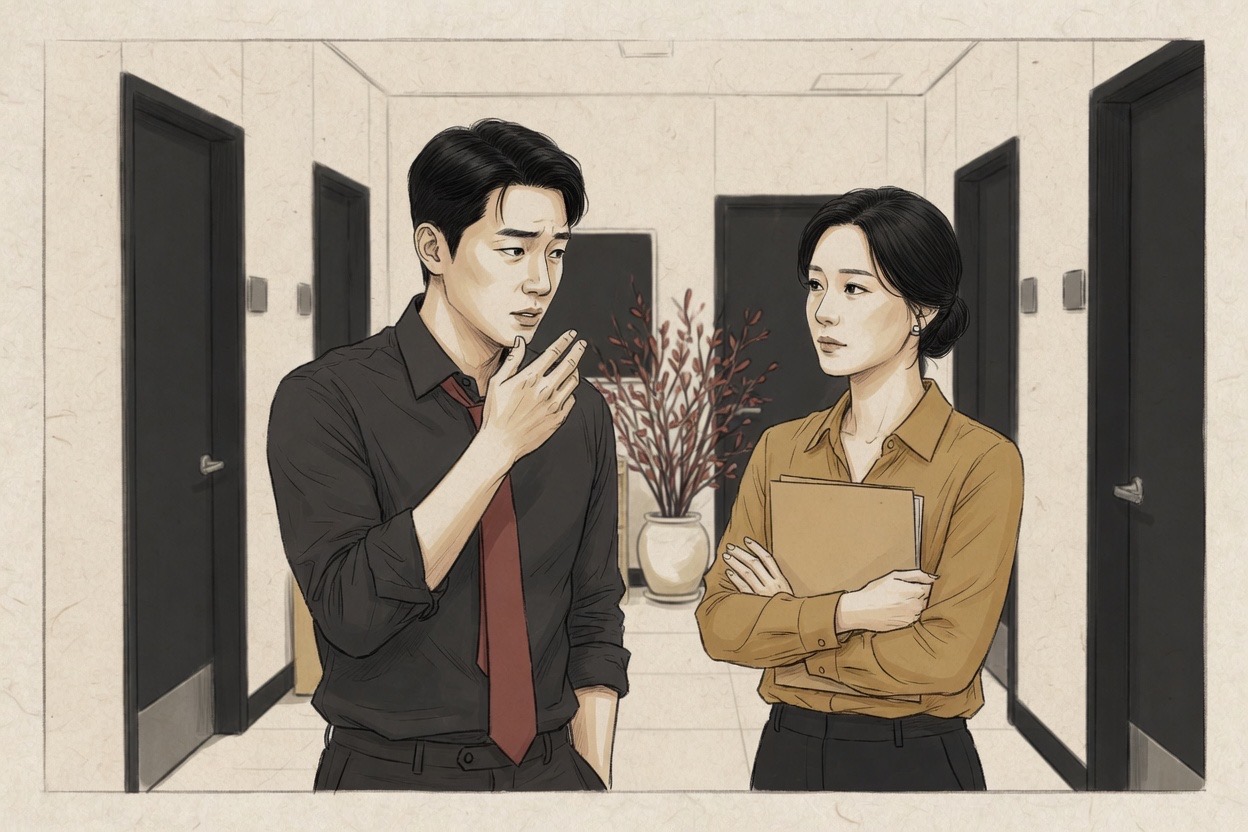
Kibun is how English business writing usually spells the Korean word 기분 (gibun, pronounced gi-boon): mood, feeling, or state of mind. When someone says a colleague’s kibun is good, bad, spoiled, or recovering, they mean the emotional weather of that person right now—not a secret cultural object. One-sentence definition: kibun is ordinary mood, and Korean social life just treats other people’s mood as worth noticing.
The spelling gap trips people up. In standard romanization you will see gibun. In older English management books and cross-cultural guides, kibun stuck. Same hangul, same word. What did not stick accurately is the caricature that Koreans walk around carrying a porcelain “kibun” you must never chip. People protect mood the way polite people everywhere soften bad news—they just have a tidy noun for the thing being protected.
Quick facts
| Hangul | 기분 |
| Romanization | gibun (English business texts often: kibun) |
| Pronunciation | gi-boon |
| Literal sense | mood / feeling / state of mind |
| Closest English | mood, feeling, “how someone is doing emotionally” |
| You’ll hear | 기분 좋다, 기분 나쁘다, 기분 상하다, 기분 전환 |
| Paired skill | nunchi — reading the room that holds the mood |
How do you pronounce kibun / gibun?
Say gi-boon with a hard g as in “give,” not a soft j. The first syllable is short; the second is a clean “boon,” not “bun.” Stress is fairly even. If you learned “kibun” from a business book, keep the same sounds—only the romanization letter changed from k to g in more careful spelling.
You do not need a special “cultural pronunciation.” It is a two-syllable everyday noun, as ordinary as saying “mood” in English.
What does kibun mean, really?
Strip away the seminar slides and you get a plain word:
- Good kibun — 기분이 좋다 — in a good mood
- Bad kibun — 기분이 나쁘다 — in a bad mood
- Spoiled / hurt kibun — 기분이 상하다 — feelings hurt; mood damaged
- Recovering kibun — 기분이 풀리다 — the hurt eases; the mood unclenches
That verb set is the real map. Koreans do not walk around saying “please respect my kibun” like a customer-service slogan. They say someone looks off, that a joke landed badly, that the air in the room got heavy, or that they need a 기분 전환—a mood change. The social story is not “Koreans are uniquely fragile.” It is “people notice when you step on someone’s mood, and they have clean verbs for the damage and the repair.”
English already has the pieces. What Korean packs tightly is the social attention around them: public correction can cost more; private feedback can cost less; timing matters; hierarchy can amplify a careless line. None of that requires inventing a mystical second soul called kibun.
Why kibun matters socially
Protecting another person’s 기분 is a live consideration in ordinary Korean interaction. That does not mean everyone is endlessly soft. It means people often:
- soften bad news instead of dropping it cold in front of an audience
- avoid public correction when a quiet aside would do the same job
- read whether now is the moment—after lunch, after a win, after someone already had a rough morning
- leave an exit so the other person can save face without a speech
If you have already been learning Korean honorifics, this is the emotional half of the same map. Titles and speech levels mark who you are to each other. Kibun is the weather report of how the interaction feels while those titles are in play.
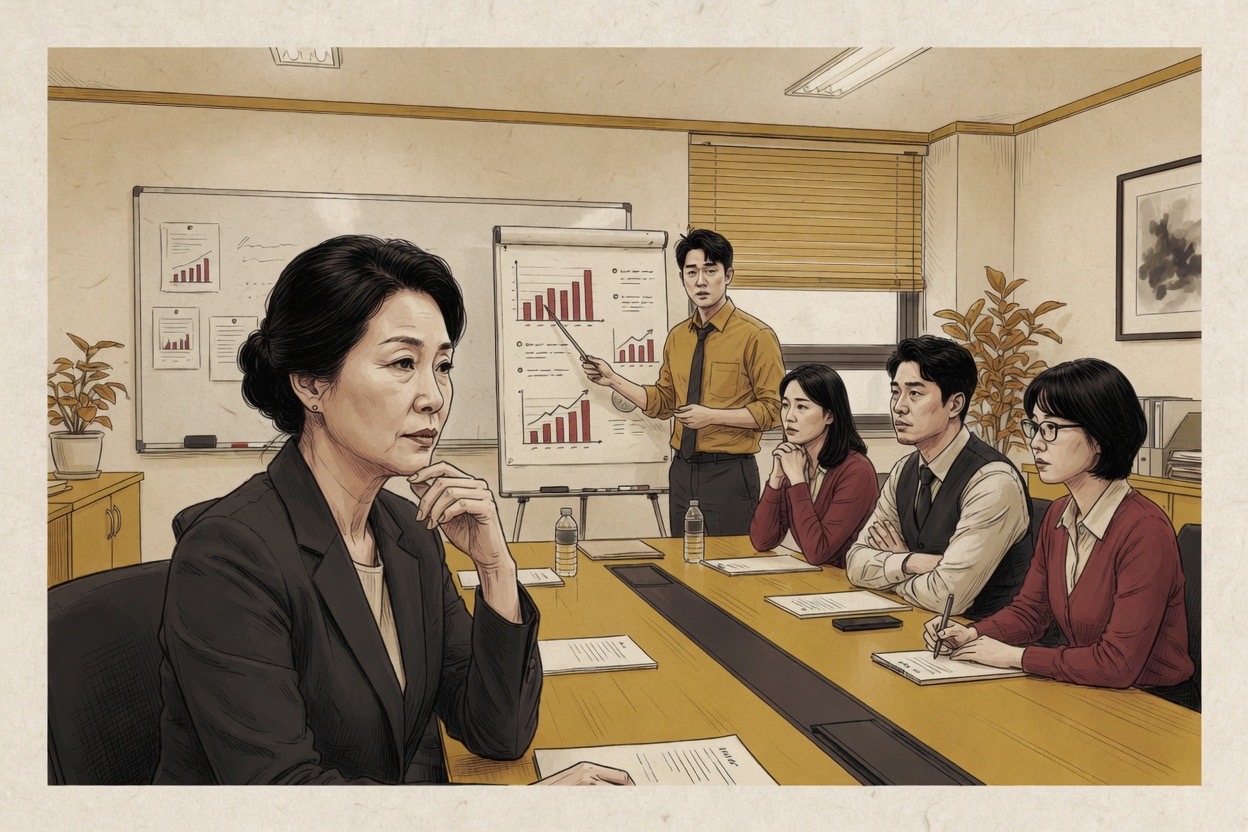
A manager who rewrites a junior’s point in front of ten people may be “efficient” and still wreck the junior’s mood for the rest of the day. A friend who changes the subject when someone flinches at a joke is not being fake—they are treating mood as part of the shared space. The weight is social choice, not porcelain.
Kibun and nunchi are a pair
English explainers often sell nunchi and kibun as two exotic imports on the same souvenir shelf. They are related, but they are not twins.
| Nunchi (눈치) | Kibun / gibun (기분) | |
|---|---|---|
| What it is | A skill: reading the room | A state: someone’s mood/feeling |
| Question it answers | What is happening under the words? | How does this person feel right now? |
| You “have” it | Yes — good nunchi / no nunchi | Less so — you are in a mood |
| Damage language | 눈치 없다 (clueless) | 기분 상하다 (feelings hurt) |
| Repair language | Learn to notice | Apologize, soft time, 기분 전환 |
Nunchi is the reading. Kibun is what gets read—and, ideally, protected.
Someone with sharp nunchi notices when a coworker’s kibun dips after a joke, when a parent’s silence is not agreement, when a dinner table needs a subject change. Someone with low nunchi can still have kibun—everyone has mood—they just keep missing everyone else’s.
If you only remember one relationship on this page, remember that pair. Reading without care becomes manipulation. Care without reading becomes vague anxiety. Together they describe ordinary social competence with Korean labels.
The business-book caricature vs ordinary life
English management writing loves a simple rule: never damage kibun. The rule is not entirely wrong. It is incomplete in a way that turns adults into museum guards.
What the caricature gets right
- Public humiliation is expensive in many Korean rooms (and many non-Korean rooms).
- Hierarchy can make a blunt line land harder than the speaker intended.
- People may stay polite while their mood is already gone.
What the caricature gets wrong
- Kibun is not a fragile national treasure. It is mood. People get over things, call friends, eat spicy noodles, take a walk, and move on.
- Koreans argue, tease, and correct each other constantly. Families roast. Friends pile on. Offices still deliver bad news. The point is how and where, not eternal silence.
- Foreigners are not uniquely radioactive. Careless people damage mood in any language. Careful people repair it in any language.
- “Never damage kibun” can become cowardice. Good social skill includes honest feedback delivered with timing and privacy—not only smiling while problems rot.
The ordinary version is almost boring, which is why it is trustworthy: mood is real, public stomping is rude, and most adults prefer not to be the person who ruins the air in the room. That is etiquette with a noun, not a mystical operating system only Koreans run.
You will hear similar care when people choose how to say thank you or how to apologize—the words matter, but so does whether the other person still feels small after you speak.
The verb set you actually need
Memorize patterns, not a TED-talk definition.
기분이 좋다 — to be in a good mood
Weather report. Can be weather, food, a compliment, a free Friday.
기분이 나쁘다 — to be in a bad mood
Broad. Could be traffic, a slight, low blood sugar, or a whole week.
기분이 상하다 — to have one’s feelings hurt / mood spoiled
This is the phrase business books orbit without teaching cleanly. It often follows:
- a joke about someone’s appearance, skill, or status
- being corrected in front of peers
- being ignored when they expected inclusion
- a promise casually broken
It is not always “offense” in the English culture-war sense. It can simply mean that ruined the feeling of the moment.
기분이 풀리다 — for the bad mood to ease
The knot loosens. Someone apologizes well, time passes, ice cream happens, the walk works. Repair language matters as much as damage language.
기분 전환 — mood change / mental reset
Everyday self-care vocabulary. Not a spa brand. Not a therapy diagnosis. People say they need a 기분 전환 the way English speakers say they need a change of scenery:
- a short walk by the river
- a different café
- a silly variety show
- shopping with no agenda
- alone time with earphones in
Notice what this phrase assumes: mood can move. You are not stuck forever in the spoiled feeling. Korean does not only stock words for damage; it stocks words for reset. That is the ordinary counterweight to the “never damage kibun” cartoon. People hurt each other’s feelings, then they also change the channel on purpose.
If you are learning Korean for real life, this phrase may earn you more goodwill than any boardroom proverb about never touching kibun. Offer it as a plan, not a lecture: “Want a mood change—walk or food?” lands better than “I sense your kibun is compromised.”
When you’ll hear it
- After a meeting: “I think the team lead’s mood is off today.”
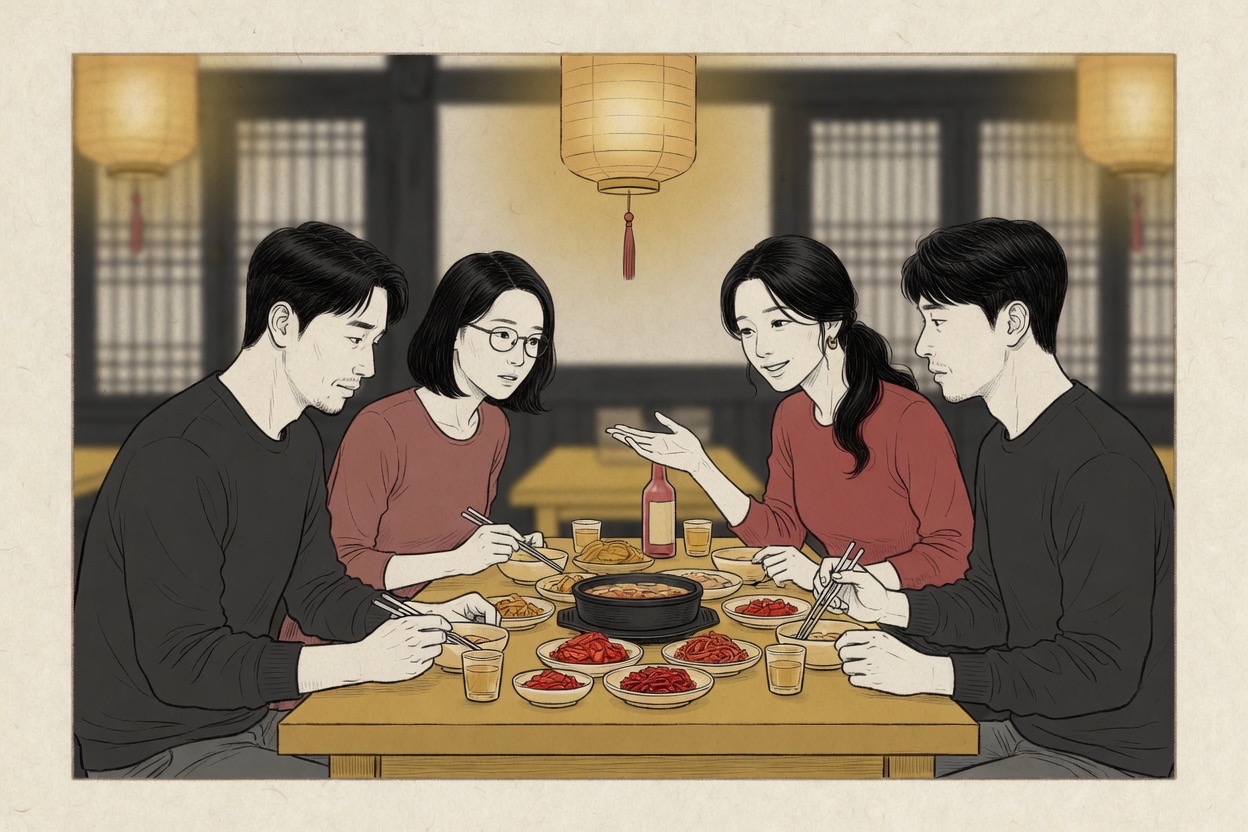
- Among friends: “Don’t bring that up—last time their kibun got wrecked.”
- Self-talk: “I need a mood change. Let’s walk.”
- Parent to child: “Why is your face like that? What’s wrong?”
- Workplace whisper: “Say it privately. If you say it here, it’ll spoil the air.”
- After a compliment or gift: “That made my mood so good.”
- After hierarchy friction: someone was corrected like a maknae errand-runner in front of seniors, and the quiet afterward is not peace—it is spoiled mood.
You will not usually hear a formal declaration like “I am now protecting your kibun in accordance with Korean custom.” That sentence lives in books. Real rooms use shorter tools: softer wording, better timing, a subject change, a later apology.
Age rank can amplify the same line. In rooms shaped by the Korean age system, a joke from a senior can feel heavier than the same joke between equals—not because juniors have thinner skin, but because they have fewer safe ways to push back in public.
Example dialogues
1. Softening bad news, polite speech
Open office, late afternoon. A junior needs to report a delay—without detonating the room.
- Junior: 팀장님, 잠깐 괜찮으세요? 일정 얘기 잠깐만요.
Timjangnim, jamkkan gwaenchaneuseyo? Iljeong yaegi jamkkanmanyo.
Team lead, is now okay for a second? Just a quick schedule note. - Team lead: 말해 봐요.
Malhae bwayo.
Go ahead. - Junior: 오늘 안에 다 끝내긴 조금 빠듯할 것 같아요. 내일 오전으로 미뤄도 될까요?
Oneul ane da kkeutnaegin jogeum ppadeuthal geot gatayo. Naeil ojeoneuro mirwodo doelkkayo?
Finishing everything today looks a bit tight. Could we push it to tomorrow morning? - Team lead: …알겠어요. 다음엔 더 일찍 말해 줘요.
…Algesseoyo. Daeumeun deo iljjik malhae jwoyo.
…All right. Next time, tell me earlier.
Gloss: Jondaemal. The junior asks for timing first, frames the delay as constraint rather than drama, and leaves a clear ask. Bad news still lands; it does not arrive like a thrown plate.
2. Feelings hurt after a joke, banmal among friends
Late dinner, close friends. A joke went one notch too far.
- Friend A: 야, 방금 그거 좀 심했다.
Ya, banggeum geugeo jom simhaetda.
Hey, that just now was a bit much. - Friend B: 농담이었어. 왜?
Nongdamiyeosseo. Wae?
It was a joke. Why? - Friend A: 민지 기분 상한 것 같아. 표정이 바뀌었거든.
Minji gibun sanghan geot gata. Pyojeongi bakkwieotgeodeun.
I think Minji’s feelings got hurt. Her face changed. - Friend B: …아. 내가 말 잘못했네. 민지야, 미안.
…A. Naega mal jalmotanne. Minji-ya, mian.
…Ah. I misspoke. Minji, sorry.
Gloss: Banmal throughout. Nobody lectures about “kibun theory.” Someone names the damage in plain Korean—기분 상한 것 같아—and the repair starts with a short apology, not a TED talk.
3. Mood change as self-care, banmal between peers
After a rough workday. Two coworkers of similar age, already friendly.
- Hana: 오늘 진짜 기분 안 좋다.
Oneul jinjja gibun an jota.
My mood is really bad today. - Sora: 무슨 일 있어?
Museun il isseo?
Something happen? - Hana: 회의에서 좀 깨졌어. 기분 전환 좀 해야겠어.
Hoeuieseo jom kkaejyeosseo. Gibun jeonhwan jom haeyagesseo.
I got chewed out a bit in the meeting. I need a mood change. - Sora: 한강 좀 걷자. 이어폰 끼고 아무 말도 안 해도 돼.
Hangang jom geotja. I-eopon kkigo amu maldo an haedo dwae.
Let’s walk by the Han River a bit. Earphones in—you don’t have to talk.
Gloss: Casual speech between peers. 기분 전환 is practical, not performative. Care can be quiet company, not forced cheer.
Good nunchi / Zero nunchi
Good nunchi
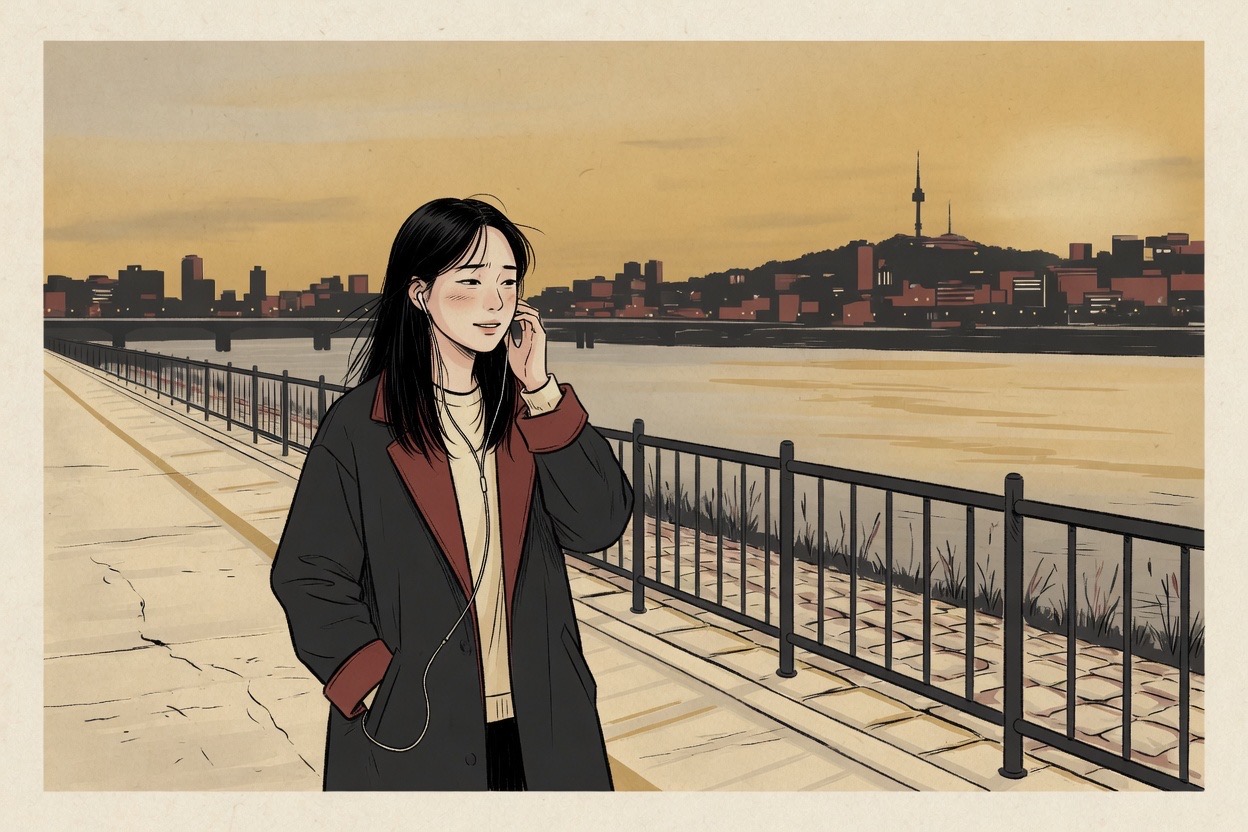
A junior presents. A number is wrong. You wait until the meeting ends, walk with them to the hallway, and fix the figure privately: “Slide four—let’s correct it before it goes to the client.” Their kibun dips for thirty seconds, then recovers, because the work was protected and their public face was not used as a whiteboard.
Zero nunchi
Same wrong number. You interrupt mid-sentence, laugh, and say in front of everyone that the math is “adorably wrong.” You think you are being honest and fun. The room freezes into polite smiles. You have practiced the business-book cartoon in reverse: maximum damage, zero reading, and a mood that will need more than a snack to reset.
Do / Don’t
Do
- Treat kibun/gibun as ordinary mood with social consequences—not a sacred relic.
- Soften public blows when a private aside would work.
- Learn the collocations: 상하다, 풀리다, 전환.
- Pair the word with nunchi: read first, then decide how hard to speak.
- Offer real repair—clear apology, corrected behavior, time—when you spoil the air.
Don’t
- Turn “never damage kibun” into a ban on honest feedback.
- Announce that you are “doing kibun” like a foreign etiquette stunt.
- Publicly correct people for sport and call it transparency.
- Assume only Koreans have mood worth protecting.
- Confuse quiet discomfort with agreement.
Is kibun the same as “face”?
Not exactly. English “saving face” and Korean talk about dignity, shame, and public image overlap with kibun, but they are not identical. Face (in the social-science sense) is more about reputation and standing. Kibun is more about the immediate emotional weather—how the moment feels in the body and the room.
You can spoil someone’s kibun without destroying their public reputation: a thoughtless joke between friends, a cold reply, a cancelled plan with no soft landing. You can also protect kibun while still delivering hard news: private setting, clear facts, no audience, a path forward. If you collapse everything into “Asians care about face,” you will miss the smaller, more frequent skill: don’t be the person who needlessly ruins the afternoon.
Nearby ideas
- Nunchi (눈치) — the reading skill that tracks kibun in real time
- Honorifics — titles and speech levels that set the formality weather around a conversation
- Maknae dynamics — age-rank rooms where a careless joke at the youngest can land louder than you meant
- Thanks language — repair and warmth tools when mood has already dipped
A closing line
Kibun is not a glass sculpture behind a velvet rope. It is how someone feels, said in one compact Korean noun—and Korean social life is simply frank about the fact that feelings can be spoiled, eased, and reset.
Read the room. Choose your moment. If you step on someone’s mood, fix it like an adult—not like a tourist who memorized a warning label and forgot the person standing in front of them.
FAQ
What does kibun mean in Korean?
Kibun is the English business-writing spelling of 기분 (gibun)—mood, feeling, or state of mind. In daily Korean it is an ordinary word for how someone feels, not a special ritual object.
Is kibun the same as nunchi?
No. Nunchi is the skill of reading a room; kibun is the mood that gets read and, ideally, not stomped on. They work as a pair—nunchi is the reading, kibun is what is being measured.
What does 기분 상하다 mean?
기분 상하다 means to have one’s feelings hurt or to have one’s mood spoiled—often by a blunt remark, public correction, or careless joke. It is stronger than ‘a little annoyed’ and softer than a full fight.
Why do business books talk about never damaging kibun?
English management writing turned kibun into a fragile artifact foreigners must tiptoe around. Among ordinary people it is just mood—the social weight comes from choosing not to trample it, not from mystical Korean fragility.
What is 기분 전환?
기분 전환 (gibun jeonhwan) means a mood change or a mental reset—taking a walk, eating something good, changing the scenery. It is everyday self-care vocabulary, not therapy jargon.
Do you have nunchi?
Get short Korean word lessons and social cues in your inbox.