How to Say Thank You in Korean: 감사합니다, 고맙습니다 & Every Register
One polite thank-you covers shops, offices, and strangers—if you climb the right ladder.
- Hangul
- 감사합니다
- Romanization
- gamsahamnida
- Pronunciation
- gam-sa-ham-ni-da
- Category
- Phrases
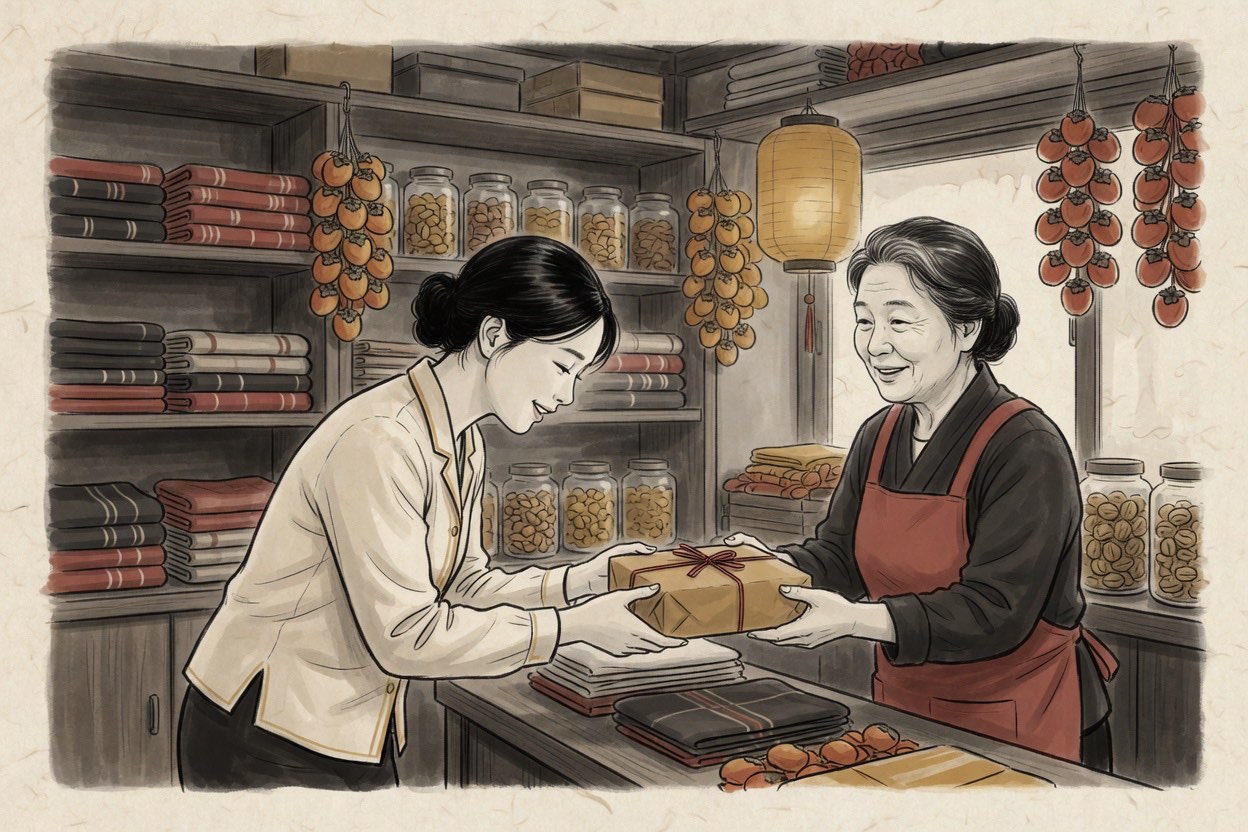
Thank you in Korean is 감사합니다 (감사합니다, gamsahamnida, pronounced gam-sa-ham-ni-da)—the default formal-polite line for shops, offices, teachers, and almost anyone whose age or rank you have not mapped yet. Its twin, 고맙습니다 (고맙습니다, gomapseumnida), sits at the same politeness rank. The real difference is feel: 감사 is Sino-Korean and often lands a shade more polished or official; 고맙 is native Korean and often lands a shade warmer. Neither is “more respectful” by rulebook.
If you only need one line for travel or work: say 감사합니다, add a small nod, and you are covered. Casual 고마워, soft-polite 고마워요 / 감사해요, intensifiers like 정말, replies like 아니에요, and workplace 수고하셨습니다 are register tools—not a second language.
Quick facts
| Hangul (default) | 감사합니다 |
| Romanization | gamsahamnida |
| Pronunciation | gam-sa-ham-ni-da |
| Equal formal twin | 고맙습니다 (gomapseumnida) |
| Register | formal-polite (safe default) |
| Polite softer | 고마워요 · 감사해요 |
| Casual | 고마워 (friends & kids only) |
| Common intensifiers | 정말 · 진짜 · 너무 |
| Common reply | 아니에요 · 별말씀을요 |
How do you say thank you in Korean?
Search engines treat “how to say thank you in Korean” as one phrase. Real rooms treat it as a small status choice—the same kind of ladder you climb when you pick a hello.
| Situation | Say | Register |
|---|---|---|
| Shop, café, stranger, teacher, client, first meeting | 감사합니다 or 고맙습니다 | formal-polite default |
| Coworker / acquaintance you already speak politely with | 감사해요 or 고마워요 | soft polite |
| Close friend, sibling, same-age buddy on banmal | 고마워 | casual |
| Stronger gratitude (any register above) | add 정말 / 너무 / 진짜 | intensifier |
| After shared work, to peer or junior | 수고하셨습니다 | thanks-adjacent work phrase |
When in doubt, default to 감사합니다. Reading whether the room wants warm soft-polite or full formal is nunchi—the same radar that decides titles and speech levels in Korean honorifics.
감사합니다 vs 고맙습니다 — the real answer
Most English pages shrug and say “they’re the same.” That is half true and half lazy.
Same rank. In everyday polite speech, both 감사합니다 and 고맙습니다 are formal-polite. Neither is a higher honorific of the other. You will not offend a shop owner by picking the “wrong” one of the pair. You will not impress a professor by treating one as automatically more respectful.
Different texture.
- 감사 is Sino-Korean (the 감사 you meet in words about gratitude and appreciation). In many rooms it feels a touch more polished, official, or script-ready—the line that appears on signs, speeches, service scripts, and careful first contact.
- 고맙 is native Korean. In many rooms it feels a touch more personal and warm—still fully polite with -습니다, still safe with strangers, but with less “printed brochure” chill.
Think fabric, not hierarchy: same formal cut, different weave. Some speakers prefer one by habit. Some rooms lean one way. Many people use both in the same day.
Practical takeaway:
- Safe default for any unfamiliar room: 감사합니다.
- Equally safe, often slightly warmer feel: 고맙습니다.
- Do not invent a politeness ladder where 감사 always beats 고맙, or the reverse.
- Do match the rest of your speech. Full formal endings with a casual 고마워 is the real mismatch—not 감사 vs 고맙 at the same -습니다 height.
The register ladder: 고마워 → 고마워요 / 감사해요 → 감사합니다 / 고맙습니다
Korean thank-you is one meaning on three everyday rungs. Climb by relationship and setting, not by how grateful you feel inside.
1. Casual — 고마워
고마워 (고마워, gomawo) is banmal. Same “thanks” root as 고맙습니다, minus the polite distance.
Use it with:
- close friends who already banmal with you
- siblings and partners on casual terms
- kids (or when kids thank you)
Do not drop 고마워 on a clerk, a professor, a client, or a coworker you still call with a title. “Friendly foreigner energy” is not a free pass into banmal. If the other person still greets you with 안녕하세요-level distance, stay on the polite rungs.
2. Soft polite — 고마워요 · 감사해요
고마워요 (고마워요, gomawoyo) and 감사해요 (감사해요, gamsahaeyo) are the everyday polite middle: respectful without sounding like a board meeting.
You will hear them with:
- coworkers of similar rank once the ice is broken
- neighbors, classmates, and service chats that already run on -요 speech
- friends who keep soft jondaemal even when they are close
감사해요 still carries a slight “Sino-Korean polish”; 고마워요 often feels a bit softer. Both are polite. Neither replaces full formal when the room is stiff, hierarchical, or brand new.
3. Formal-polite — 감사합니다 · 고맙습니다
This is the rung tourists need first and professionals never fully retire: shops, taxis, teachers, clients, first introductions, and any power gap you do not control.
감사합니다 is the line most phrasebooks print first for a reason: high coverage, low risk. 고맙습니다 is not a downgrade. It is the same floor with a warmer carpet. Longer ceremonial gratitude shows up in speeches; daily life does not need five “extra formal” variants before a clean 감사합니다 with a natural nod.
How to make it stronger: 정말, 진짜, 너무
Intensity is a separate dial from register. You raise gratitude by adding a word; you do not automatically jump speech level.
| Intensifier | Feel | Example |
|---|---|---|
| 정말 (jeongmal) | sincere, standard “really” | 정말 감사합니다 |
| 너무 (neomu) | strong “so / too” (common in speech) | 너무 고마워요 |
| 진짜 (jinjja) | colloquial “really / for real” | 진짜 고마워 |
Patterns that sound natural:
- 정말 감사합니다. — Really, thank you. (safe almost anywhere formal-polite fits)
- 너무 고마워요. — Thank you so much. (soft polite)
- 진짜 고마워. — Thanks a lot / seriously, thanks. (banmal only)
Watch stacking. “너무 정말 진짜 감사합니다” is cartoon gratitude. One intensifier is enough. 진짜 is chatty; 정말 travels better into careful speech. For bigger favors, add a reason: 와 주셔서 감사합니다 (thank you for coming), 도와주셔서 고맙습니다 (thank you for helping). Favor + 주셔서 + thanks often sounds more grown-up than a bare volume boost.
How to respond when someone thanks you
Learners memorize thank-you and freeze when the arrow flips. Korean has soft default replies that mean “you’re welcome” without sounding like a customer-service jingle.
아니에요
아니에요 (아니에요, anieyo) literally tracks with “it’s not (a big deal)” / “no (problem).” After thanks, it functions as a light you’re welcome / don’t worry about it.
- Shop staff might say it after you thank them for a bag.
- Friends use it when you over-thank a small favor.
- Tone should be easy, not “I reject your gratitude in court.”
A more casual sibling is 아니야 (aniya)—banmal only.
별말씀을요
별말씀을요 (별말씀을요, byeolmalsseumeulyo) is a polished softener: roughly “don’t mention it” / “it’s nothing special to say.” You will hear it in polite service, older-speaker kindness, and careful guest–host talk. It can sound slightly formal-sweet compared with a plain 아니에요. That is a feature in the right room.
Other everyday moves
- 천만에요 (cheonmaneyo) — textbook “you’re welcome.” Understood; less automatic in casual modern talk than many learners expect.
- A smile + small nod + no words — extremely common for tiny favors.
Rule of thumb: if the thanks was small (holding a door, handing a receipt), keep the reply small. Matching a one-second favor with a speech is its own kind of awkward.
Bowing with thank-you (and when a nod is enough)
Thanks in Korean is mouth plus body. You do not need a drama bow for every coffee.
- Small nod / slight bow with 감사합니다 at a counter: everyday polite. Shoulders ease forward; eyes soft.
- Clearer bow for gifts, introductions, real favors, elders, or formal rooms: still controlled, not a stage dive.
- Two hands when receiving something important (a gift, a business card, a certificate) often pairs with thanks. One-handed grab plus mumbled thanks can feel abrupt.
- Deep 90° theater bow for a convenience-store triangle kimbap: comedy, not culture points.
Match depth to favor size + age/rank gap, not to how much you studied last night. A warm 감사합니다 with a tiny nod beats a perfect deep bow glued to banmal endings. Body and speech level should travel together—the same principle behind honorific titles.
수고하셨습니다 — thanks-adjacent, easy to misuse
If you work with Koreans, you will hear 수고하셨습니다 (수고하셨습니다, sugohasyeotseumnida) constantly. It is not a dictionary twin of “thank you,” but it lives next door.
What it does: acknowledges effort—“you worked hard,” “thanks for your labor/effort,” “good work today.” End of a meeting, end of a shift, after someone finishes a task, when a delivery arrives: the phrase marks that effort was seen.
Nearby forms: 수고하세요 when leaving someone still working (context-sensitive—copy your workplace); 수고 많으셨습니다 for heavier recognition of a lot of effort; short casual versions among peers after a long day.
The genuine misstep: aiming it up the hierarchy as if you are the assessor
Here is the part many phrasebooks skip.
Do not treat 수고하셨습니다 as a free thank-you to fire at seniors. In many hierarchical rooms, a junior telling a senior “you worked hard” can sound like the junior is evaluating the senior’s labor—or standing where the person who assigns and appraises work stands. Peers and seniors may say it to you. You thank seniors with 감사합니다 / 고맙습니다 (and appropriate titles), not with a reflexive 수고하셨습니다 that puts you in the manager’s chair.
Nuance, not a single universal ban: some teams trade mutual “수고…” after group work without drama; careful rank-sensitive rooms still want juniors to default to clear gratitude and titles. When unsure, thank the favor (help, review, time) instead of grading the sweat. If you are the maknae on a team and everyone older is packing up, a clean 감사합니다 for their guidance lands safer than “수고하셨습니다, 팀장님” with intern bravado.
Example dialogues
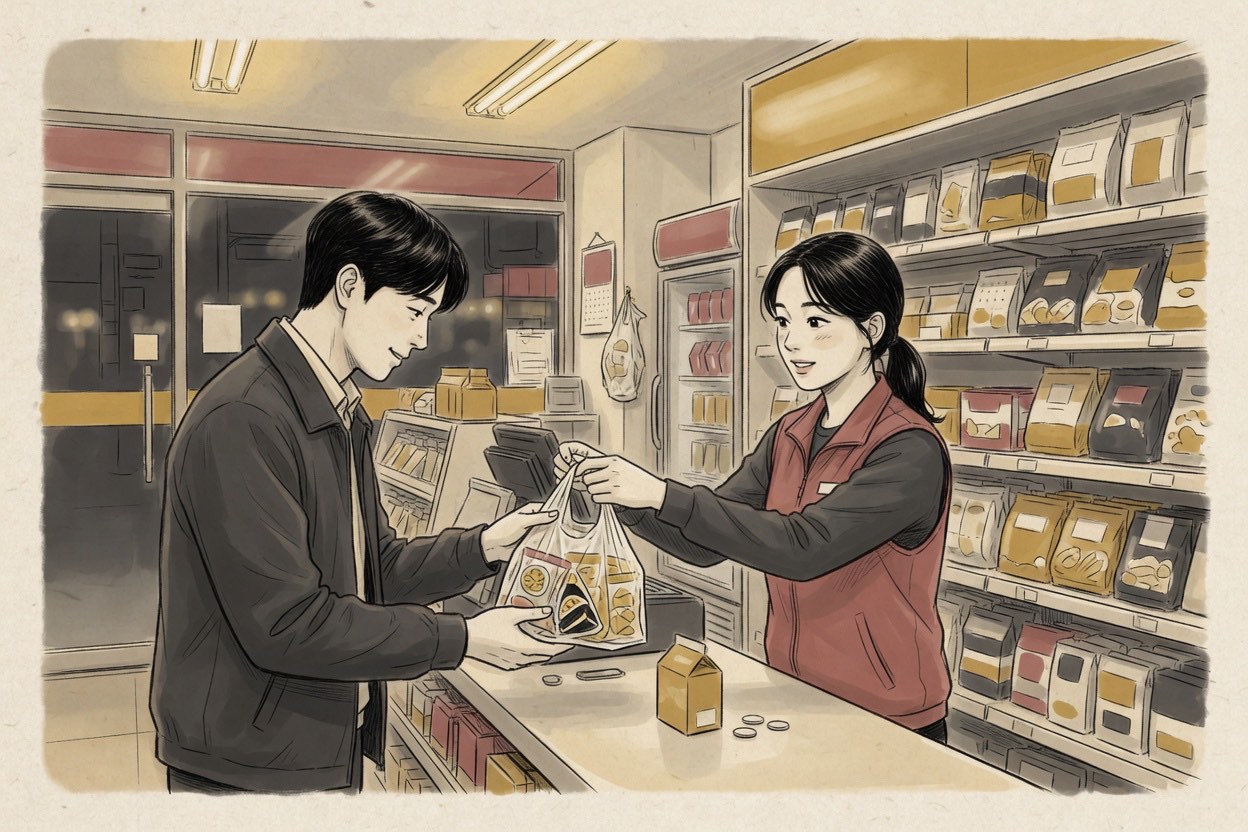
1. Shop counter, formal-polite default
Neighborhood store. Customer pays; owner bags the items.
- Owner: 여기 있습니다.
Yeogi itseumnida.
Here you go. - Customer: 감사합니다.
Gamsahamnida.
Thank you. - Owner: 네, 조심히 가세요.
Ne, josimhi gaseyo.
Yes—go carefully / take care.
Gloss: Full formal-polite thanks for a routine exchange. A deep bow is optional; a small nod is enough.
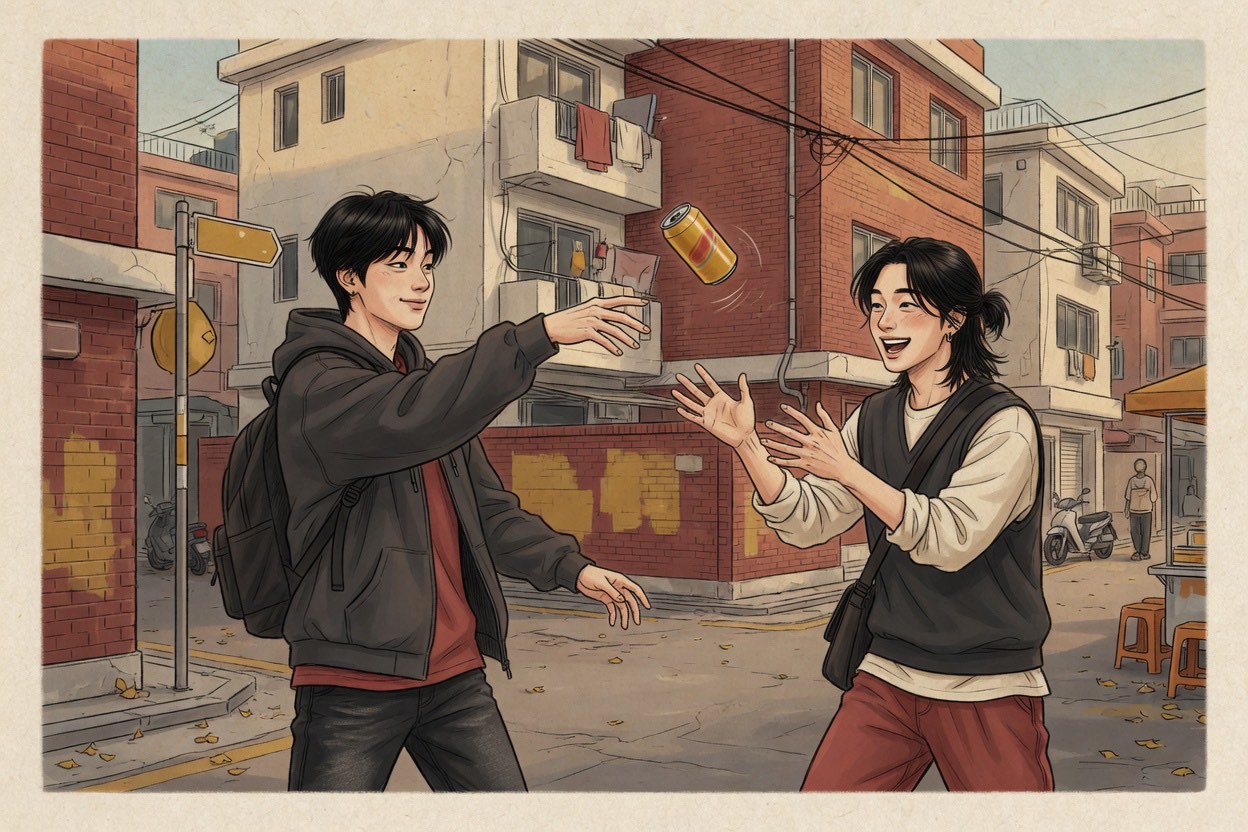
2. Friends on the street, banmal thanks
Two friends in their twenties. One tosses the other a canned drink.
- Minho: 자, 받아.
Ja, bada.
Here—catch. - Jisoo: 오, 진짜 고마워.
O, jinjja gomawo.
Oh, thanks a lot. - Minho: 별거 아니야.
Byeolgeo aniya.
It’s nothing.
Gloss: Banmal throughout. 진짜 intensifies without climbing into 감사합니다 territory—those two are not strangers at a counter.
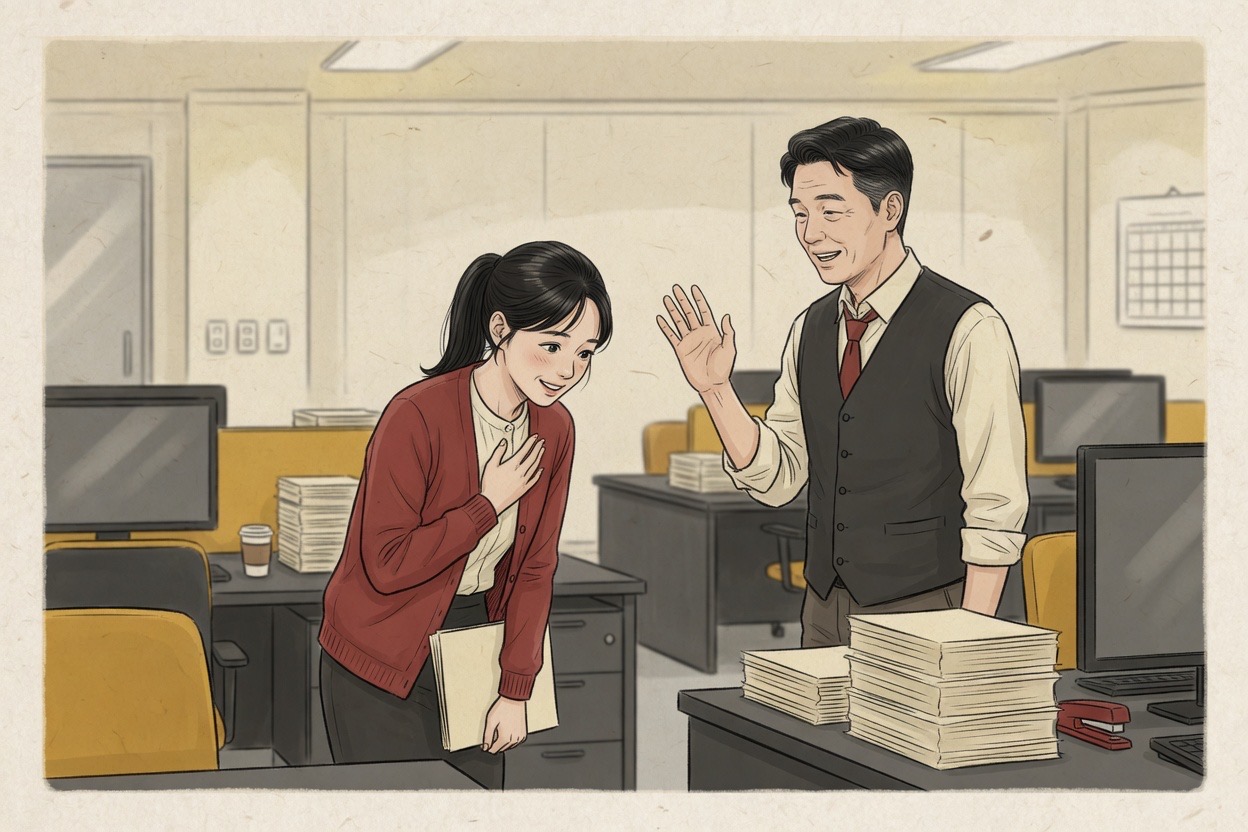
3. Office help, soft polite + careful upward thanks
Open office. A senior in his forties fixed a spreadsheet for a junior in her twenties.
- Junior: 팀장님, 수정해 주셔서 정말 감사합니다.
Timjangnim, sujeonghae jusyeoseo jeongmal gamsahamnida.
Team lead, thank you so much for fixing it. - Team lead: 아니에요. 이 부분만 다시 보면 돼요.
Anieyo. I bubunman dasi bomyeon dwaeyo.
It’s nothing. Just recheck this part. - Junior: 네, 알겠습니다.
Ne, algesseumnida.
Yes, understood.
Gloss: Upward gratitude uses 감사합니다 + reason + 정말—not 수고하셨습니다 aimed at the senior as a performance review. The senior’s 아니에요 closes the loop lightly.
Good nunchi / Zero nunchi
Good nunchi
You buy fruit from a market ajumma. You say 감사합니다 with a small bow, take the bag with both hands if it is heavy, and move on. Later, a close Korean friend covers your coffee; you say 너무 고마워 in the banmal you already share. At work, after your team lead reviews your draft, you say 확인해 주셔서 감사합니다—not a jaunty 수고하셨습니다 that pretends you are signing off their shift. Same emotion, three correctly ranked containers.
Zero nunchi
Same day, inverted. You hit the market with a loud 고마워~ because informal felt “friendlier.” You thank your friend with stiff 감사드립니다 energy for a 4,000-won coffee. You leave the team meeting by telling your director 수고하셨습니다 like you are the one evaluating the hierarchy. You collected phrases. You skipped the ladder.
Do / Don’t
Do
- Default to 감사합니다 with strangers, elders, and anyone whose register you have not earned.
- Treat 고맙습니다 as equal rank with a warmer weave—not as a downgrade.
- Use 고마워 only where banmal already lives.
- Add 정말 / 너무 / 진짜 sparingly for real weight.
- Reply with 아니에요 or 별말씀을요 (or a nod) when someone thanks you.
- Thank seniors for help and time; be careful aiming 수고하셨습니다 up the ladder.
Don’t
- Invent a politeness hierarchy between 감사 and 고맙 at the -습니다 level.
- Drop banmal thanks on clerks and professors to seem cool.
- Stack three intensifiers like a gratitude smoothie.
- Perform a full ceremonial bow for a receipt.
- Use 수고하셨습니다 to a senior as your all-purpose “thanks” when you mean “I appreciate you,” not “I am appraising your labor.”
Nearby ideas on Have Nunchi
- Hello in Korean — the same register logic on the way in
- Korean honorifics explained — titles and speech levels that should match your thank-you
- Nunchi — reading whether this room wants 고마워, 고마워요, or 감사합니다
- Maknae — youngest-in-group role, where upward thanks still need careful packaging
A closing line
Korean thank-you is not a single tattooed phrase. It is a ladder with one excellent default.
Start with 감사합니다, keep 고맙습니다 as equal-rank warmth, save 고마워 for people who already share your banmal, answer thanks with 아니에요 more often than a textbook monologue—and keep 수고하셨습니다 for effort you are allowed to name. That is gratitude with nunchi, not gratitude with a flashcard.
FAQ
How do you say thank you in Korean?
The default formal-polite thank you is 감사합니다 (gamsahamnida). 고맙습니다 (gomapseumnida) is equally polite; with close friends say 고마워, and with polite acquaintances 고마워요 or 감사해요.
What is the difference between 감사합니다 and 고맙습니다?
Both sit at the same formal-polite rank. 감사 is Sino-Korean and often feels a touch more polished or official; 고맙 is native Korean and often feels a touch warmer. Neither is ruder or more respectful by rule.
How do you say thank you in Korean casually?
Casual thank you is 고마워 (gomawo)—banmal for close friends, siblings, and kids. Soften to 고마워요 (gomawoyo) or 감사해요 (gamsahaeyo) for polite everyday speech that is not full formal.
How do you respond when someone says thank you in Korean?
Common replies are 아니에요 (anieyo, “it’s nothing”) and 별말씀을요 (byeolmalsseumeulyo, “don’t mention it”). A smile and a small nod often finish the exchange.
What does 수고하셨습니다 mean?
수고하셨습니다 (sugohasyeotseumnida) acknowledges someone’s hard work—“you worked hard / thank you for your effort.” Say it to peers or juniors after shared work; do not aim it up at a senior as if you are grading their labor.
Do you have nunchi?
Get short Korean word lessons and social cues in your inbox.