How to Say Hello in Korean: 안녕하세요 and Every Other Greeting You’ll Need
One polite hello covers morning, afternoon, and night—if you pick the right register.
- Hangul
- 안녕하세요
- Romanization
- annyeonghaseyo
- Pronunciation
- ahn-nyeong-ha-se-yo
- Category
- Phrases
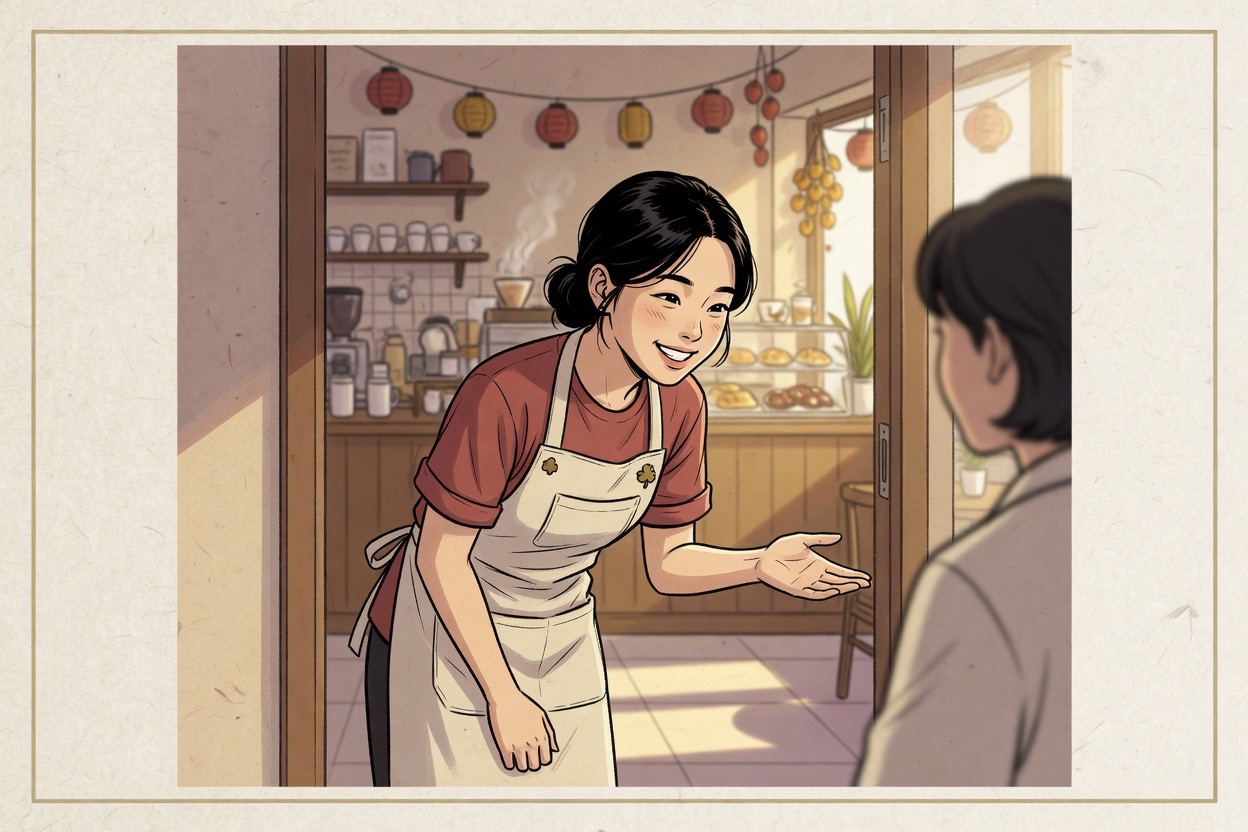
Hello in Korean is 안녕하세요 (안녕하세요, annyeonghaseyo, pronounced ahn-nyeong-ha-se-yo)—the standard polite greeting you can use with almost anyone, any time of day. The literal sense is close to “are you at peace?” which is why one word covers morning coffee, afternoon meetings, and late-night convenience-store small talk. English splits good morning / afternoon / evening; everyday Korean usually does not.
If you remember only one line for travel, work, or your first K-drama binge: say 안녕하세요, nod slightly, and smile. Everything else on this page—casual 안녕, formal 안녕하십니까, phone-only 여보세요—is register, not a second language.
Quick facts
| Hangul | 안녕하세요 |
| Romanization | annyeonghaseyo |
| Pronunciation | ahn-nyeong-ha-se-yo |
| Literal sense | roughly “are you at peace?” / “are you well?” |
| Register | polite (standard jondaemal) |
| Time of day | morning, afternoon, night—same form |
| Casual twin | 안녕 (annyeong) — friends & kids only |
| Formal twin | 안녕하십니까 (annyeonghasimnikka) |
| Phone only | 여보세요 (yeoboseyo) |
How do you say hello in Korean?
Search engines treat “hello in Korean” as one question. Real rooms treat it as a small status choice.
| Situation | Say | Register |
|---|---|---|
| Shop, café, coworker, stranger, teacher | 안녕하세요 | polite default |
| Close friend, sibling, same-age buddy | 안녕 | casual (banmal) |
| Announcer, military, very formal event | 안녕하십니까 | high formal |
| Answering the phone | 여보세요 | phone-only |
| First introduction (meeting someone new) | 처음 뵙겠습니다 / 반갑습니다 | polite first-meet |
When in doubt, default to 안녕하세요. Reading whether the room wants casual or stiff is nunchi—the same social radar that decides titles like oppa.
What does annyeonghaseyo mean?
안녕하세요 breaks down roughly as a polite question about whether the other person is at peace or well. You do not need a philosophy seminar to use it. You need the social fact:
- It is hello, not a medical check-in.
- It is safe with people older than you, people you just met, service staff, and anyone whose rank you have not mapped yet.
- It does not change with sunrise or sunset. You will not sound wrong saying 안녕하세요 at 10 p.m. the way “good morning” would at 10 p.m. in English.
Pronunciation guide: ahn-nyeong-ha-se-yo. Keep the syllables even; do not rush haseyo into mush. Online spellings like annyong haseyo show up in search—they are the same greeting with looser romanization.
Do
- Use 안녕하세요 as your default face-to-face hello.
- Pair it with a slight bow or nod (more below).
- Reply with the same form when someone greets you that way.
Don’t
- Swap in 안녕 for a shop clerk, professor, or client.
- Overthink “good afternoon Korean.” For ordinary days, 안녕하세요 is enough.
- Shout it like a catchphrase. Warm and clear beats theatrical.
Hello in Korean informal: 안녕
안녕 (안녕, annyeong) is the short, casual form. Same peace-root as 안녕하세요, minus the polite ending. It is banmal—the speech level of closeness.
Use 안녕 when:
- You are close friends, classmates who already dropped formality, or siblings.
- You are talking to young children (or they are talking to you).
- The other person already greets you with 안녕 and clearly wants that register.
Do not use 안녕 on strangers, elders you just met, or anyone whose name you still say with a title. Dropping to banmal without invitation is not “friendly”; it is status freelancing.
One more twist: 안녕 also means bye between people who already use banmal. Context does the work. Walking in: hello. Walking out: bye. Same two syllables.
Korean greetings at higher formality: 안녕하십니까
안녕하십니까 (안녕하십니까, annyeonghasimnikka) is the high-formal sibling of 안녕하세요. You will hear it from news anchors, military settings, ceremony hosts, and people performing maximum respect.
For most learners, this is a recognition word more than a daily tool. If you walk into a café and fire off 안녕하십니까, you will be understood—and you may also sound like you wandered out of a televised address. Save the heavy formal for rooms that already run on it. Everywhere else, 안녕하세요 is the grown-up default, not a compromise.
How to answer the phone in Korean: 여보세요
여보세요 (여보세요, yeoboseyo) is the Korean phone hello. Pick up the handset (or tap accept) and say it whether the number is saved or unknown.
Rules that keep you out of trouble:
- Phone only. Do not greet someone at a restaurant table with 여보세요 unless you are joking.
- Works cold. You do not need the caller’s name first.
- Tone matters. Flat and clear is professional; sing-song cute is for people who already share that vibe.
After 여보세요, the call becomes ordinary Korean: who is speaking, why they called, and which speech level fits the relationship.
The bow (and the handshake)
Greeting in Korean is not only mouth-work. Body language carries the register.
- Slight nod / small bow with 안녕하세요: everyday polite. Shoulders ease forward a little; eyes soft, not glued to the floor.
- Deeper bow: more respect—elders, formal thanks, serious first meetings. Match depth to the room; do not perform a full 90° theater bow for a convenience-store clerk.
- Handshakes with elders: when a handshake happens, many Koreans support the right forearm or use two hands as a respect signal. A one-handed pump without eye contact can feel abrupt.
You can speak perfect hangul and still feel off if your body stays rigidly “Western interview.” A small bow is cheap nunchi.
First meetings: 처음 뵙겠습니다 and 반갑습니다
When you are introduced—or introduce yourself—hello often expands:
- 처음 뵙겠습니다 (처음 뵙겠습니다, cheoeum boepgesseumnida) — “I meet you for the first time” / pleased to make your acquaintance. First-meeting formal-polite.
- 반갑습니다 (반갑습니다, bangapseumnida) — “nice to meet you” / “glad to meet you.” Warm, still polite.
You might hear both in sequence, or 안녕하세요 plus one of them, plus a name and a light bow. You do not need a monologue. Short, clear, and sincere beats a memorized paragraph.
Common replies (and “how are you?”)
Someone says 안녕하세요. What do you say back?
| They say | You can say | Note |
|---|---|---|
| 안녕하세요 | 안녕하세요 | Mirror the same form |
| 안녕 | 안녕 | Only if you share banmal |
| After a while apart | 잘 지냈어요? | “Have you been well?” — closest everyday “how are you?” |
| First meeting | 반갑습니다 | Nice to meet you |
잘 지냈어요? (잘 지냈어요?, jal jinaesseoyo?) is the polite-ish check-in friends and acquaintances use after time apart. It is not a demand for your medical history. A short 네, 잘 지냈어요 (“yes, I’ve been well”) is a complete answer. English small-talk length is optional, not required.
Text and chat greetings
On phones, greetings compress.
- ㅎㅇ — shorthand for “hi” (from 하이 / hi). Very casual chat.
- 안뇽 — cute / soft spelling play on 안녕. Friends and informal chats; not your boss’s email.
- Full 안녕하세요 still appears in group chats with mixed ages, class group chats with a teacher, and any thread that is not pure banmal.
If the chat already runs on stickers and ㅎㅇ, matching that energy is fine. If the thread includes your manager, spell like an adult.
Example dialogues
1. Café counter, polite default
Morning. Customer orders; barista greets first.
- Barista: 안녕하세요. 무엇을 드릴까요?
Annyeonghaseyo. Mueoseul deurilkkayo?
Hello. What can I get for you? - Customer: 안녕하세요. 아메리카노 한 잔 주세요.
Annyeonghaseyo. Amerikano han jan juseyo.
Hello. One Americano, please.
Gloss: Standard polite. Time of day does not change the hello.
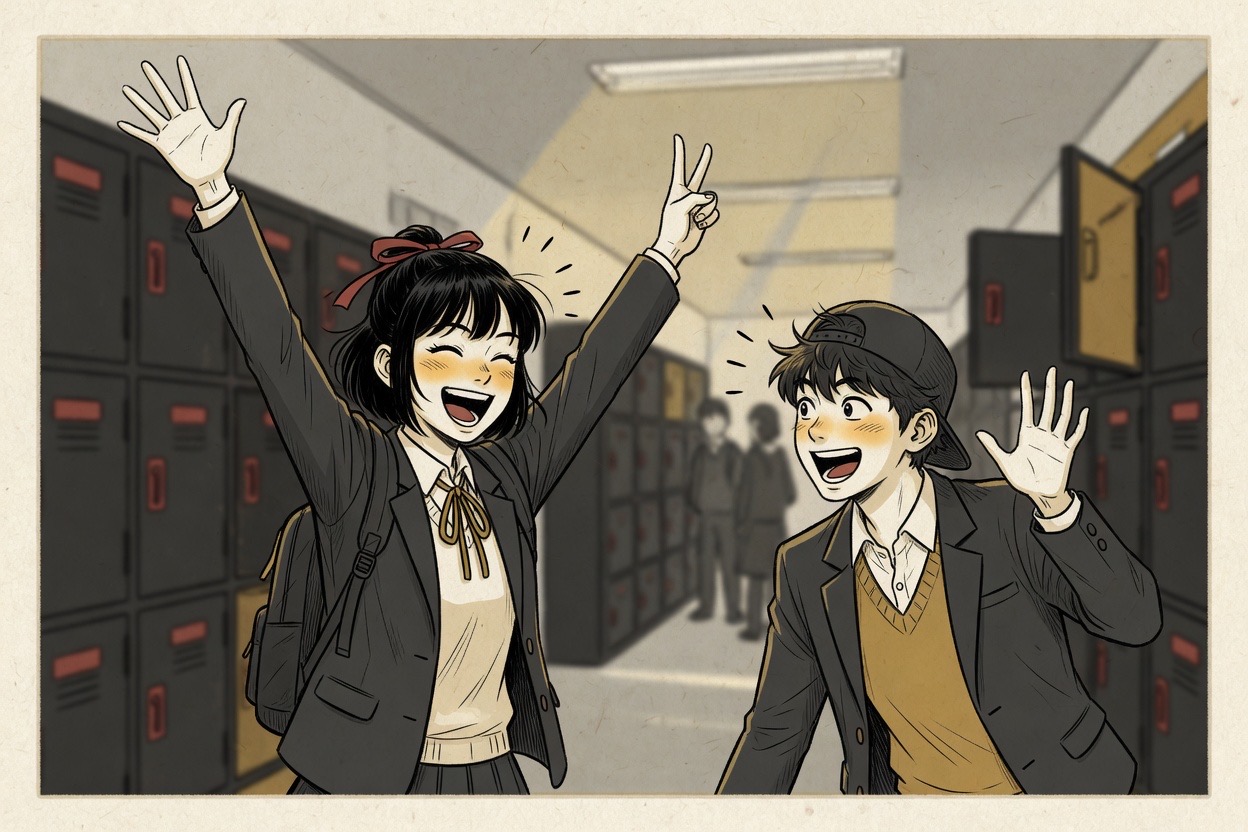
2. Friends in the hallway, casual 안녕
After last period. Two classmates who always use banmal.
- Sora: 안녕! 오늘 야자 해?
Annyeong! Oneul yaja hae?
Hey! Are you doing evening study hall today? - Hyejin: 안녕. 오늘은 빠져. 배고파 죽겠어.
Annyeong. Oneureun ppajyeo. Baegopa jukgesseo.
Hey. Skipping today. I’m starving.
Gloss: Short 안녕, zero strangers nearby. This is not the form for a teacher in the same hallway.
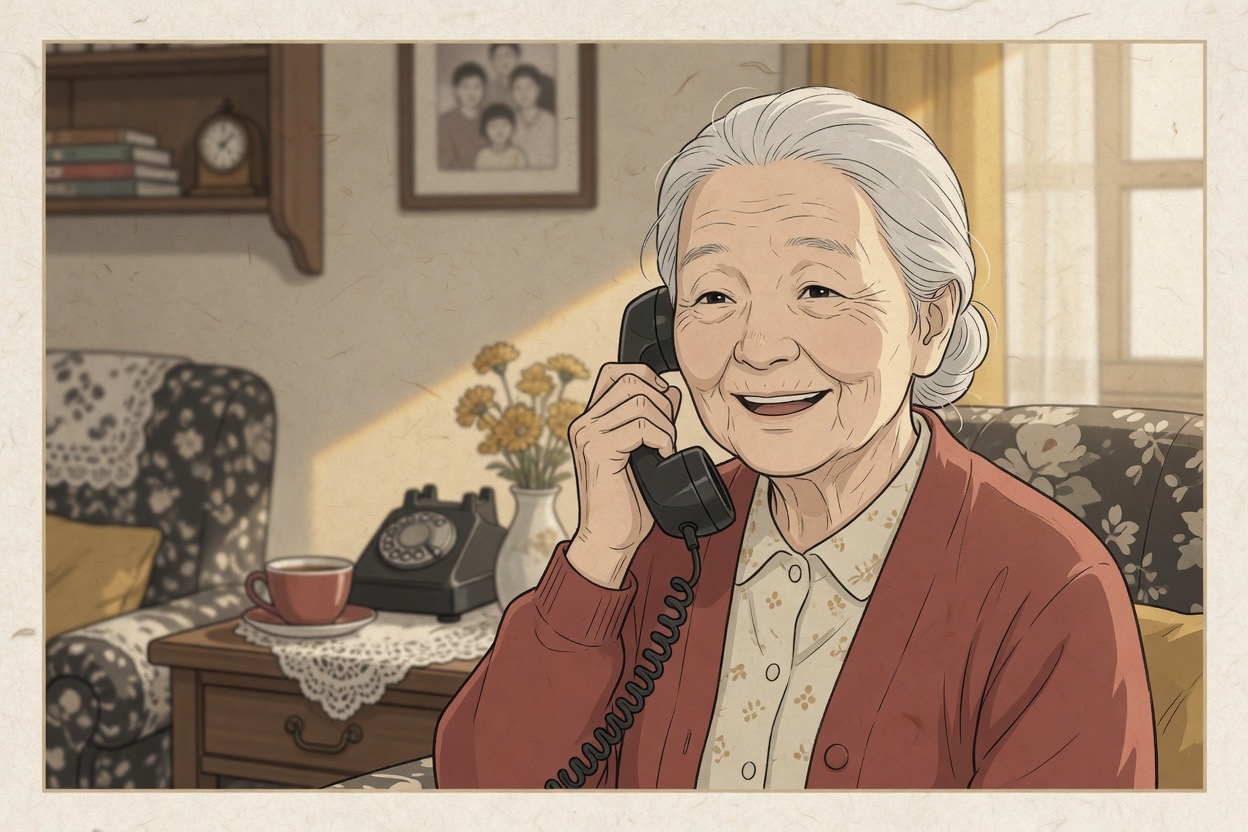
3. Phone call from family
Landline rings at home. Granddaughter picks up.
- Granddaughter: 여보세요?
Yeoboseyo?
Hello? - Grandmother: 아이고, 민지니? 할머니야.
Aigo, Minjini? Halmeoniya.
Oh, is that Minji? It’s Grandma. - Granddaughter: 네, 할머니. 안녕하세요!
Ne, halmeoni. Annyeonghaseyo!
Yes, Grandma. Hello!
Gloss: 여보세요 opens the channel; 안녕하세요 can still appear once the relationship is clear—especially toward elders.
Good nunchi / Zero nunchi
Good nunchi
You enter a Seoul café. The barista is roughly your age. You say 안녕하세요 with a small nod, order politely, and leave the casual 안녕 in your pocket. Nobody freezes. You did not “bond” by forcing banmal on a stranger whose job is to make your coffee.
Zero nunchi
Same café. You lean on the counter with a loud “안녕~!” because a phrasebook said informal is friendlier. The barista answers with stiff 안녕하세요 and a professional smile that does not reach the eyes. You meant warmth. The room heard a register mismatch.
Nearby ideas
- Banmal vs jondaemal — the speech-level system that decides 안녕 vs 안녕하세요
- Honorifics — titles and verb endings that travel with the greeting
- Oppa — another relationship label that only works when age, gender, and closeness line up
- Nunchi — reading whether this room wants 안녕, 안녕하세요, or silence first
A closing line
Korean hello is not a costume change for every hour on the clock. It is a register choice with one excellent default.
Start with 안녕하세요, keep 안녕 for people who already share your banmal, save 여보세요 for the phone—and let your nunchi decide when a deeper bow is the real second sentence.
FAQ
How do you say hello in Korean?
The default polite hello is 안녕하세요 (annyeonghaseyo). Use 안녕 (annyeong) only with close friends and kids, and 안녕하십니까 (annyeonghasimnikka) for highly formal settings.
What does annyeonghaseyo mean?
안녕하세요 literally asks something like “are you at peace?” It works as hello any time of day—Korean does not split good morning, good afternoon, and good evening the way English does.
How do you say hello in Korean informal?
Casual hello is 안녕 (annyeong)—banmal between close friends, siblings, and children. Do not use it on strangers, elders, or coworkers you just met.
What are the main Korean greetings?
Core set: 안녕하세요 (polite default), 안녕 (casual), 안녕하십니까 (formal), 여보세요 (phone only), plus first-meeting lines like 처음 뵙겠습니다 and 반갑습니다.
How do you answer the phone in Korean?
Pick up with 여보세요 (yeoboseyo). It is phone-only—not a face-to-face hello—and works whether you know the caller or not.
Do you have nunchi?
Get short Korean word lessons and social cues in your inbox.