Korean Texting Slang — ㅇㅇ, ㅋㅋ, ㄱㄱ & the Consonant Code
The KakaoTalk layer is a system—once you know the consonant rule, new replies stop looking like keyboard noise.
- Hangul
- 채팅 줄임말
- Romanization
- chaeting jurimmal
- Pronunciation
- che-ting ju-rim-mal
- Category
- Slang
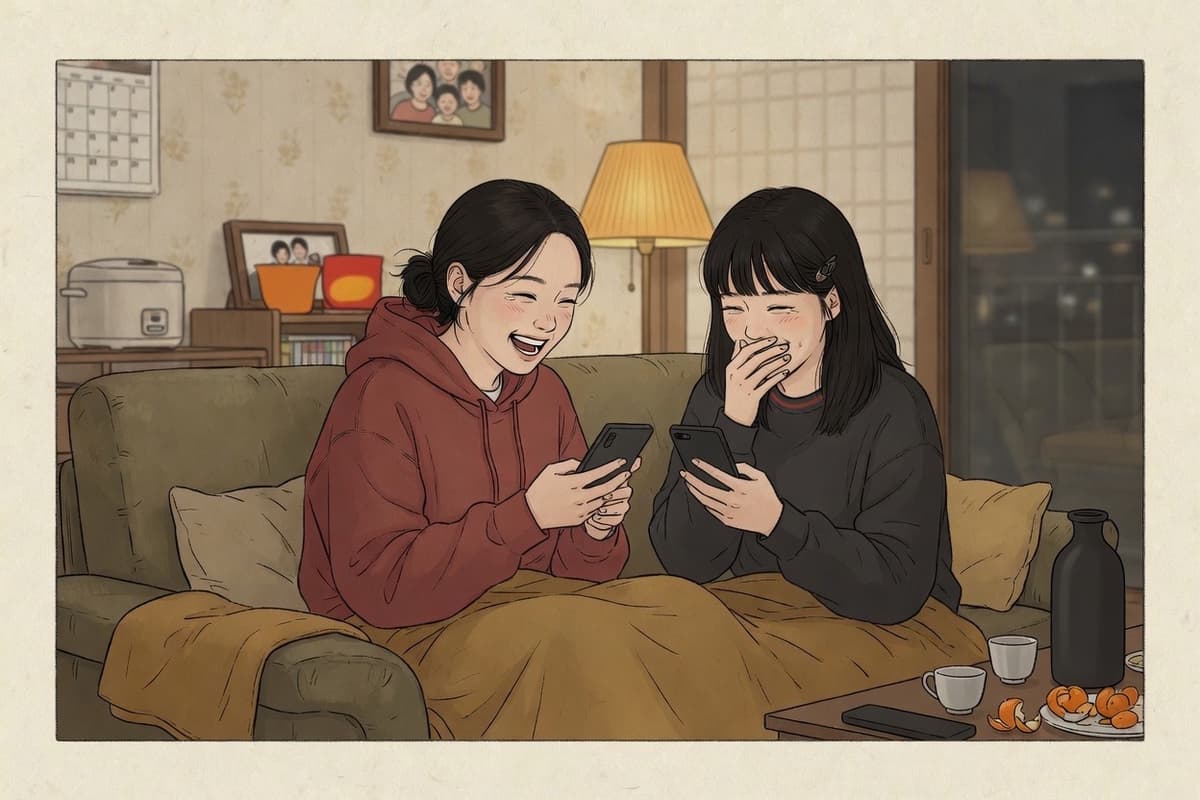
Korean texting slang is the shorthand layer Koreans use in KakaoTalk and other chats—consonant-only replies, laugh and cry shapes, and clipped polite expressions that keep thumbs fast on a hangul keyboard. You will see ㅇㅇ for yes, ㄴㄴ for no, ㄱㄱ for “let’s go,” ㅋㅋ for laughter, and ㅠㅠ for tears. One-sentence definition: Korean texting slang is a consonant-and-clip code for speed and tone, not a separate dialect of spoken Korean.
This page is a decoding system, not a scavenger list. Learn the initial-consonant rule once, and new abbreviations stay readable. Spoken memes and compound slang live on our Korean slang 2026 hub; here the focus is the chat-native layer—what people type when they are already mid-conversation.
Quick facts
| Hangul (topic) | 채팅 줄임말 |
| Romanization | chaeting jurimmal |
| Pronunciation | che-ting ju-rim-mal |
| What this hub covers | consonant-only replies, laugh/cry shapes, clipped thanks/sorry, KakaoTalk social rules, work register |
| What it is not | full spoken slang, honorific titles, or a complete emoji dictionary |
| Core rule | consonant-only forms take the first letter of each syllable |
| Register | friend and peer chat by default; full polite speech for seniors and formal rooms |
The rule that makes it decodable
If you only remember one thing, make it this:
Consonant-only Korean texting slang is built from the first consonant of each syllable in the full word or phrase.
Hangul syllables start with an initial consonant (or the silent placeholder ㅇ). Chat slang often keeps only that first piece of each syllable and drops the rest. That is why the forms look like keyboard scrap and still map cleanly once you know the source word.
| Chat form | Full word / phrase | First consonants | Meaning |
|---|---|---|---|
| ㅇㅇ | 응응 | ㅇ + ㅇ | yep / yeah / okay |
| ㄴㄴ | 노노 (from English “no-no”) | ㄴ + ㄴ | nope / nah |
| ㄱㄱ | 고고 (from English “go-go”) | ㄱ + ㄱ | let’s go / I’m in |
| ㅇㅈ | 인정 | ㅇ + ㅈ | fair / true / I concede |
| ㅊㅋ | 축하 (playfully 추카) | sound-based ㅊ + ㅋ | congrats |
| ㅅㄱ | 수고 | ㅅ + ㄱ | good work / thanks for the effort |
| ㄱㅅ | 감사 | ㄱ + ㅅ | thanks |
| ㅈㅅ | 죄송 | ㅈ + ㅅ | sorry |
| ㅂㅂ | 바이바이 | ㅂ + ㅂ | bye-bye |
How to parse a new one: guess the full word from context, then test the initial consonants. That solves forms such as ㄱㅅ and ㅇㅈ. If it does not fit, check for a playful sound spelling: ㅊㅋ maps to 축하 through 추카, not through the standard word's initials (ㅊㅎ). Context and convention finish the job.
Some forms are loanword doubles (ㄱㄱ, ㄴㄴ, ㅂㅂ) rather than pure Korean morphology, but the same “keep the useful consonant chunk” habit applies. The point is not linguistics homework—it is fast fingers plus shared context.
Consonant-only replies you will actually meet
These are the high-frequency particles of friend and peer chat.
| Form | Read as | Use it when… | Avoid it when… |
|---|---|---|---|
| ㅇㅇ | yep | quick agreement among friends | a senior asks a serious yes/no |
| ㄴㄴ | nope | soft refusal in banmal | declining a client, teacher, or elder |
| ㄱㄱ | go / I’m in | plans, games, “shall we leave?” | formal scheduling with higher-ups |
| ㅇㅈ | fair / true | someone made a point you accept | you still disagree and need a real sentence |
| ㅊㅋ | congrats | peer wins, birthdays, small victories | a formal congratulatory message to a boss |
| ㅅㄱ | good work | wrapping a shared task with peers | aiming “you worked hard” up the hierarchy without care |
| ㅎㅇ | hi | casual chat hello, from 하이 | a spoken hello; that job is hello in Korean |
| ㅎㅇ요 | hi + 요 | the same hello plus polite 요, still chat-only | a café, an elder, or any face-to-face 안녕하세요 |
ㅎㅇ is a casual chat “hi,” clipped from 하이. ㅎㅇ요 is the same plus polite 요—still not a face-to-face greeting. Spoken 안녕하세요 lives on hello in Korean; this page owns the consonant forms.
A single consonant reply often means “message received, low friction, we are close enough for shorthand.” It is not laziness by default. In the right chat it is fluency. In the wrong chat it is a register mismatch—the same class of mistake as using banmal before the room opens that door. For the broader speech-level map, see banmal vs jondaemal.
Laughing and crying: ㅋㅋ, ㅎㅎ, ㅠㅠ, ㅜㅜ
Korean chat treats laughter and tears as shape particles, not full sentences.
ㅋㅋ vs ㅎㅎ
| Form | Feel | Typical job |
|---|---|---|
| ㅋㅋ | default laugh | amusement, mild mockery, “I heard you,” social grease |
| ㅎㅎ | softer chuckle | lighter, sometimes politer or shyer amusement |
ㅋㅋ is the workhorse. You will see it after a joke, after bad news that needs cushioning, and after almost nothing at all—just a way to keep the thread warm. ㅎㅎ often lands gentler: less “I’m dying,” more “heh, soft smile.” Neither replaces a real answer when one is owed.
What the number of characters signals
Length is volume control:
- ㅋ — tiny snort, almost dry
- ㅋㅋ — normal laugh
- ㅋㅋㅋ / ㅋㅋㅋㅋ — bigger reaction
- a wall of ㅋㅋㅋㅋㅋㅋㅋㅋ — maximum theater (real hilarity, or performative chaos)
Same idea with tears:
- ㅠ or ㅜ — light distress
- ㅠㅠ / ㅜㅜ — standard “ugh / sad / overwhelmed”
- longer strings — more dramatic, still not always literal crying
ㅠㅠ and ㅜㅜ are letter shapes that look like eyes with tears. They cover sad news, cute frustration, apology face, and affectionate meltdown. Context decides whether someone is grieving or just late for the bus.
Escalation stack people actually use: plain statement → statement + ㅋㅋ → longer laugh → full paragraph when the joke needs words. The laugh particle is tone. The sentence is content. Do not confuse a flood of ㅋ with a real yes.
Clipped politeness: ㄱㅅ, ㅈㅅ, ㅂㅂ
Thanks, sorry, and bye get the consonant treatment too—especially among friends who already share how to say thank you in Korean as a full phrase in formal rooms.
| Clip | Full idea | Chat feel |
|---|---|---|
| ㄱㅅ | 감사 / thanks | quick gratitude between equals |
| ㅈㅅ | 죄송 / sorry | light apology for small friction |
| ㅂㅂ | 바이바이 / bye | casual exit; pairs with full goodbye forms offline |
You will also meet soft hybrids: ㄱㅅㄱㅅ, ㅈㅅㅈㅅ, or a consonant form plus a laugh. That is still peer code. For a shop, teacher, client, or first meeting, write the full polite line—감사합니다, 죄송합니다—not a two-keystroke stub.
Emphasis: 진짜루, tildes, and laugh stacks
Texting slang is not only abbreviations. Tone tools sit on top of ordinary Korean:
- 진짜 / 진짜루 — “really / for real,” with 진짜루 as a playful, elongated casual form
- ~~ — soft drag or trailing emphasis in some chats (playful stretch, not formal punctuation)
- ㅋㅋㅋㅋㅋ escalation — reaction volume, as above
- repeated letters or syllables in banmal — warmth or drama, not a new grammar chapter
These work because the base relationship is already casual. Stacking emphasis on a stiff polite sentence to a senior does not make you sound closer. It makes you sound like you mixed two modes.
KakaoTalk-native social words
Some vocabulary is less about keyboard compression and more about what the app made normal.
읽씹 — read and ignored
읽씹 (pronounced roughly ik-ssip) blends 읽다 (to read) and 씹다 (here, to ignore / blow off). It names the moment someone opens the message (or the app shows it as read) and does not reply. The sting is social, not technical: in KakaoTalk, the unread-count marker—usually the number 1—disappears and makes the silence visible.
안읽씹 — left on unread on purpose
안읽씹 (pronounced roughly an-ik-ssip) is the cousin: you do not open the chat so it never shows as read—avoiding both a reply and the guilt of an open-and-ignore. Related survival tactics include carefully managing unread markers or answering late with a soft ㅈㅅ and a reason.
카톡 as a verb
카톡 (Katok) is the everyday nickname for KakaoTalk. Koreans also use it as a verb-like shorthand: “I’ll Kakao you,” “Kakao me the address,” “Did you Katok them?” The app is the default channel the way many English speakers say “text me,” only more culturally central for coordinating real life.
Reading whether silence is busy, cold, or just deferred is pure nunchi—and texting makes that radar harder, because you cannot see the room, only the read mark.

When consonant slang is fine at work (and when it is not)
Workplace KakaoTalk and team chats are where foreigners and juniors most often misread the code.
Usually fine
- Same-generation teammates who already use banmal or soft peer speech
- After-hours plan logistics among equals: dinner, taxi, “ㄱㄱ?”
- Tiny status pings in an already informal thread: ㅇㅇ, ㄱㅅ, ㅅㄱ
Usually not fine
- Anything aimed up the hierarchy (team lead, executive, client, professor)
- First contact, interview follow-ups, external partners
- Bad news, conflict, money, HR, or anything that needs a clear paper trail
- Group chats where seniors are present and the default is still full sentences
Safe default at work: full polite Korean until the thread itself proves otherwise. If your manager writes complete sentences with 요 endings, do not answer with a naked ㅇㅇ. Mirror their density. If a peer starts with ㅋㅋ and ㄱㄱ, you can meet them there—still without dragging clients into the same register.
Titles and speech levels still apply in chat. A wall of consonant slang does not cancel Korean honorifics; it only compresses speech among people who already share the floor.

Example dialogues
1. Friends making plans — banmal + consonant code
Friday, 6:40 p.m. Same-age friends, already mid-thread.
- Minji: 지금 나와? 배고파.
Jigeum nawa? Baegopa.
Coming out now? I’m hungry. - Hyejin: ㅇㅇ ㄱㄱ. 나도 거의 끝났어.
Eung-eung go-go. Nado geoui kkeunnasseo.
Yep, let’s go. I’m almost done too. - Minji: ㅇㅋ. 역 앞에서 보자 ㅋㅋ
Okei. Yeok apeseo boja keukeu.
Okay. See you in front of the station lol.
Gloss: Pure peer banmal. ㅇㅇ + ㄱㄱ is agreement plus motion, not a formal RSVP.
2. Late reply among friends — light ㅈㅅ apology
Saturday morning. No crisis, just a delayed read.
- Joon: 어제 답장 늦어서 ㅈㅅ. 폰 놓고 잠듦.
Eoje dapjang neujeoseo joesong. Pon noko jamdeum.
Sorry for the late reply yesterday. Left my phone and passed out. - Sora: ㅋㅋ 괜찮아. 나 읽씹당한 줄 알았네.
Keukeu gwaenchana. Na ikssipdanghan jul aranne.
Haha, it’s fine. I thought I’d been left on read. - Joon: ㄴㄴ 그건 아니고. 오늘 몇 시 괜찮아?
No-no geugeon anigo. Oneul myeot si gwaenchana?
Nope, not that. What time works today?
Gloss: ㅈㅅ repairs small friction. 읽씹 names the social fear. ㄴㄴ clears it fast.
3. Peer work chat vs senior chat — register split
Same project, two threads.
Thread A — same-age teammate
- Teammate: 자료 보냈어. 확인만 해줘.
Jaryo bonaesseo. Hwaginman haejwo.
Sent the file. Just check it. - You: ㅇㅇ ㄱㅅ. 지금 볼게.
Eung-eung gamsa. Jigeum bolge.
Yep, thanks. Looking now.
Thread B — team lead (keep full polite speech)
- Team lead: 민지 씨, 자료 확인하셨어요?
Minji ssi, jaryo hwaginhasyeosseoyo?
Minji, did you check the file? - You: 네, 팀장님. 지금 확인했습니다.
Ne, timjangnim. Jigeum hwaginhaetseumnida.
Yes, team lead. I’ve checked it just now.
Gloss: The information is identical. The density and endings are not. Consonant slang stays in Thread A.

Good nunchi / Zero nunchi
Good nunchi
You join a Korean group chat of friends your age. People answer with ㅇㅇ, ㅋㅋ, and ㄱㄱ. You match their density, ask plans in short banmal, and save full polite paragraphs for your professor and your manager. When someone leaves you on read, you wait before assuming drama—and if you were the slow one, you send a light ㅈㅅ with a real reason.
Zero nunchi
Same week, you paste a wall of ㅋㅋㅋㅋ and ㅇㅇ ㄱㄱ into a first message to a client, then “ㅋㅋ” a senior’s serious deadline question. Later you accuse a busy friend of 읽씹 after twelve quiet minutes. The code was never the problem. The room was.
Do / Don’t
Do
- Learn the initial-consonant rule so new forms stay parseable.
- Treat ㅋㅋ / ㅎㅎ / ㅠㅠ as tone particles, not full answers.
- Mirror the thread: short with peers who go short; full polite with people who write full polite.
- Use 읽씹 vocabulary to understand feelings—not as a courtroom charge after every delay.
Don’t
- Send consonant-only replies to seniors, clients, or first contacts.
- Confuse a laugh stack with consent, agreement, or a plan.
- Drop spoken-only slang and chat code into the same bucket without checking register.
- Invent abbreviations you have never seen a real chat use—stick to high-frequency forms until you have live models.
Nearby ideas
- Korean slang 2026 — spoken memes, compound abbreviations, social labels beyond the keyboard layer
- Banmal vs jondaemal — the speech-level software that decides whether shorthand is warmth or disrespect
- How to say thank you in Korean — full forms when ㄱㅅ is too thin
- Nunchi — reading silence, density, and whether this chat wants speed or ceremony
- Hello in Korean — spoken 안녕하세요; this hub keeps ㅎㅇ / ㅎㅇ요
A closing line
Korean texting slang looks like broken keys until you see the machine: initial consonants, sound-based shortcuts, clipped politeness, laugh volume, and KakaoTalk social physics. Learn the patterns, match the room, and leave the full sentences for the people who still need them.
Do you have nunchi for a blue “read” mark? That is half the language.
FAQ
What is Korean texting slang?
Korean texting slang is the KakaoTalk-native shorthand layer—consonant-only replies (ㅇㅇ, ㄴㄴ, ㄱㄱ), laugh and cry shapes (ㅋㅋ, ㅠㅠ), and clipped thanks or sorry forms (ㄱㅅ, ㅈㅅ)—built so fingers stay fast on a hangul keyboard.
What does ㅇㅇ mean in Korean texting?
ㅇㅇ is a quick casual yes—short for 응응 (eung-eung), roughly “yep / yeah / okay.” ㄴㄴ is the matching casual no (노노).
What is the difference between ㅋㅋ and ㅎㅎ?
ㅋㅋ is the default laugh or amused reaction; length scales intensity. ㅎㅎ is a softer chuckle—lighter, sometimes politer or shyer. Neither is a full sentence.
How do you read consonant-only Korean slang?
Many forms keep the first consonant of each syllable: ㄱㅅ comes from 감사 (ㄱ + ㅅ), and ㅇㅈ from 인정. Others follow playful sound spellings: ㅊㅋ reflects 추카, a casual phonetic spelling of 축하. Context still matters.
Is Korean texting slang okay at work?
Only with same-generation peers who already chat casually. Skip consonant walls with seniors, clients, first contacts, and formal group chats—use full polite lines instead.
Sources
Primary and authoritative references used for definitions and context on this page.
- 2021 Korean Online Conversation Corpus Collection and Refinement Report — National Institute of Korean Language
- 2024 Context-Inference Corpus Research and Analysis — National Institute of Korean Language
Read next
Do you have nunchi?
Get short Korean word lessons and social cues in your inbox.