What Does “Nunchi” Mean in Korean?
The Korean superpower of noticing what nobody said out loud.
- Hangul
- 눈치
- Romanization
- nunchi
- Pronunciation
- noon-chee
- Category
- Culture
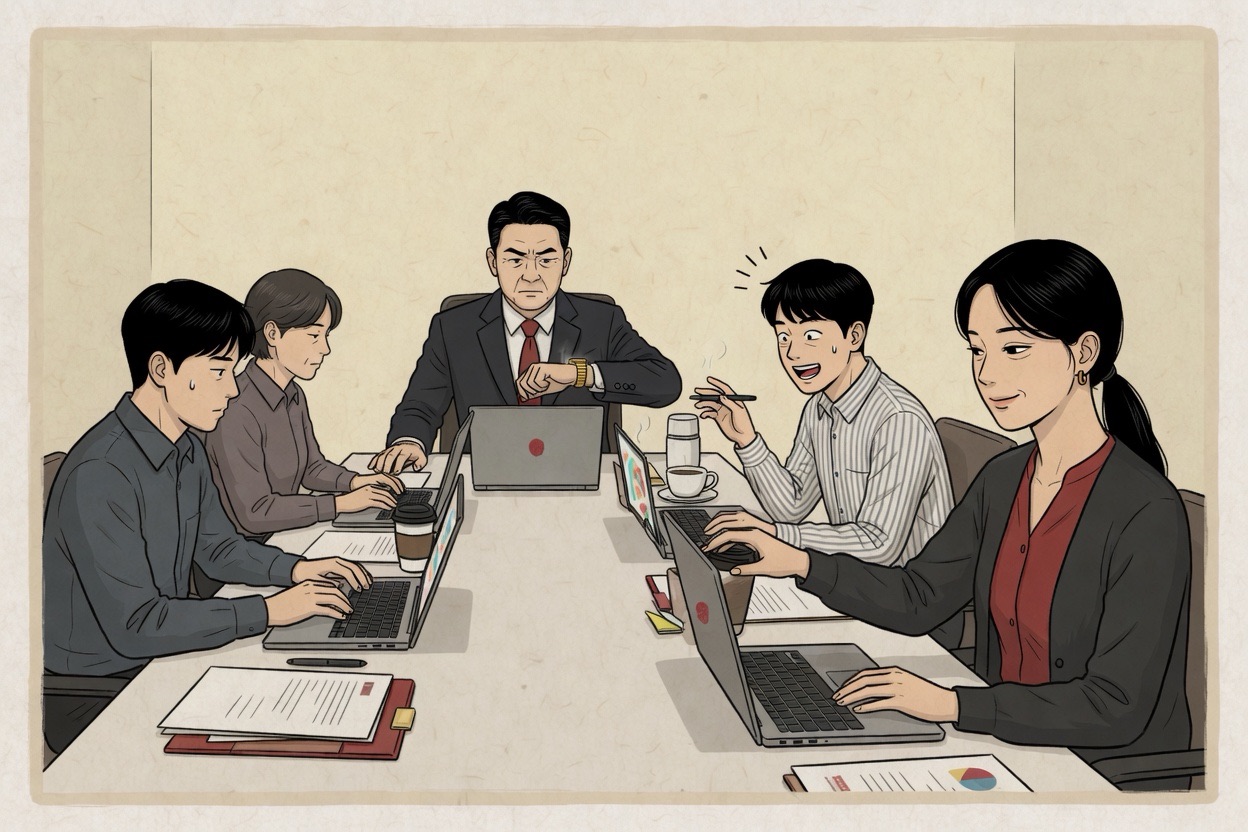
Nunchi (눈치, pronounced noon-chee) is a Korean social skill: the ability to read a room, sense someone’s mood, and respond appropriately—often without anyone spelling the rules out. If English reaches for “read the room,” “take a hint,” or “social radar,” Korean packs a lot of that into one everyday word.
It’s not mind-reading. It’s noticing the pause after a joke, the boss’s tight smile, the empty seat that isn’t actually free, and adjusting before things get awkward.
Quick facts
| Hangul | 눈치 |
| Romanization | nunchi (also noonchi) |
| Pronunciation | noon-chee |
| Literal sense | often glossed as “eye-measure” |
| Closest English | reading the room / social awareness / taking a hint |
| You’ll hear | have nunchi, no nunchi, quick nunchi |
When you’ll hear it
Koreans don’t save nunchi for philosophy class. It shows up in ordinary judgment calls:
- Someone keeps talking after the meeting clearly ended.
- A friend pays for dinner and you miss every chance to offer.
- You sit in the priority seat on a crowded subway while an older person stands nearby.
- A coworker’s “It’s fine” is very much not fine.
- You ask a blunt personal question in a room that wasn’t ready for it.
In those moments, people don’t always lecture. They might just mutter that someone 눈치가 없다—has no nunchi.
How to use it in English (and Korean)
Because English speakers already borrow the word, a few patterns are becoming natural:
| Pattern | Meaning | Korean cousin |
|---|---|---|
| have nunchi | socially sharp; reads the room | 눈치 있다 |
| no nunchi / lack nunchi | tone-deaf; misses cues | 눈치 없다 |
| quick nunchi | catches on fast | 눈치 빠르다 |
| get your nunchi sorted | learn to pay attention | context-dependent |
Useful Korean chunks:
- 눈치 좀 채라 — Take a hint. / Read the room.
- 눈치 보인다 — I feel watched / uncomfortable (social pressure).
- 눈치 채다 — to notice; to catch on.
Do
- Watch faces and pacing, not only words.
- Leave people an easy exit.
- Match formality to the room (age, rank, first meeting).
Don’t
- Confuse nunchi with people-pleasing forever. Good nunchi includes knowing when silence helps—and when a clear boundary is kinder.
- Assume every quiet room wants you to fill it.
- Treat hierarchy cues as “fake.” In many Korean settings, they’re the interface.
Example dialogues
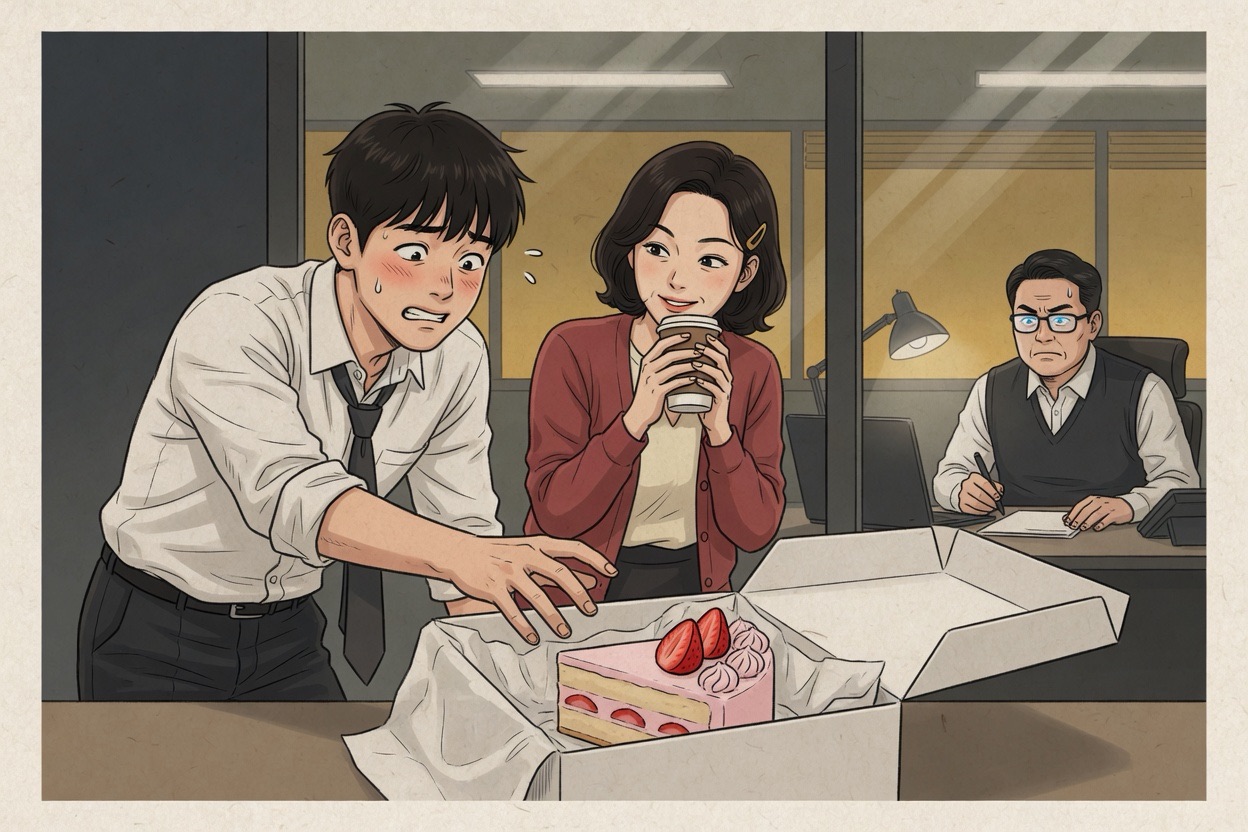
1. The leftover cake
Office pantry, 6:40 p.m. One slice left after a team celebration.
- A: 이거 누구 거예요? Is this anyone’s?
- B: 아마 다 같이 먹으라고 둔 걸 거예요… 근데 팀장님 아직 안 가셨거든요. It’s probably for everyone… but the team lead hasn’t left yet.
- A: 그러면 내일 아침에 다시 볼게요. Then I’ll check again tomorrow morning.
Gloss: Nobody wrote a rule on the cake box. B’s nunchi is about timing and rank, not sugar.
2. The group chat that went quiet
- A: Wait, did I say something weird? Everyone stopped replying.
- B: You asked about their salary in a 12-person chat. That’s… zero nunchi.
- A: I thought I was being open.
- B: Open is great. Public is different.
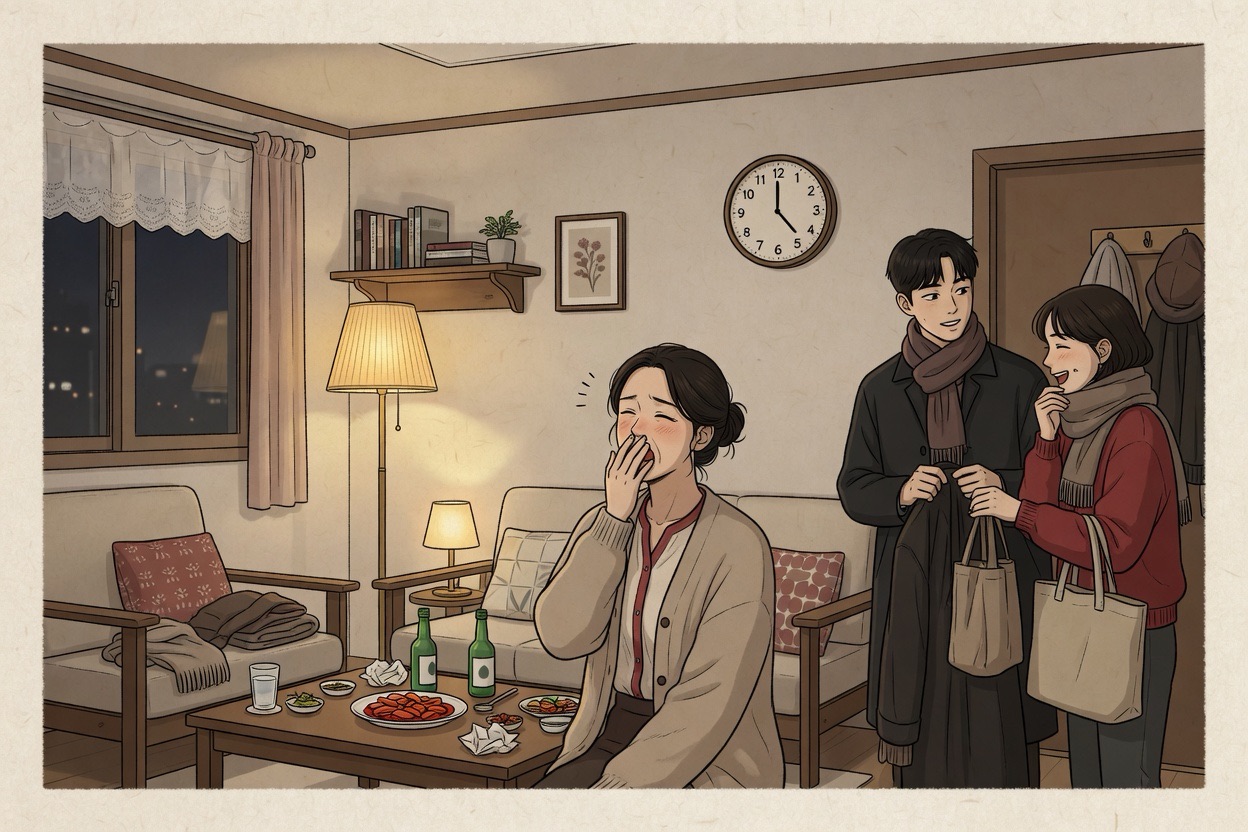
3. Quick nunchi, soft landing
- Host: 피곤하지 않아요? 내일 일찍 출근해야 하는데. Aren’t you tired? I have to be at work early tomorrow.
- Guest: 맞다, 저희도 이만 가볼게요. 오늘 정말 감사했어요. You’re right—we should head out too. Thank you so much for today.
Gloss: The host didn’t say “Please leave.” Quick nunchi hears the subtitles.
Good nunchi / Zero nunchi
Good nunchi
You notice a colleague was talked over in a meeting. Afterward you ping them privately: “You had a point about the timeline—want me to bring it back up tomorrow?” You didn’t perform allyship in public for credit; you repaired the room.
Zero nunchi
Same meeting. You loudly rehash their unfinished idea as your own, then joke about how quiet they are. Technically nobody “told you” not to. That’s the whole problem.
Is nunchi unique to Korea?
The feeling isn’t only Korean. Japanese has talk of “reading the air.” English has tact, EQ, and “know your audience.” What makes nunchi culturally loud is how often it’s named, taught, praised, and blamed in daily speech—and how tightly it can bind to hierarchy, group harmony, and high-context communication.
If you grew up in a culture that rewards directness first, Korean rooms can feel like a game with invisible DLC. Learning the word helps. Practicing the skill helps more.
Nearby ideas (for later on Have Nunchi)
- Jeong (정) — sticky affection and loyalty that builds over time
- Kibun (기분) — mood/face-feeling you don’t casually stomp on
- Banmal vs jondaemal — casual speech vs respectful speech levels
- Nunchi at work — hierarchy, after-hours dinners, and when “optional” isn’t
A closing line
Nunchi isn’t magic. It’s attention with manners.
If you can notice when the table goes quiet—and choose the next sentence carefully—you already have a little.
FAQ
How do you pronounce nunchi?
Roughly “noon-chee.” You’ll also see the older romanization “noonchi.”
Is nunchi the same as emotional intelligence?
They’re cousins. Emotional intelligence is broad; nunchi is sharper and more situational—especially about hierarchy, timing, and what not to say.
Can foreigners have nunchi?
Yes. Nunchi is a skill, not a blood type. Koreans talk about people who have it, lack it, or are still learning it.
What’s the opposite of nunchi?
눈치 없다 (nunchi eopda)—“to have no nunchi.” English speakers might say clueless, tone-deaf, or unable to take a hint.
Is nunchi only for work?
No. It shows up with family, friends, dating, group chats, and public spaces—anywhere unspoken rules matter.
Why is it called “eye-measure”?
The older form is tied to characters meaning eye and force/measure. You’re measuring the room with your eyes—and your timing.
Do you have nunchi?
Get short Korean word lessons and social cues in your inbox.