Do You Have Nunchi? What “Having Nunchi” Really Means
Quick nunchi is a compliment. Watching for approval is a different verb.
- Hangul
- 눈치
- Romanization
- nunchi
- Pronunciation
- noon-chee
- Category
- Culture
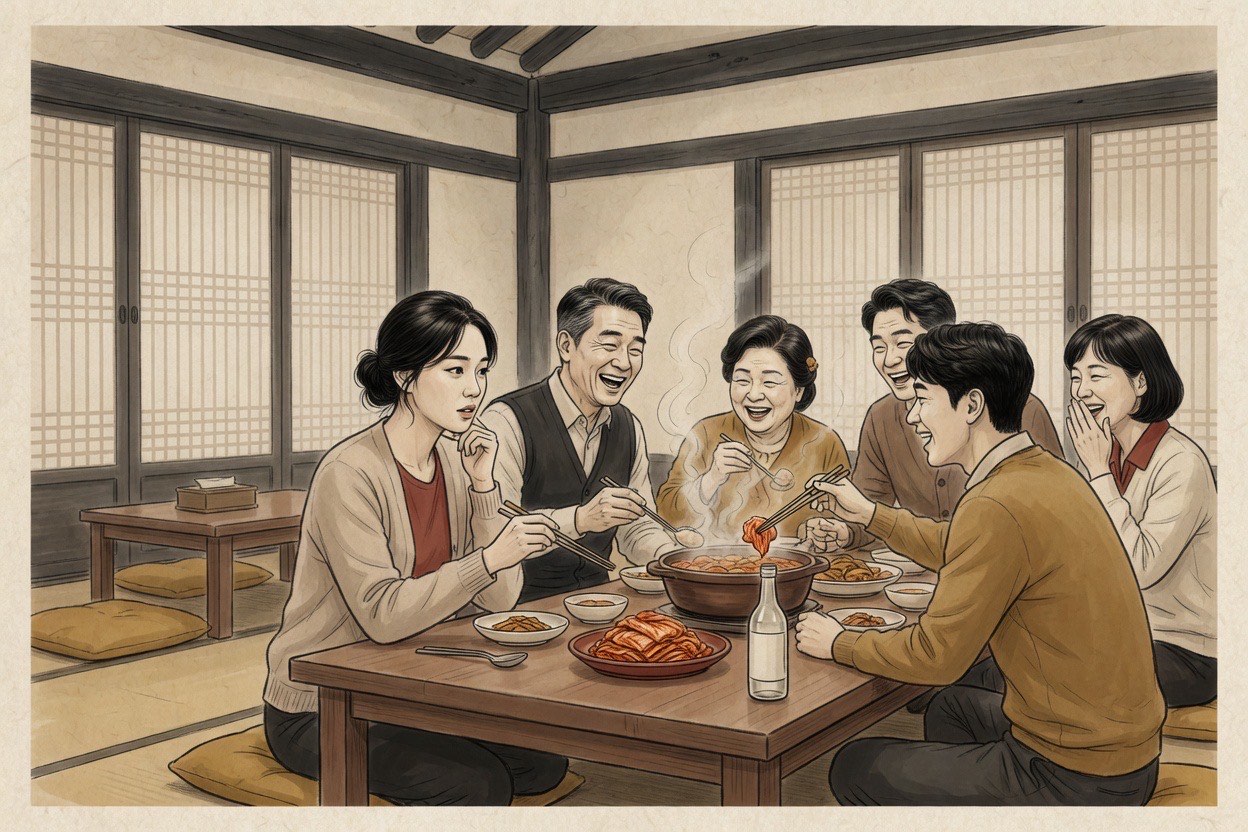
To have nunchi means people trust you to read a room and move at the right speed—without a script, a warning, or a post-mortem. In Korean, that praise is usually 눈치가 있다 or the stronger compliment 눈치가 빠르다: you notice mood, rank, and timing early, then act so nobody has to rescue the atmosphere. The opposite is 눈치가 없다—you miss the signal, keep talking, pour wrong, stay too long, or joke after the table already went cold.
For the basic sense of the word (also spelled noonchi once in older English), start with what nunchi means. The question here is practical and slightly judgmental: do you have it—and can you tell quick skill from anxious watching?
English collapses both into “reading the room.” Korean does not. The spine of this page is one root with two directions: 눈치가 빠르다 (praise) versus 눈치를 보다 (often a complaint about servile or nervous deference).
Quick facts
| Hangul | 눈치 |
| Romanization | nunchi |
| Pronunciation | noon-chee |
| Core judgment | have it / lack it / be quick with it / watch for it |
| English trap | treating “have nunchi” as pure people-pleasing |
| Skill vs fear | quick nunchi ≠ forever scanning for permission |
What “having nunchi” means in Korean speech
Koreans grade nunchi the way English speakers grade “good sense” or “social radar”—in ordinary talk, not philosophy seminars. The main patterns are short and sharp:
| Expression | Rough English | Feel |
|---|---|---|
| 눈치가 있다 | has nunchi | solid praise: socially awake |
| 눈치가 없다 | has no nunchi | complaint: tone-deaf, dense to cues |
| 눈치가 빠르다 | has quick nunchi | high praise: catches on early |
| 눈치를 보다 | watches / gauges nunchi | often anxious, careful, or deferential |
| 눈치 채다 | catches on; notices | neutral skill verb: you figured it out |
| 눈치 보이다 | feels socially watched | pressure on the speaker, not admiration |
Having nunchi is not a fixed personality type. The same person can show quick nunchi at work and still freeze at a partner’s family dinner. Practically: in this room, did you notice what mattered, and did your next move help?
That next move is where hierarchy and speech level enter. Korean honorifics explained maps titles and formality; nunchi is the live sensor that decides when that system should tighten or relax.
눈치가 빠르다 vs 눈치를 보다 — the page’s spine
This distinction is the part English coverage usually flattens—and the part that keeps foreigners from either self-flagellation or fake fluency.
눈치가 빠르다 — quick nunchi (praise)
When someone says you have quick nunchi, they mean you process social information fast:
- You hear the real sentence under the polite one.
- You stop a joke one beat early.
- You pour, leave, speak up, or stay quiet before the senior has to telegraph harder.
It is competence. It feels light from the outside: the person with quick nunchi makes rooms run smoother without looking like a courtier. Praise often sounds like:
- 눈치가 진짜 빠르다 — Their nunchi is seriously quick.
- 그 사람은 눈치가 좋아 — That person has good nunchi.
Quick nunchi can include not doing something: not finishing the last dish, not correcting a boss in front of clients, not asking a personal question after the group chat went quiet.
눈치를 보다 — watching nunchi (often heavy)
눈치를 보다 uses the same root but shifts the camera. You are not primarily praised for speed; you are described as watching faces and rank for permission. Context decides whether it is mild caution or exhausting deference:
- Soft / practical: checking the boss’s mood before pitching a risky idea.
- Heavy / critical: living so carefully that your own needs never surface.
- Interpersonal pressure: “Why are you always watching my nunchi?” can mean stop walking on eggshells around me or stop performing obedience instead of talking.
Related complaints Koreans use about the burden side:
- 눈치 보게 만들지 마 — Don’t make me have to watch for cues / don’t put me in that careful position.
- 눈치 보느라 말을 못 했어 — I couldn’t speak because I was watching the room’s mood.
Same root, opposite feel
| 눈치가 빠르다 | 눈치를 보다 | |
|---|---|---|
| Typical judgment | compliment | neutral to complaint |
| Energy | alert, competent | cautious, sometimes servile |
| Goal | make the situation work | avoid friction / get approval |
| English collapse | “reads the room well” | also “reads the room” — wrong |
| Healthy version | social intelligence | temporary caution |
| Unhealthy version | (rarely the problem) | chronic self-erasure |
Do you have nunchi? in Korean social life often means: can you do the first column without living forever in the second?
Where nunchi gets measured (real rooms, not quizzes)
Nobody hands you a certificate. People notice you in moments that already have invisible scripts.
Who pours first
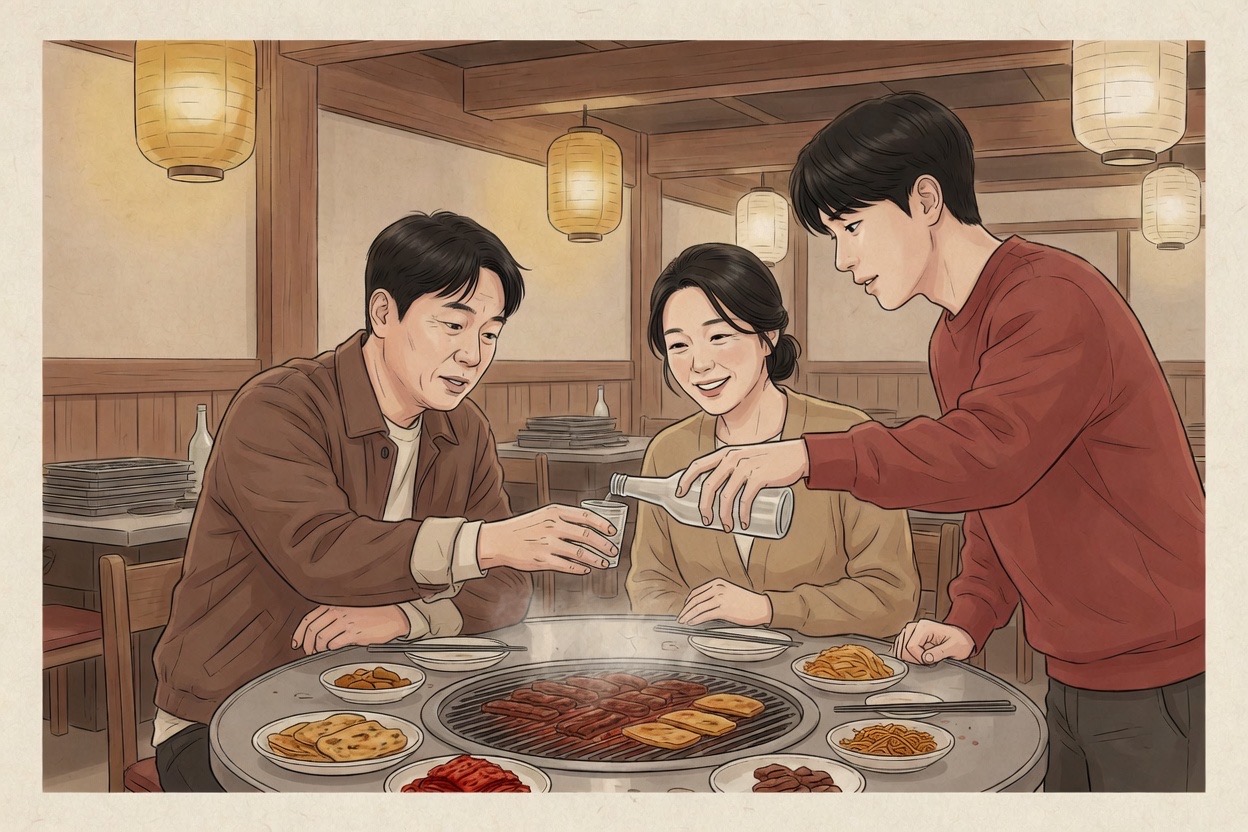
At a Korean drinking table, juniors often pour for seniors; empty glasses get refilled before anyone has to ask; two-handed etiquette and modest receiving still signal respect. The person with nunchi reaches for the bottle at the right second. The person without nunchi waits to be told, pours for themselves first, or keeps a senior’s glass dry while chatting.
This is not only alcohol theater. It is timing + rank awareness—the same muscles used when the maknae on a team quietly handles logistics without turning chores into a martyr act.
When to leave
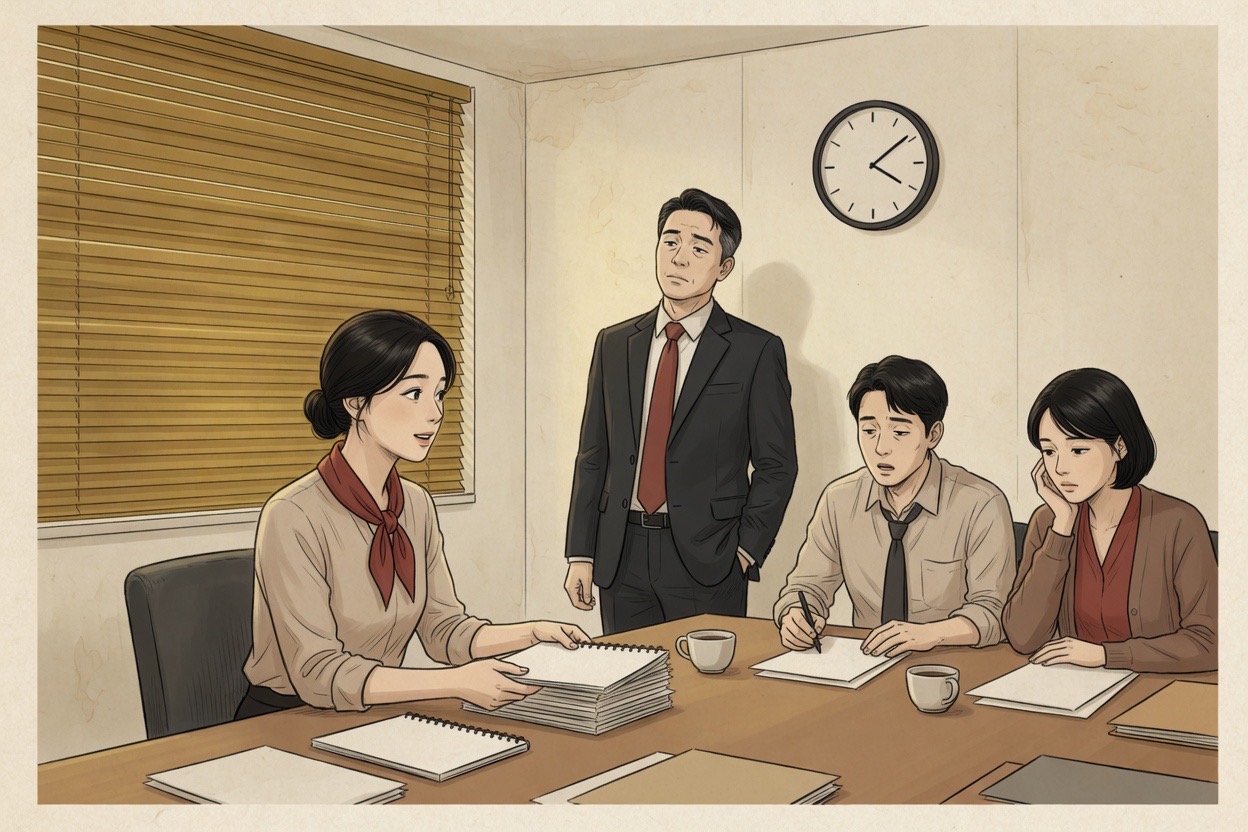
Hosts rarely say “Please go home now.” They glance at the clock, mention tomorrow’s early start, stifle a yawn, or let the conversation thin. Quick nunchi stands up first with warmth. Zero nunchi starts a new story arc at 11:40 p.m.
When “anything is fine” is not fine
A boss, parent, or senior friend says 아무거나 괜찮아—anything is fine. Sometimes they mean it. Often they mean I do not want to decide on the record, but I still have preferences, and you should already know the safe range. Having nunchi here means reading history: last three lunches, the frown at spicy food, the way they said “anything” too fast.
When a joke has landed wrong
The laugh is half a beat late. Two people exchange a micro-look. Someone changes the subject with too much energy. Quick nunchi stops digging. Zero nunchi repeats the punchline louder “because they didn’t get it.”
Priority seating, who speaks first, whether the after-work dinner is optional only on paper—same test. Korean age and rank still shape many rooms even when a company says it is “flat.” You do not need to worship hierarchy; you do need to see it before you ignore it.
How a foreigner actually builds nunchi
You will miss cues. That is normal. Nunchi is not a blood type; it is reps.
1. Watch the second-most-senior person
The highest-status person is often the center. The second-most-senior is often the translator of the room—they model how hard to laugh, when to stop eating, when the meeting is over, how formal to stay. Copy their pace before you invent your own.
2. Count the pauses
Korean rooms use silence as information. A pause after your question may mean “too direct,” “not for this group,” or “the answer is no but we will not say no.” Do not fill every gap with more English enthusiasm. Wait one extra beat; see who speaks.
3. Notice who stops eating first
At shared tables, the senior’s chopsticks often set the tempo. When they slow down or set utensils down, the social meal is winding up even if food remains. Finishing aggressively while everyone else has soft-closed the meal is a classic zero-nunchi look.
4. Track “optional” events—and soft nos
If the team lead is going, “optional” may still be graded. Decline with care instead of vanishing mid-thread. Phrases like “It might be difficult,” “Next time,” or a long inhale often are the answer. Pushing for a courtroom yes/no can feel honest in English and blunt in the wrong Korean room.
5. Separate skill from performance
Building nunchi is watching patterns. Performing nunchi is overacting humility—endless self-blame, never stating a preference. Outsiders sometimes overcorrect into permanent 눈치를 보다 mode. Aim for the compliment form: awake, not erased.
When nunchi becomes a burden
Koreans are not only proud of nunchi; many are tired of living inside it.
People talk about 눈치 문화—a culture of constant social measurement—when:
- workplaces punish honest disagreement as “no nunchi”
- juniors self-censor until burnout
- partners stop saying what they want because conflict feels like moral failure
- every group meal becomes a scoreboard of who paid, who poured, who left first
The unhealthy extreme of “having nunchi” is not wisdom. It is preemptive self-minimizing. You scan so hard that you never bring a real opinion. You confuse harmony with silence. You call fear professionalism.
Healthy nunchi includes knowing when a clear boundary is kinder than a soft performance. Leaving a toxic dinner early with a clean excuse can be better nunchi than staying three hours to “read the room” while resenting everyone. The skill is situational ethics, not infinite absorption of other people’s moods.
Drama heroes praised for nunchi often never rest. Real rooms need awareness and recovery.
Example dialogues
1. Quick nunchi at the end of a meeting
Conference room, 5:55 p.m. The manager has checked the wall clock twice.
- Manager: 오늘은 여기까지 할까요? 내일 오전에 이어서 하죠.
Oneureun yeogikkaji halkkayo? Naeil ojeone ieoseo hajyo.
Shall we stop here for today? Let’s continue tomorrow morning. - Junior (quick): 네, 팀장님. 정리해서 공유드리겠습니다.
Ne, timjangnim. Jeongnihaeseo gongyudeurigetsseumnida.
Yes, team lead. I’ll organize the notes and share them. - Junior (zero, in another timeline): 아, 근데 저 아이디어 하나만 더 말씀드려도 될까요? 조금 긴데요.
A, geunde jeo aideo hanaman deo malsseumdeuryeodo doelkkayo? Jogeum gindeyo.
Oh, but could I share just one more idea? It’s a bit long.
Gloss: Polite workplace speech. The first junior heard “we’re done.” The second treated the closing line as a commercial break.
2. Pouring without being asked
Korean barbecue, three coworkers. Senior’s glass is nearly empty; junior notices first.
- Junior: 팀장님, 잔 비셨네요. 제가 따르겠습니다.
Timjangnim, jan bisyeotneyo. Jega ttareugetsseumnida.
Team lead, your glass is empty. I’ll pour. - Senior: 아이고, 고마워. 너는 편하게 먹어.
Aigo, gomawo. Neoneun pyeonhage meogeo.
Oh, thanks. You just eat comfortably. - Peer (aside, later): 민수 눈치 진짜 빠르다.
Minsu nunchi jinjja ppareuda.
Minsu’s nunchi is seriously quick.
Gloss: The senior’s “eat comfortably” is warmth, not an order to stop helping. Peers encode the compliment as 빠르다, not “good servant.”
3. 눈치를 보다 as anxious weight
Two friends after a group dinner. One friend barely spoke all night.
- A: 오늘 왜 그렇게 조용했어?
Oneul wae geureoke joyonghaesseo?
Why were you so quiet today? - B: 형들 눈치 보느라… 말 꺼내기가 좀 그랬어.
Hyeongdeul nunchi boneura… mal kkeonaegiga jom geuraesseo.
I was watching the hyungs’ mood… it felt hard to bring anything up. - A: 야, 친구들 사이에서 그렇게까지 눈치 볼 필요 없어.
Ya, chingudeul saieseo geureokekkaji nunchi bol piryo eopseo.
Hey, you don’t need to watch nunchi that hard among friends.
Gloss: Banmal between close friends. Here 눈치 보다 is not praise; A is pushing B out of anxious deference.
4. The soft no at lunch planning
Office kitchen, noon.
- Coworker: 점심 뭐 먹을까요? 아무거나 괜찮아요.
Jeomsim mwo meogeulkkayo? Amugeona gwaenchanayo.
What should we eat for lunch? Anything’s fine. - You (good): 지난번에 순두부 좋아하셨잖아요. 그쪽으로 갈까요?
Jinanbeone sundubu joahasyeotjanayo. Geujjogeuro galkkayo?
You liked the soft tofu stew last time. Want to go that way? - You (zero): 정말 아무거나요? 그럼 제가 제일 먹고 싶은 거 고를게요.
Jeongmal amugeonayo? Geureom jega jeil meokgo sipeun geo goreulgeyo.
Truly anything? Then I’ll pick what I want most.
Gloss: “Anything” was an invitation to share the cognitive load, not a blank check for your personal ranking.
Good nunchi / Zero nunchi
Good nunchi
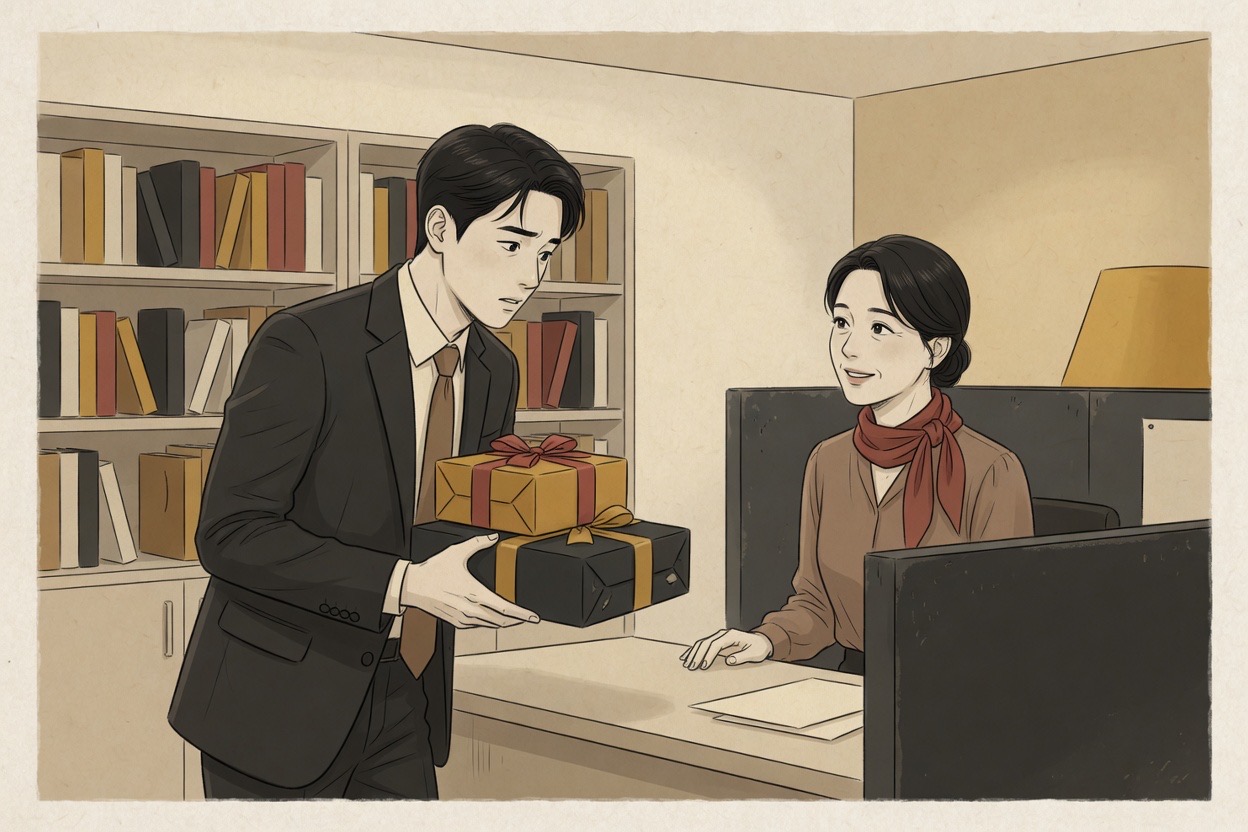
You are the foreigner at a team dinner. You notice the second-most-senior stop eating and stack their chopsticks. You thank the host, offer a clean exit line, and stand when others stand. Later a colleague says your nunchi is fast—not because you performed Korean-ness, but because you did not make anyone manage you.
Zero nunchi
Same dinner. You keep ordering more rounds after the lead has paid the mental bill for leaving. You retell a joke that already died once. You ask the quietest junior, in front of everyone, why they never speak up. Nobody scolds you. The table just becomes careful around you for the rest of the quarter.
Do / Don’t
Do
- Treat having nunchi as skill + timing, not as permanent self-erasure.
- Learn the praise path (눈치가 빠르다) separately from the anxiety path (눈치를 보다).
- Practice with concrete drills: pour timing, exit timing, soft nos, joke aftershocks.
- Use hierarchy as information—especially age and role—without turning it into a costume.
- Build a small feedback loop: one trusted Korean friend who will say “that was late” without humiliating you.
Don’t
- Translate every Korean silence into “they hate me.”
- Confuse over-apologizing with good nunchi.
- Force kinship titles or banmal to look fluent; wrong warmth is still zero nunchi.
- Assume “anything is fine” means your preference wins by default.
- Stay trapped in permanent cue-watching until you never state a need.
Nearby ideas
- What does nunchi mean? — the definition page: room-reading as a word, not only as a judgment
- Korean honorifics explained — titles and speech levels that nunchi has to steer
- Maknae — youngest-in-group role where logistics and cue-reading often land together
- Korean age system — why “who is older” still shapes many first meetings
- Kibun (기분) — the mood/face-feeling you try not to stomp when you misread a room
A closing line
Do you have nunchi? is less a yes/no exam than a tempo check: can you notice early, act lightly, and still keep a self?
Quick nunchi is a compliment. Anxious watching is a different verb. Learn both names, practice the first, and refuse to confuse the second with virtue.
FAQ
What does it mean to have nunchi?
To have nunchi (눈치가 있다) means you notice mood, hierarchy, and timing without needing a lecture—and you adjust before the room has to correct you. It is a skill judgment, not a personality brand.
What is the difference between 눈치가 빠르다 and 눈치를 보다?
눈치가 빠르다 (quick nunchi) praises someone who catches social cues fast. 눈치를 보다 (to watch nunchi) often means anxiously tracking approval or rank—same root, opposite emotional feel.
Can a foreigner have nunchi in Korea?
Yes. Nunchi is practiced, not inherited. Outsiders start behind on local codes, but watching pauses, rank, and who moves first is learnable in real rooms.
How do Koreans judge whether someone has nunchi?
In concrete moments—who pours first, when to leave, when “anything is fine” is not fine, when a joke lands wrong. People rarely grade you on a quiz; they notice whether you made the room easier or heavier.
When does having nunchi become a problem?
When constant scanning turns into self-erasure. Koreans themselves complain about exhausting 눈치 문화—always measuring others before saying a plain need.
Do you have nunchi?
Get short Korean word lessons and social cues in your inbox.