Zero Nunchi Moments — When You Miss the Signal Everyone Else Caught
Funny, recoverable, and almost never about being a bad person.
- Hangul
- 눈치 없다
- Romanization
- nunchi eopda
- Pronunciation
- noon-chee uhp-da
- Category
- Etiquette
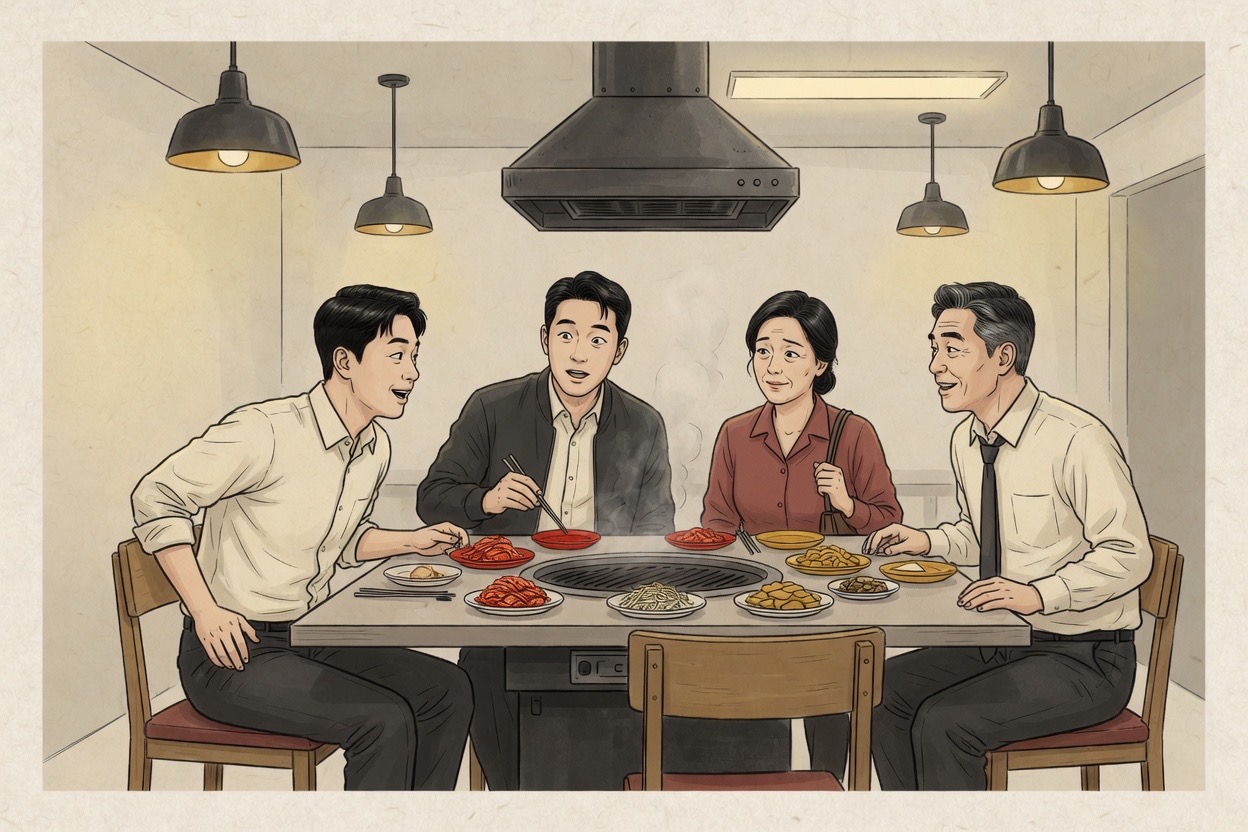
Nunchi (눈치) is the skill of reading a room—mood, rank, timing—and adjusting before anyone has to explain. A zero-nunchi moment is when someone misses a signal everyone else already caught: the empty seat that isn’t free, the joke that already died, the glass that needed pouring before yours. For the base word, start with what nunchi means. This page is the field guide—concrete scenes, not a personality quiz.
One-sentence version: zero nunchi is not a fixed trait; it is a missed observation in a specific moment. Most of those misses come from people trying to be considerate by their rules. The room still flinches. The kindness is still real. The fix is learnable.
Quick facts
| Hangul | 눈치 없다 |
| Romanization | nunchi eopda |
| Pronunciation | noon-chee uhp-da |
| Also spelled | noonchi (older English) |
| Closest English | tone-deaf moment / missed the room |
| Core idea | missed signal, not bad character |
| Related | have nunchi?, workplace nunchi |
The misconception worth killing first
People treat nunchi like blood type: you either have it or you don’t. That framing is wrong, and it is also unhelpful. Nunchi is watching observable signals—who sits where, who speaks next, whose glass is empty, whether the group chat already moved on—and adjusting. Signals can be practiced. Koreans practice them for decades and still fumble.
The second correction is just as important: zero nunchi is not the same as being rude. Rude is intentional disregard. Zero nunchi is often someone being generous, efficient, or friendly by another culture’s map—splitting the bill carefully, answering a greeting literally, taking the “good” seat first. The intention is warm. The room still notices the miss.
Eight zero-nunchi moments (and what to do instead)
Each one follows the same shape: situation → what happened → what the room saw → the better move.
1. The seat furthest from the door
Situation: Company dinner. The table is filling. You grab the “nice” seat deep inside, far from the door.
What you did: Took the senior-looking spot because it looked comfortable.
What everyone else noticed: The seat nearest the door is often the junior’s—easier to fetch things, stand for the next bottle, run small errands. You parked in hierarchy without meaning to.
Instead: Hover half a second. Sit where people of your rough rank sit. If someone waves you deeper into the table, follow their hand, not your comfort map.
2. Spoon before the senior
Situation: Food arrives. You are hungry. You start eating.
What you did: Lifted your spoon while the oldest person at the table still had both hands free.
What everyone else noticed: A beat of silence. Eyes flicked to the senior’s untouched utensils. Nobody wanted to start the meal without them.
Instead: Wait until the most senior person lifts a spoon or chopsticks—or until they clearly say 드세요 / “Please eat.” One second of patience is cheaper than a whole table performing recovery.
3. Your glass first, elder’s empty
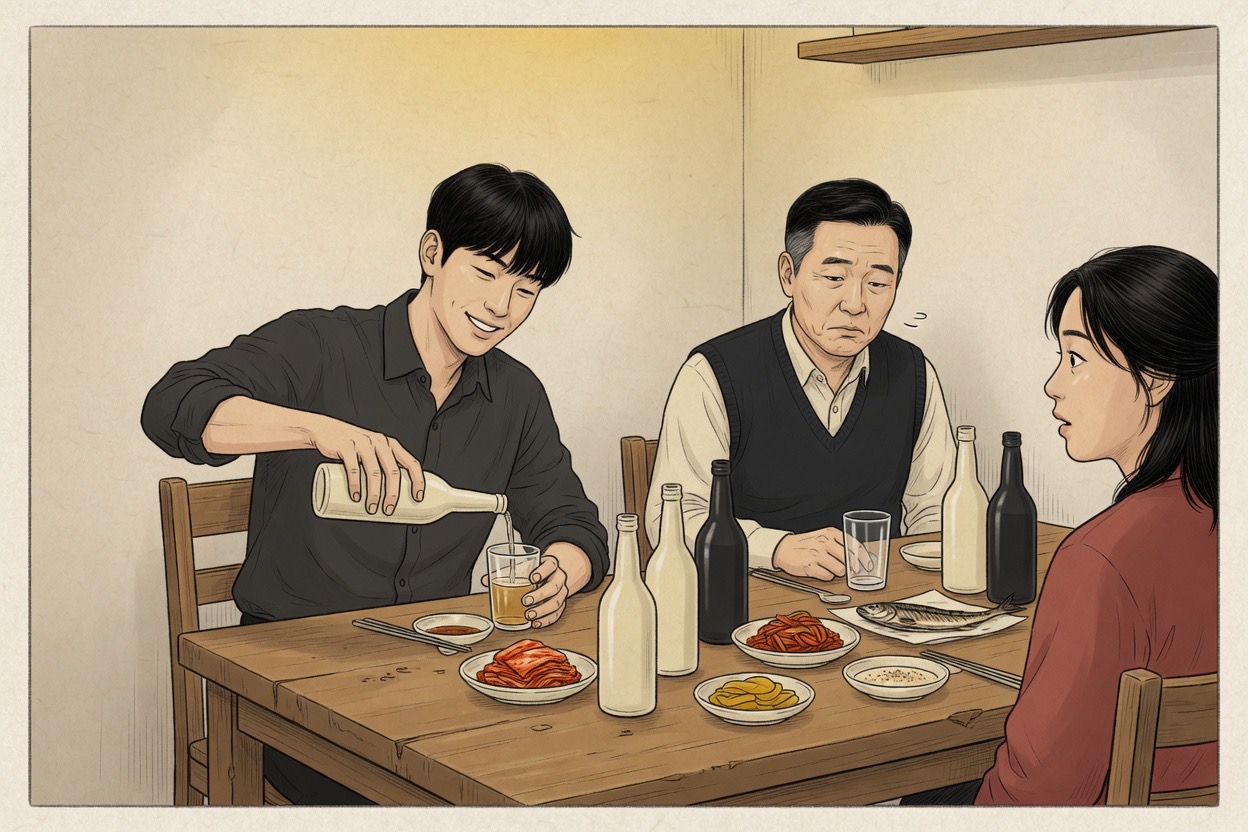
Situation: Soju or beer mid-table. Your glass is low. You refill yourself.
What you did: Self-service while an older person’s glass sat empty beside you.
What everyone else noticed: You treated the bottle like a personal resource, not a shared care tool. In many rooms, juniors pour for seniors first—see how to say cheers in Korean for the toast choreography around that habit.
Instead: Scan empty glasses near elders before your own. Offer once. Accept a pour with two hands if that is what the table is doing. Then refill yourself without a speech.
4. “Did you eat?” as a yes-or-no quiz
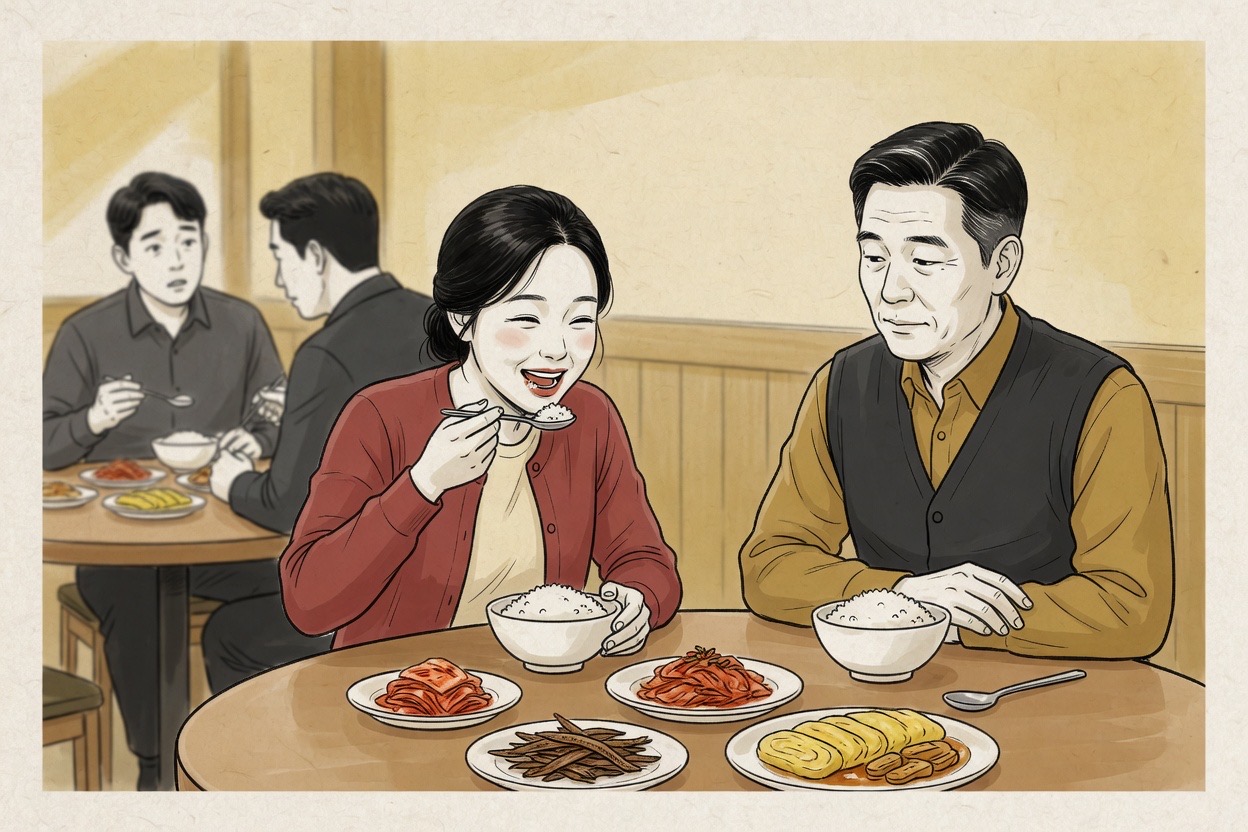
Situation: A coworker greets you with 밥 먹었어? — “Did you eat?”
What you did: Answered with a precise timeline: “Yes, at 12:40, a sandwich, not very good.”
What everyone else noticed: A small awkward pause. That line is often a greeting, not a nutrition survey—cousin energy to hello in Korean, not a food log request.
Instead: Light reciprocal warmth: 네, 먹었어요. 오늘 바쁘시죠? — Yes, I ate. Busy day? Match the social temperature, not the literal question.
5. The group chat that already moved on
Situation: Slack or KakaoTalk. Three topics ago, someone asked a soft question. The chat is now about Friday dinner.
What you did: Dropped a six-paragraph answer to the old question, @everyone, no summary.
What everyone else noticed: You rewound the room without reading the scroll. The energy died. People mute notifications.
Instead: Read the last ten messages. If the thread moved, open a new message or reply under the original with a short lead-in: “Late on this—quick answer: …”
6. Still sitting when the table stands
Situation: Dinner is done. Jackets appear. People push chairs back.
What you did: Stayed mid-story in your seat, phone out, finishing a point nobody asked for.
What everyone else noticed: The exit wave started without you. Standing is the signal. Sitting through it forces people to wait or abandon you politely.
Instead: When half the table stands, stand. Finish the story while walking to the door, or save it for the subway ride home.
7. Banmal on first contact
Situation: New acquaintance, similar age, friendly vibe. You switch to casual speech immediately because English friendship feels flat without it.
What you did: Used 반말 with someone who never offered it.
What everyone else noticed: Warmth without permission. Korean closeness has a door; banmal vs jondaemal is that door. Opening it alone can feel pushy even when you meant kindness.
Instead: Start polite. Let the older or more established person invite casual speech—or wait until both of you clearly match. Warmth is not only verb endings.
8. Splitting the bill to the last won
Situation: A senior colleague already has their card out after a team meal.
What you did: Insisted on calculator math and equal split because fairness matters to you.
What everyone else noticed: You turned a hierarchy gift into a spreadsheet fight. Fairness is real; so is letting a senior treat without a debate that makes them put the card away twice.
Instead: Offer once, sincerely. If they insist, accept with thanks and catch the next coffee or junior-friendly meal. Reciprocity across time beats theater at the register.
The pattern behind almost all of them
Watch what the group is doing before you act.
Seats, spoons, pours, greetings, chats, exits, speech levels, bills—nearly every zero-nunchi moment is a private decision made one beat ahead of the room. The skill is not mind-reading. It is delay plus observation. The second-most-senior person is often your best mirror: they know the rules and still have to follow them carefully.
What zero nunchi is not
- Not being foreign. Locals collect these moments too. There is everyday vocabulary for it: 눈치 없다, 눈치 없다니까, the soft roast after the restaurant door closes.
- Not a language mistake. Wrong particle, wrong word—those are study problems. Zero nunchi is missing the social timing around words that were fine.
- Not proof you lack empathy. Many misses come from over-applying your own considerate rules. The kibun of the room still matters; your heart can be good and the timing still wrong.
- Not a permanent brand. One clumsy dinner does not mean you “have no nunchi” as identity. Koreans reassess people over weeks of small recoveries—especially at work, where patterns matter more than one pour.
If you want the positive frame—what people mean when they say you have it—read Do you have nunchi?. This page is the complementary mirror: the misses, without sneering.
How to build nunchi (three habits)
1. Watch the second-most-senior person
The top senior can improvise. The person one step down usually still obeys the map carefully—where they sit, when they eat, when they stand, how hard they refuse a pour. Copy their pace before you invent your own.
2. Wait one beat before acting
One breath before grabbing a seat, lifting utensils, sending the long message, or switching to banmal. That beat is where most signals become visible. Impulses create folklore; beats prevent it.
3. Notice who has stopped talking
When laughter thins, when phones come out, when the person who was hosting the story goes quiet—the room is changing state. Ending your own monologue there is advanced nunchi. Continuing at full volume is how “fun foreigner” becomes “heavy guest.”
Korean honorifics help the same skill: titles and speech levels are visible signals, not decorations. Match what the room is already doing.
Example dialogues
1. Company dinner, wrong seat, soft recovery
Restaurant table, team dinner. Chairs scrape; the junior seat by the door is still open.
- Minjun: 여기 앉을게요!
Yeogi anjeulgeyo!
I’ll sit here! - Colleague: 민준 씨, 이쪽으로 오실래요? 저쪽은 보통 팀장님 자리라서요.
Minjun ssi, ijjogeuro osillaeyo? Jeojjogeun botong timjangnim jariraseoyo.
Minjun, would you come over here? That seat is usually the team lead’s. - Minjun: 아, 네—옮길게요. 감사합니다.
A, ne—omgigeyo. Gamsahamnida.
Ah, right—I’ll move. Thank you.
Gloss: Polite speech throughout. Nobody shames him. A light redirect, a quick move, dinner continues. The zero-nunchi moment lasted twelve seconds because recovery was clean.
2. “Did you eat?” answered like a form
Office kitchen, morning. A senior coworker greets in passing.
- Senior: 아침 먹었어요?
Achim meogeosseoyo?
Did you have breakfast? - Sora: 네. 일곱 시에 토스트요. 버터는 없었고 잼만 있었어요.
Ne. Ilgop sie toseuteuyo. Beoteoneun eopseotgo jaemman isseosseoyo.
Yes. Toast at seven. No butter, only jam. - Senior: …아, 그래요. 오늘도 힘내세요.
…A, geuraeyo. Oneuldo himnaeseyo.
…Ah, okay. Hang in there today. - (A half-second hang in the air. Both smile. The senior walks on.)
Gloss: The senior used a greeting-shaped question. Sora filed a report. Not rude—just mismatched. The pause is the whole lesson.
3. Friend explains afterward—help, not scolding
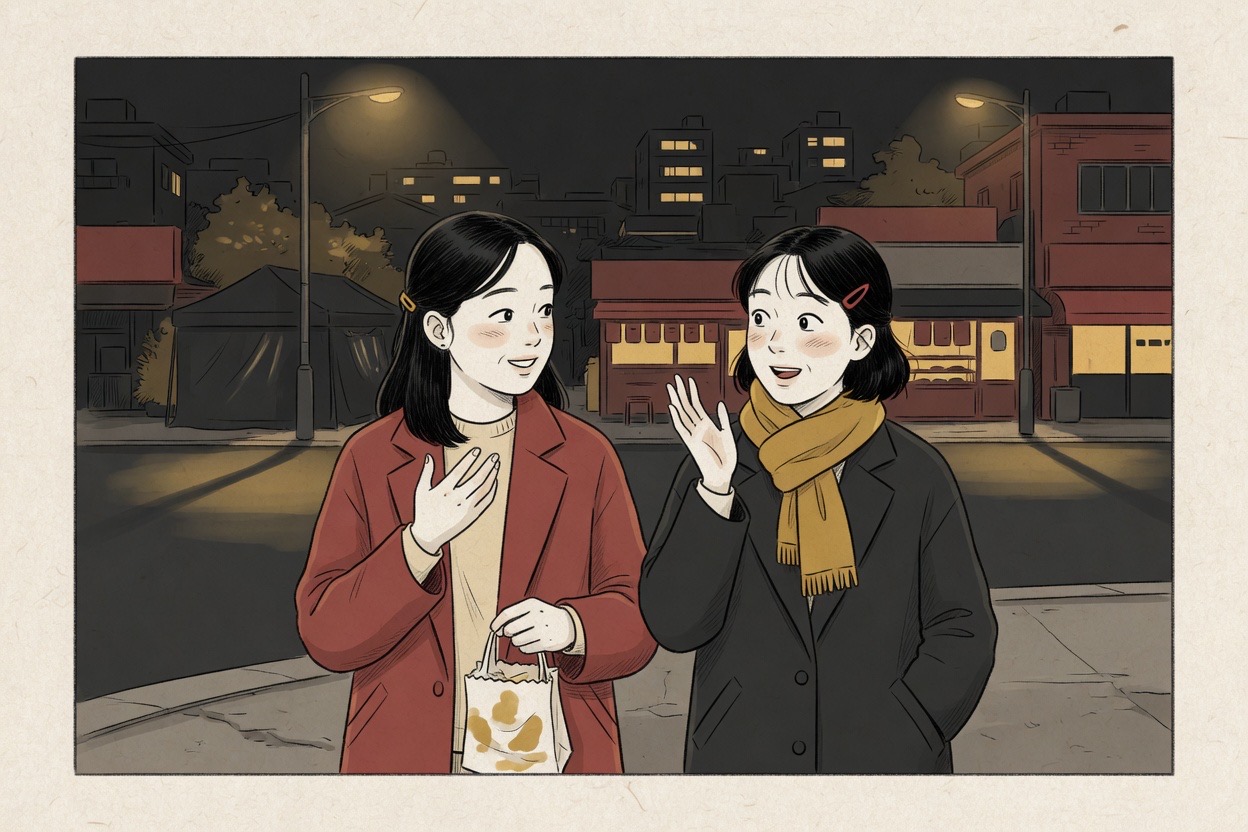
Sidewalk after the dinner. Two friends, late twenties, walking off the soju.
- Haeun: 오늘 자리 때문에 좀 당황했지?
Oneul jari ttaemune jom danghwanghaetji?
You got a bit flustered about the seats today, huh? - Minjun: 응… 내가 뭐 잘못한 거야?
Eung… naega mwo jalmotan geoya?
Yeah… did I mess something up? - Haeun: 잘못이라기보다, 문 쪽 자리는 보통 막내가 앉아. 다음엔 한 박자만 보고 앉으면 돼.
Jalmotiragiboda, mun jjok jarineun botong maknaega anja. Daeumen han bakjaman bogo anjeumyeon dwae.
Not really “wrong”—the seat by the door is usually the youngest’s. Next time just watch one beat, then sit. - Minjun: 아—그래서 다들 잠깐 멈춘 거구나. 알려 줘서 고마워.
A—geuraeseo dadeul jamkkan meomchun geoguna. Allyeo jwoseo gomawo.
Ah—so that’s why everyone paused for a second. Thanks for telling me.
Gloss: Banmal between close friends. The tone is repair, not rank enforcement. This is how nunchi actually spreads—after the restaurant, on the walk home.
Good nunchi / Zero nunchi
Good nunchi
First company dinner with a Korean team. You wait by the chairs half a second, take the seat near the door when a senior points you there, lift your spoon after the director does, and pour for the empty glass on your left before topping yourself up. You leave when the second wave stands. Nobody lectures you. You get invited next time.
Zero nunchi
Same dinner. You claim the inner seat, start eating while the director’s chopsticks are still folded, refill only your own glass, answer “Did you eat?” with a calorie report, then stay seated mid-story while jackets go on. People stay polite. The group chat later is quieter around you. You thought you were just being yourself. The room thought you were one beat early all night.
Do / Don’t
Do
- Watch the group for one beat before seats, spoons, pours, and exits.
- Treat zero-nunchi moments as recoverable—move seats, thank the redirect, learn the rule.
- Offer reciprocity later when a senior pays: next coffee, next junior-friendly meal.
- Assume most misses are cross-map politeness, not moral failure—yours or anyone else’s.
- Learn speech-level doors: polite first, banmal when invited.
Don’t
- Call yourself (or others) “zero nunchi” as a fixed identity after one dinner.
- Over-perform tradition until it becomes cosplay—copy the quiet competent junior, not a blog checklist.
- Correct someone else’s nunchi loudly in front of seniors. Sidewalk later, like Haeun.
- Confuse literal honesty with social fluency on greeting questions.
- Insist on fairness theater when a gift of hierarchy is already on the table.
Nearby ideas on Have Nunchi
- What does nunchi mean? — the base definition this whole site builds on
- Do you have nunchi? — praise language vs anxious watching
- Good nunchi at work — 회식, leaving time, disagreement
- Kibun — the mood you protect when you catch the signal
- Banmal vs jondaemal — speech level as a visible door
- Korean honorifics — titles that move with the room
A closing line
A zero-nunchi moment is not a verdict on your character. It is a signal you can train yourself to see next time—the seat, the spoon, the empty glass, the chat that already turned the page.
Watch the room one beat longer than feels necessary. That beat is the whole skill. The rest of Have Nunchi is just practice with better examples.
FAQ
What is a zero-nunchi moment?
A zero-nunchi moment is when someone misses a social signal the rest of the room already caught—seating, timing, tone, or who moves first—and keeps going as if nothing shifted.
Is having zero nunchi the same as being rude?
No. Most zero-nunchi moments come from following a different culture's politeness rules, not from wanting to offend. The fix is reading the room, not becoming colder.
Can foreigners learn nunchi in Korea?
Yes. Nunchi is reading observable signals and adjusting—not a personality type you either inherited or missed. Watching who moves first is learnable in real rooms.
Do Koreans have zero-nunchi moments too?
Constantly. Korean has everyday phrases for it—especially 눈치 없다 (no nunchi)—and people use them on friends, coworkers, and themselves after a dinner goes sideways.
What is the fastest way to avoid zero-nunchi mistakes?
Watch what the group is doing before you act. One beat of pause—who sits where, who lifts a spoon, who stops talking—prevents most of the classic slips.
Do you have nunchi?
Get short Korean word lessons and social cues in your inbox.