Banmal vs Jondaemal: Casual vs Polite Korean Speech
Casual speech vs polite speech—and the awkward, human moment when someone says you can drop the formality.
- Hangul
- 반말
- Romanization
- banmal
- Pronunciation
- ban-mal
- Category
- Culture
Banmal (반말, ban-mal) is casual Korean speech. Jondaemal (존댓말, jon-dae-mal) is polite or respectful speech. The split is not mainly about vocabulary lists—it is about verb endings and social distance. One-sentence definition: banmal shortens the sentence toward equals and intimates; jondaemal keeps a respectful floor with people you do not yet have permission to treat as casual.
If you only remember one practical rule: start in jondaemal, and switch only when the other person opens the door. Age, workplace rank, and closeness all push the choice—and they can disagree with each other. Getting the grammar right and the relationship wrong is still wrong.
Quick facts
| Hangul | 반말 / 존댓말 |
| Romanization | banmal / jondaemal |
| Pronunciation | ban-mal / jon-dae-mal |
| Core contrast | casual speech vs polite/respectful speech |
| Marked by | mainly verb endings and overall distance, not “fancy words” alone |
| Safe default | jondaemal until invited otherwise |
| Related skill | nunchi for reading whether the room wants warmth or distance |
What is banmal vs jondaemal?
English speakers often treat “formal” and “informal” as a tone of voice. Korean makes the difference audible in the endings of almost every sentence.
- Banmal is the casual register you use with close friends, younger people (when the relationship allows), partners, and many family rooms. It sounds shorter, flatter, and more direct.
- Jondaemal is the polite/respectful register you use with strangers, seniors, customers, most first meetings, and a huge share of workplace talk. It keeps a social cushion under every request and refusal.
Neither side is “more Korean” than the other. Both are normal. The social work is knowing which room wants which, and how people move between them without making the other person flinch.
This page is the speech-level twin of Korean honorifics explained. That hub maps what you call someone. This one maps how formal your sentences sound. Titles and endings have to travel together.
The endings: -요, -습니다, and bare stems
You do not need a full textbook conjugation chart to use the concept. You need one clean trio you can hear in real rooms.
Take “eat” as a base:
| Level | Hangul | Feel |
|---|---|---|
| Banmal (casual) | 먹어 | bare, intimate, peer-to-peer |
| Jondaemal (polite) | 먹어요 | everyday polite; the workhorse ending |
| Jondaemal (formal) | 먹습니다 | more formal / official / careful public speech |
Same pattern with “go,” “do,” “come,” and almost every everyday verb:
- 가 / 가요 / 갑니다
- 해 / 해요 / 합니다
- 와 / 와요 / 옵니다
Polite -요 speech is what most learners need first for shops, offices, and new acquaintances. Formal -습니다 speech shows up in announcements, presentations, service scripts, and carefully hierarchical rooms. Bare banmal stems show up once the relationship has dropped the cushion.
A few more pairs you will hear constantly:
| Banmal | Polite jondaemal | Rough sense |
|---|---|---|
| 뭐 해? | 뭐 해요? | What are you doing? |
| 알았어 | 알았어요 | Got it |
| 괜찮아 | 괜찮아요 | It’s fine |
| 언제 와? | 언제 와요? | When are you coming? |
| 밥 먹었어? | 밥 먹었어요? | Have you eaten? |
Notice what did not change: the main idea of the sentence. The relationship did. That is why speech level is social software, not decoration.
Banmal is not “rude Korean.” It is casual Korean with a membership card. Soft polite speech among warm coworkers and stiff formal speech at a ceremony are both jondaemal—just different layers of it.
Who gets banmal, and who gets jondaemal?
Three forces interact. Textbooks sometimes pretend age alone decides. Real rooms mix all three.
- Age — Older usually receives jondaemal from younger. The Korean age system matters because birth-year talk is how groups sort “who is senior in this room” without a spreadsheet.
- Rank — Boss, professor, client, team lead: jondaemal is the default even if the person is not much older. Hierarchy is not only birthday cake.
- Closeness — Close friends of the same generation often land in banmal quickly. Partners usually do. Strangers almost never should. An older person can invite banmal; a younger person cannot force it.
| Situation | Usual default |
|---|---|
| New coworker, unclear age | jondaemal + name/role title |
| Same-age friends after real hangouts | banmal |
| Younger to older stranger | jondaemal |
| Team lead speaking to junior | often banmal down, jondaemal up |
| Client / customer room | jondaemal both ways is common |
When the forces disagree—the older junior hire, the younger boss, the friend who becomes your manager—default upward in politeness until someone clear about the relationship rewrites the rule.
말 놓다 — how people actually switch
This is the part most English pages skip, and it is the skill you actually need.
말 놓다 (말 놓다) means to drop formal speech—to put down the polite endings and move into banmal. Related everyday lines:
- 말 놔도 돼요? — Is it okay if I speak casually?
- 말 편하게 하세요. — Please speak comfortably / casually.
- 반말 해도 돼. — You can use banmal.
- 편하게 해. — Be comfortable / speak easy. (already casual)
The senior usually opens the door
In most real Korean rooms, the older person, higher-rank person, or relational senior is the one who green-lights the switch. They might:
- Start using banmal toward you first, then say you can answer the same way.
- Explicitly invite it: “Speak comfortably,” “You can drop the formality.”
- Laugh at the stiffness and pull the conversation down a gear.
The junior can ask—carefully—but asking is not claiming. 말 놔도 돼요? is a request with an exit ramp. It is not “we are equals now.”
Invitations often land softly: after a few easy lunches; after a friend one year older says full -요 all night feels weird; or when same-birth-year peers discover the age math and the cushion drops almost by itself. You can also refuse. Keep polite endings, keep the title, smile, or say you are still more comfortable this way. Some people never fully switch with certain coworkers, and that is fine.
Do not switch because a drama character switched after one coffee, because you saw a birth year on a form, or only on the verb endings while still calling someone 팀장님 like nothing changed. If nunchi has a speech-level form, it is this: wait for the door, then walk through at normal volume.
What happens when you get it wrong
Both directions fail. English advice often only warns about being too casual. Korean rooms also notice when you stay too formal on purpose.
Banmal to a senior without permission
How it lands: rude, childish, socially tone-deaf, sometimes mutinous at work.
Even if your grammar is perfect, the room hears “I decided we are peers.” That decision is not yours alone. A startled laugh, a stiff smile, or sudden silence are all feedback. Fix it by returning to jondaemal without a long apology speech unless the situation is serious.
Jondaemal to a close friend (or peer who already switched)
How it lands: cold, distant, sarcastic, or like you are performing politeness as a weapon.
Friends who already share banmal will hear sudden -요 endings as emotional weather: anger, withdrawal, fake courtesy, or “we are fighting now.” Couples know this version well. So do siblings. The grammar is polite; the message is “distance.”
Mixed signals also scrape: banmal verbs with a stiff workplace title; full jondaemal plus sudden oppa warmth with no history; casual speech only when you want something. Speech level is a relationship claim. Mixed claims confuse the claim.
Jondaemal with family — not one rule
Learners often ask: Do Koreans use formal speech with their parents?
Honest answer: it depends on the household.
Many Korean adults use banmal with parents in daily talk—especially adult children who grew up in that pattern. Some families keep softer polite forms. In-laws often receive more careful speech than blood parents. Older relatives at holiday tables may get more jondaemal than a parent you text every day.
There is no single “correct Korean family setting.” There is your family’s software. Copy the speech already running in that kitchen. The same caution applies to hello in Korean: the greeting that fits a friend group may feel wrong at the first family dinner.
Speech level and address terms must move together
Calling someone and conjugating toward them are two knobs on the same machine.
| Address choice | Speech-level partner that usually fits |
|---|---|
| Role title (팀장님, 선생님) | jondaemal |
| Name + 씨 | jondaemal (safe default) |
| Kinship title among close friends | often banmal, sometimes soft polite if preferred |
| Given name only among equals | banmal after real closeness |
| The deep map of titles lives on the honorifics hub. The rule for this page is simpler: if you soften the title, watch the endings; if you drop the endings, watch the title. That is also why the maknae of a friend group may receive banmal jokes from everyone older, then use careful jondaemal with a client five minutes later. Position is local. |
Example dialogues
1. Soft negotiation — 말 놔도 돼요?
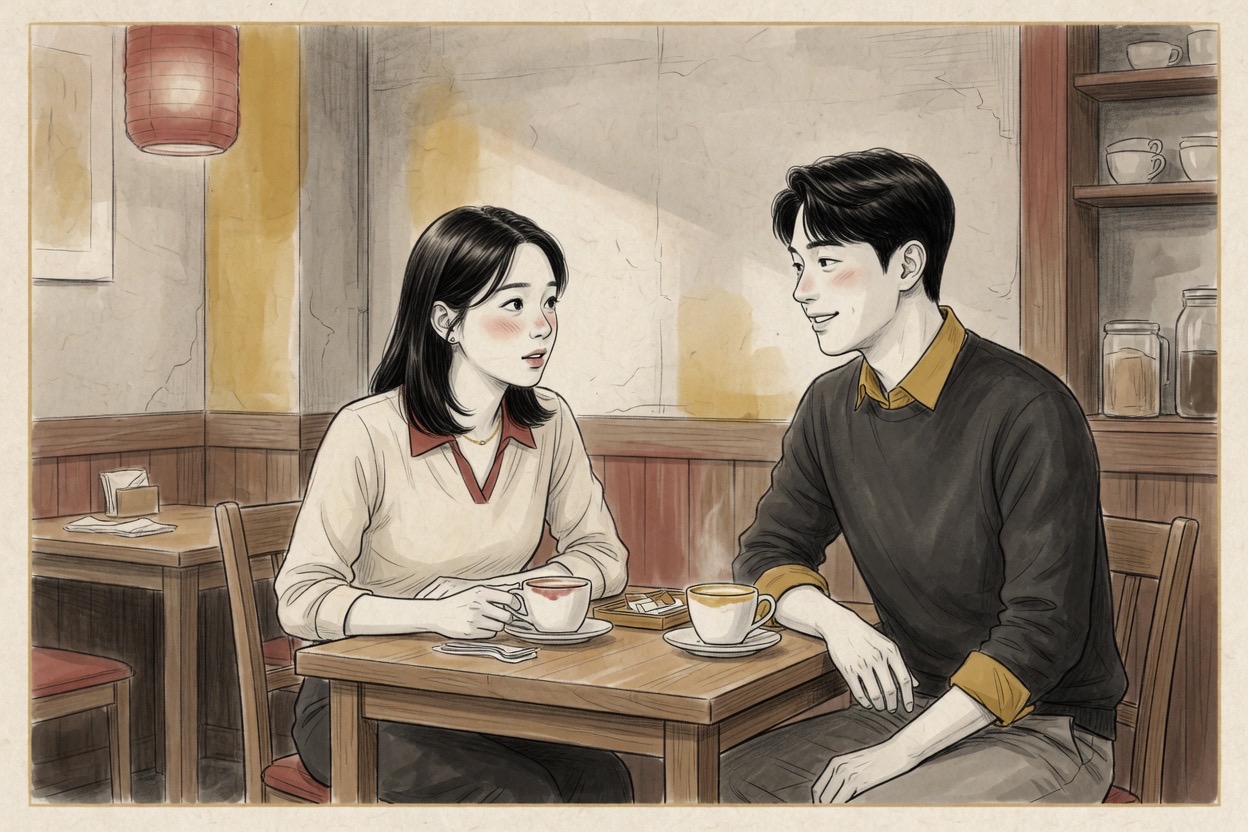
Cafe after work. Two colleagues in their late twenties. They have collaborated for weeks; age gap is about two years.
- Minseo (younger): 선배, 저 질문 하나 해도 돼요?
Seonbae, jeo jilmun hana haedo dwaeyo?
Seonbae, can I ask one question? - Hajoon (older): 당연하지. 편하게 말해.
Dangyeonhaji. Pyeonhage malhae.
Of course. Speak comfortably. - Minseo: 그럼… 말 놔도 돼요?
Geureom… mal nwado dwaeyo?
Then… is it okay if I drop the formality? - Hajoon: 응, 그래도 돼. 나도 편하게 할게.
Eung, geuraedo dwae. Nado pyeonhage halge.
Yeah, that’s fine. I’ll speak casually too.
Gloss: The junior asks; the senior grants. Both sides move. Notice Minseo stays in polite form while asking. The switch is negotiated, not seized.
2. Friends already in banmal
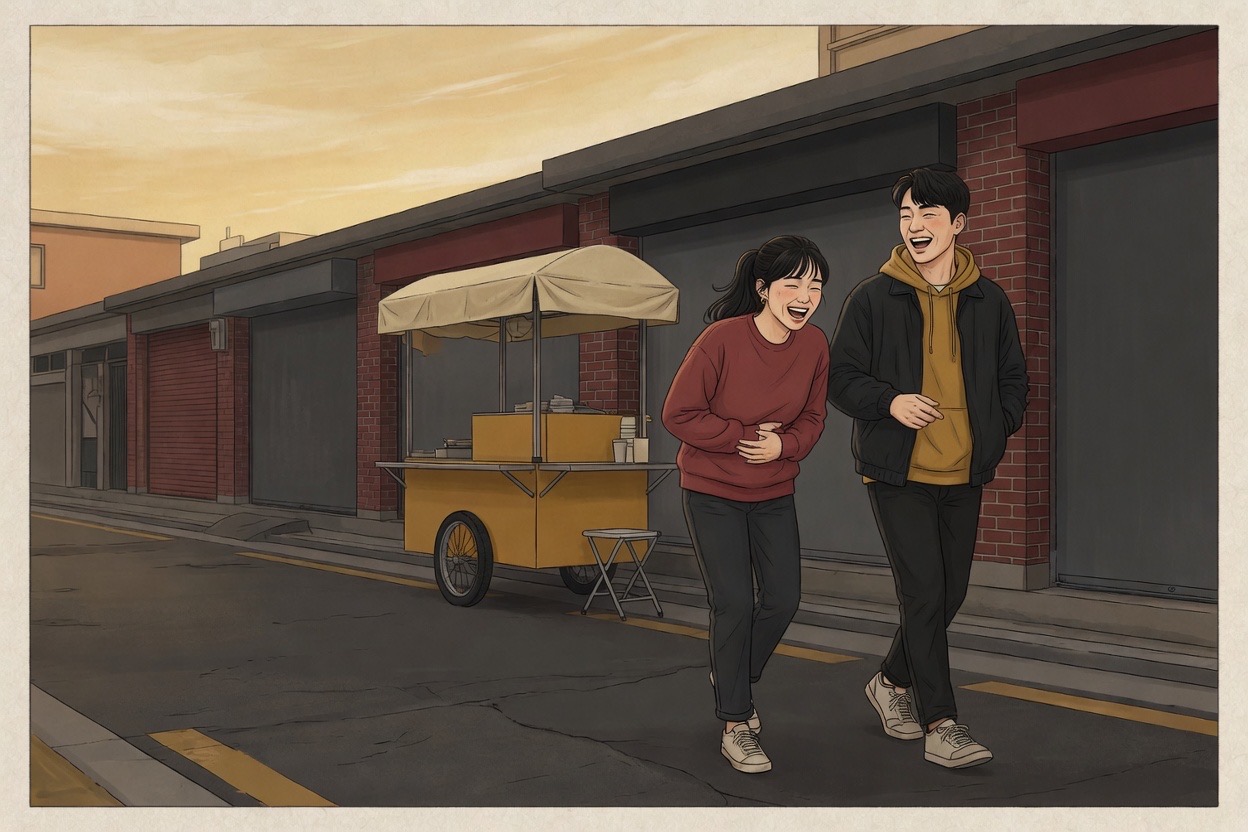
Street corner, weekend. Same generation, known closeness.
- Yuri: 배고프지 않아? 그냥 저기 들어가자.
Baegopeuji ana? Geunyang jeogi deureogaja.
Aren’t you hungry? Let’s just go in there. - Sora: 좋아. 너는 뭐 먹을 거야?
Joa. Neoneun mwo meogeul geoya?
Sounds good. What are you getting? - Yuri: 난 냉면. 너는?
Nan naengmyeon. Neoneun?
Cold noodles for me. You?
Gloss: No -요, no titles, no negotiation. Banmal here is the water they already swim in. Suddenly switching to full polite endings would sound like a mood shift, not manners.
3. Office — jondaemal holds the floor
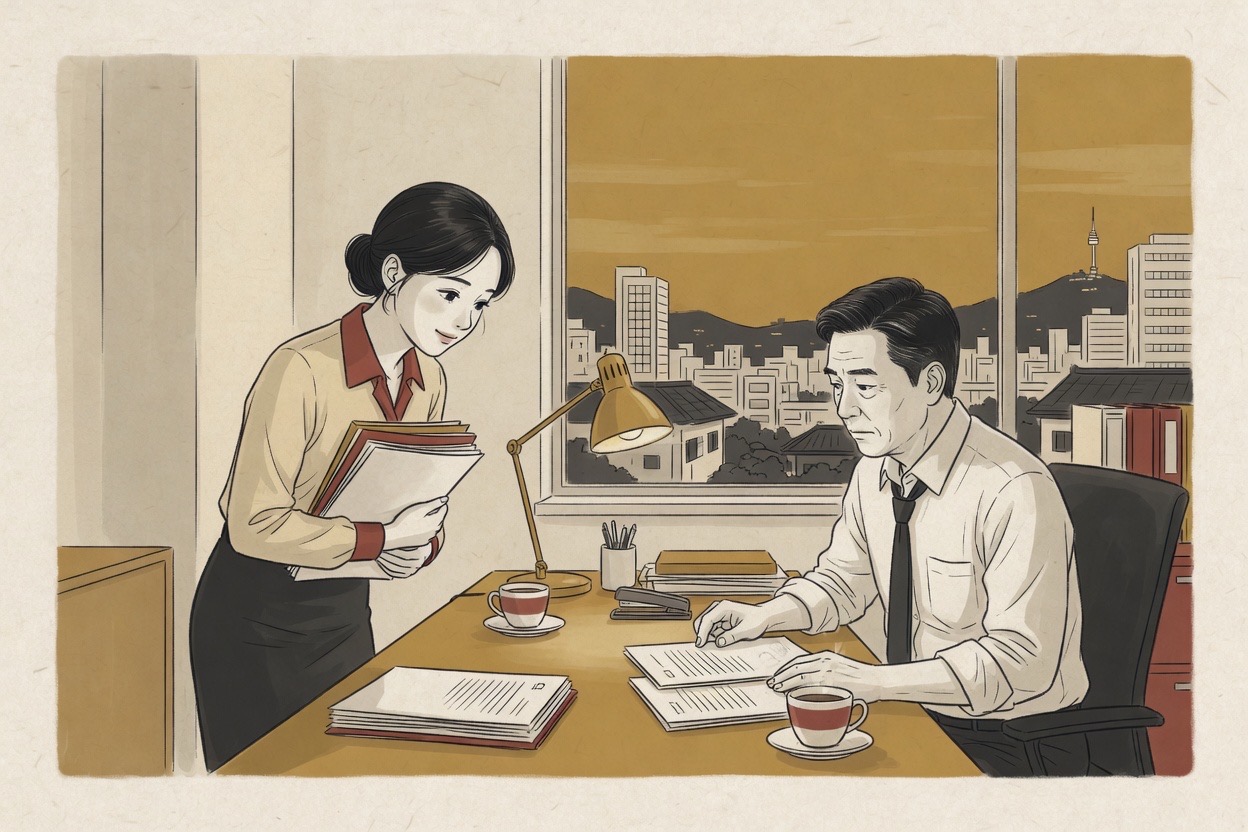
Desk side, Monday. Junior in her twenties, senior in his fifties.
- Jiwon: 팀장님, 이 부분 확인해 주시겠어요?
Timjangnim, i bubun hwaginhae jusigesseoyo?
Team lead, could you check this part? - Team lead: 어디 보자. 여기, 숫자 한번 더 봐 줘.
Eodi boja. Yeogi, sutja hanbeon deo bwa jwo.
Let me see. Here—look at the numbers once more. - Jiwon: 네, 바로 수정하겠습니다.
Ne, baro sujeonghagetsseumnida.
Yes, I’ll fix it right away.
Gloss: The senior may use shorter, more casual forms down. The junior keeps jondaemal up. One-directional casual speech from the top is common; reciprocity is not automatic.
4. The mistake — banmal without a door
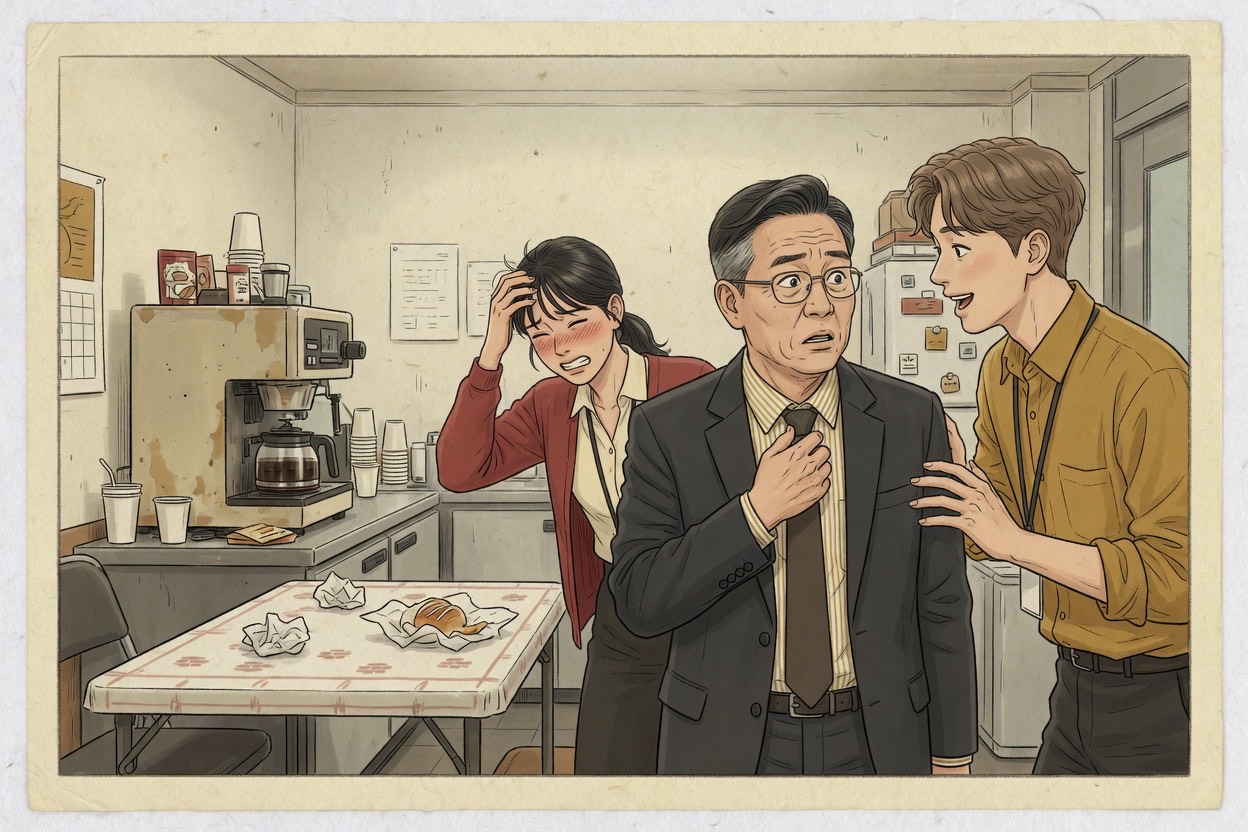
Office break room. A new foreign hire tries “friendly Korean.”
- Alex (brightly): 야, 커피 다 마셨어? 내가 타 줄게.
Ya, keopi da masyeosseo? Naega ta julge.
Hey, you finished your coffee? I’ll make you one. - Senior colleague (startled): …아, 괜찮습니다.
…A, gwaenchanseumnida.
…Ah, I’m fine. - Peer beside Alex (quietly): 그분은 반말 하시면 안 돼요.
Geubuneun banmal hasimyeon an dwaeyo.
You shouldn’t use banmal with him.
Gloss: The coffee offer was kind. The speech level claimed a peer relationship the room never built. Kindness plus wrong endings still scrapes.
Good nunchi / Zero nunchi
Good nunchi
You join a Korean team. For the first weeks you stay in polite speech with everyone older or higher-rank. A coworker a year above you, after several easy lunches, says you can speak comfortably. You confirm once—“Is banmal okay?”—then switch with that person only, not the whole office. With the team lead, you keep jondaemal. You treated the invitation as local permission, not a free pass for the whole floor.
Zero nunchi
Same first month. You hear one person say “be comfortable,” then drop banmal on every desk, including the director’s. When people answer in stiff polite forms, you assume they are shy and push harder: “Why so formal?” The room gets quieter. You thought fluency meant speed. The room heard you rewriting the hierarchy without asking.
Do / Don’t
Do
- Default to jondaemal with new people, seniors, and clients.
- Learn the clean trio: 먹어 / 먹어요 / 먹습니다 as a mental template.
- Let the senior open the 말 놓다 door when possible.
- Ask with 말 놔도 돼요? only when the relationship already feels warm.
- Move titles and endings together—see the honorifics map.
Don’t
- Drop into banmal because you know someone’s birth year from a form.
- Use banmal as a personality trick to seem “close to Korean culture.”
- Weaponize sudden jondaemal against a friend who already shares banmal.
- Assume every family uses the same parent-child speech level.
- Copy drama switches after one shared meal.
Nearby ideas on Have Nunchi
- Korean honorifics explained — titles, -ssi/-nim, and why address must match speech level
- Nunchi — reading whether this room wants distance or warmth
- Korean age system — why birth years keep showing up before banmal does
- Hello in Korean — greetings change with the same politeness ladder
- Maknae — youngest in a group, often on the receiving end of casual speech from elders
A closing line
Banmal and jondaemal are not two vocabulary packs. They are two distances your mouth can take.
Stay polite until the relationship writes a different contract—and when someone says you can drop the formality, treat that line as the real lesson, not the conjugation chart behind it.
FAQ
What is the difference between banmal and jondaemal?
Banmal (반말) is casual Korean speech; jondaemal (존댓말) is polite or respectful speech. The difference shows mainly in verb endings—eat becomes 먹어 (casual), 먹어요 (polite), or 먹습니다 (formal).
When should I use banmal vs jondaemal?
Default to jondaemal with strangers, seniors, and most workplaces. Banmal is for close friends, kids, and people who have invited you to speak casually. Age, rank, and closeness all interact—none alone decides.
What does 말 놓다 mean?
말 놓다 means to drop formal speech and switch into banmal. The senior or older person usually opens the door; the junior asks only carefully, often with 말 놔도 돼요? (Is it okay if I speak casually?).
Is it rude to use banmal with older people?
Yes, if they never offered it. Banmal toward a senior without permission can sound rude or childish. Jondaemal toward a close friend can sound cold or sarcastic—both directions fail when they fight the relationship.
Do Koreans use jondaemal with their parents?
It varies by family. Many adults use banmal with parents; some keep polite forms, especially with in-laws or in more formal households. Follow the household you are in, not a textbook default.
Do you have nunchi?
Get short Korean word lessons and social cues in your inbox.