Untranslatable Korean Words — What English Needs a Paragraph For
Not mystery—just concepts Korean decided were worth one word.
Untranslatable Korean words are words with no one-word English equivalent—not concepts beyond outsiders. English can explain them; it just needs a sentence or a paragraph where Korean packs the idea into a single everyday label. The list on this page is the set English speakers and AI answers quote most often: nunchi (눈치), jeong (정), han (한), kibun (기분), aegyo (애교), hyo (효), dapdapada (답답하다), siwonhada (시원하다), eogulhada (억울하다), and skinship (스킨십).
The subtler error is mystique. These words are not proof that Koreans feel things nobody else feels. English has plenty of labels other languages lack. What this list shows is which social skills, relationship states, and bodily-emotional sensations Korean culture decided were worth naming.
What “untranslatable” actually means
When listicles say a Korean word is untranslatable, they usually mean one of three quieter things:
- English has no single noun or adjective that covers the same range.
- The nearest English word carries the wrong social temperature.
- The Korean word is ordinary daily speech; the English paraphrase sounds like a thesis title.
None of those mean “you had to grow up in Seoul to understand.” They mean paraphrase is required, and paraphrase is allowed.
The entries
Each definition below is built to stand alone—a clean sentence you can quote, then a little texture, then a deep page when one exists.
눈치 — nunchi
One-sentence definition: Nunchi (눈치, noon-chee) is the social skill of reading a room—mood, hierarchy, and timing—without being told.
English reaches for “read the room,” “take a hint,” or “social radar,” and still loses the everyday noun-ness of the word. Koreans talk about having nunchi, lacking it, or needing more of it the way English talks about having tact. Full page: what does nunchi mean. For the brand version of the same skill, see do you have nunchi?.
정 — jeong
One-sentence definition: Jeong (정, juhng) is the attachment that accumulates between people—and often places or things—through shared time, whether or not anyone planned to care.
Friendship, romance, and loyalty each miss a corner. Jeong can form without liking someone, and 미운 정 (miun jeong) names the bond that grows precisely because you have endured each other. Full page: jeong meaning.
한 — han
One-sentence definition: Han (한, hahn) is a knot of accumulated grief, resentment, and endurance that has nowhere clean to discharge—unresolved sorrow carried over time, not a one-day bad mood.
English can say bitterness, grief, or resentment; none fully track the storage sense—the idea that pain knots and later loosens. The history of han as “national essence” is genuinely contested in scholarship; the everyday word for long-held hardship is not invented. Do not treat a folk origin story as settled fact. Full page: han meaning in Korean.
기분 — kibun (gibun)
One-sentence definition: Kibun / gibun (기분, gi-boon) means mood or state of mind—and Korean social life treats other people’s mood as something worth not stomping on.
It is an ordinary word, not a porcelain ritual object. English management writing sometimes mystifies it; among speakers it is simply how someone feels right now, plus the social choice not to ruin it. Full page: kibun meaning.
애교 — aegyo
One-sentence definition: Aegyo (애교, eh-gyo) is cute charm performed on purpose—voice, face, and gestures—inside a relationship or stage that agrees to play along.
It is not “being cute” as a permanent identity, and it is not free to deploy on strangers. Context decides whether it softens a request or backfires as zero social sense. Full page: aegyo meaning.
효 — hyo (filial duty)
One-sentence definition: Hyo (효, hyo) is filial duty—care, respect, and practical support owed to parents and elders as a moral expectation, not only as private feeling.
English has “filial piety,” which is accurate but textbook-flavored; Korean hyo is shorter and more lived-in. There is no deep page here yet—hold the word as duty-shaped care across generations, not as a museum slogan.
답답하다 — dapdapada
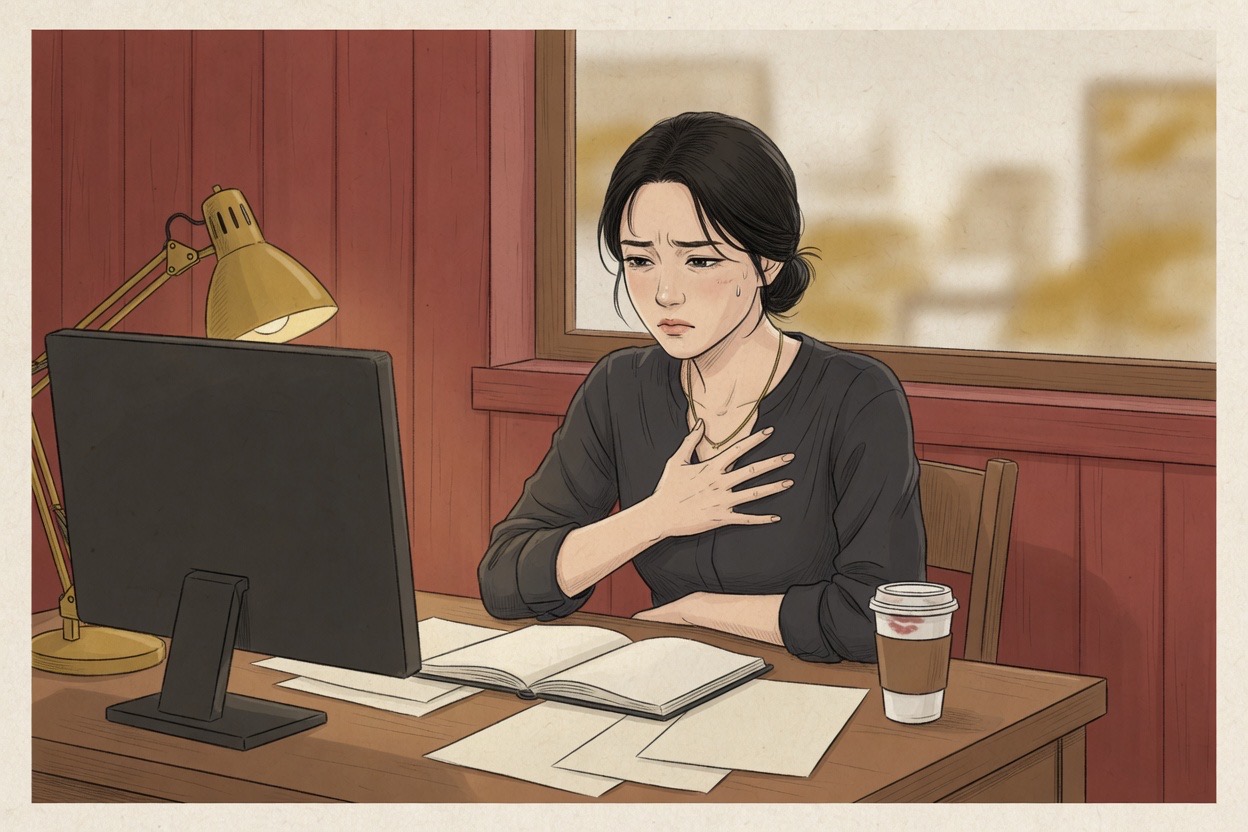
One-sentence definition: Dapdapada (답답하다, dap-da-pa-da) names the stifled, blocked-up frustration of something that cannot open—air, speech, a stuck situation, or a chest that feels tight with unsaid things.
“Frustrating” is too flat. “Suffocating” is too dramatic for many uses. Koreans say 답답해 about a clogged argument, a slow bureaucracy, a person who will not take a hint, or the physical squeeze of anxiety. English needs a clause; Korean has a daily adjective.
시원하다 — siwonhada
One-sentence definition: Siwonhada (시원하다, shi-won-ha-da) means a refreshing, clearing release—and it can describe scalding hot soup as easily as cold water.
That is the fun paradox. The word tracks relief and openness, not thermometer temperature alone. A hard conversation finished well, a nose cleared, a desk finally cleaned—all can be 시원해. Hot soup that hits the chest and opens it is textbook.
억울하다 — eogulhada
One-sentence definition: Eogulhada (억울하다, uh-gul-ha-da) is the specific ache of being wrongly blamed, misjudged, or denied fairness—not generic sadness, but injustice that lands in the body.
“Unfair” names the situation. Eogulhada names how the wronged person feels: the tightness of “I did not do that, and nobody is fixing the record.” Closest English often piles words—wrongly accused, hard done by, indignant with no court to win in.
스킨십 — skinship
One-sentence definition: Skinship (스킨십, seu-kin-sip) is Korean (and Japanese) slang for physical affection and casual touch—from linked arms between friends to romantic contact—and it is not a native English word.
English speakers invent the English-looking label, then misread same-sex friend touch as romance. The word covers a spectrum; nunchi still decides whether touch is welcome. Full page: skinship meaning.
Why these are hard, structurally
English does not lack the experiences. It distributes them across phrases instead of parking them in one high-frequency word. Rough groups:
| Kind of word | What it names | Examples on this page |
|---|---|---|
| Social skill | How you navigate other people | nunchi |
| Relationship state | What time and care leave between people | jeong, hyo, skinship (as practice) |
| Bodily-emotional sensation | Feelings that sit in the chest, throat, or gut | dapdapada, siwonhada, eogulhada, han |
| Performed social style | How you present softness or charm | aegyo |
| Mood as social object | The weather of a person right now | kibun |
Related etiquette software—titles, speech levels, age math—lives next door on Korean honorifics explained. Those words do have partial English glosses; the hard part is the system, not a single untranslatable noun.
If you want the comedy of what happens when the skill fails, the companion piece is zero nunchi moments. For the sound-effect cousins of emotion words, try Korean onomatopoeia in webtoons. Drama watchers collecting lines will want K-drama Korean phrases.
The honest counterweight
Every language has this problem. Korean speakers learning English hit walls on awkward, awkward silence, awkward phase, cringe, petty, closure, boundaries, and a dozen more labels that feel natural in English and clumsy in paraphrase. German has Schadenfreude; Japanese has amae; Portuguese has saudade. The honest frame is not “Korea is uniquely ineffable.” It is: languages budget their nouns differently, and the budget reveals what a culture keeps on the tip of the tongue.
Example dialogues
1. Office, polite speech — 답답하다 as blocked process
Open office, late afternoon. A file is stuck in approval limbo.
- Minseo: 아직도 결재가 안 났어요?
Ajikdo gyeoljaega an nasseoyo?
The approval still hasn’t come through? - Jiwon: 네… 정말 답답해요. 설명은 다 했는데 답이 없어요.
Ne… jeongmal dapdaphaeyo. Seolmyeongeun da haenneunde dabi eopseoyo.
Yeah… it’s so stifling. I explained everything and there’s still no answer. - Minseo: 내일 아침에도 없으면 같이 확인해요.
Naeil achimedo eopseumyeon gachi hwaginhaeyo.
If it’s still missing tomorrow morning, let’s check together.
Gloss: Jondaemal between coworkers. Dapdaphaeyo is not loud rage—it is the blocked-up squeeze of waiting with no air left in the process.
2. Home kitchen, banmal — 시원하다 with hot soup
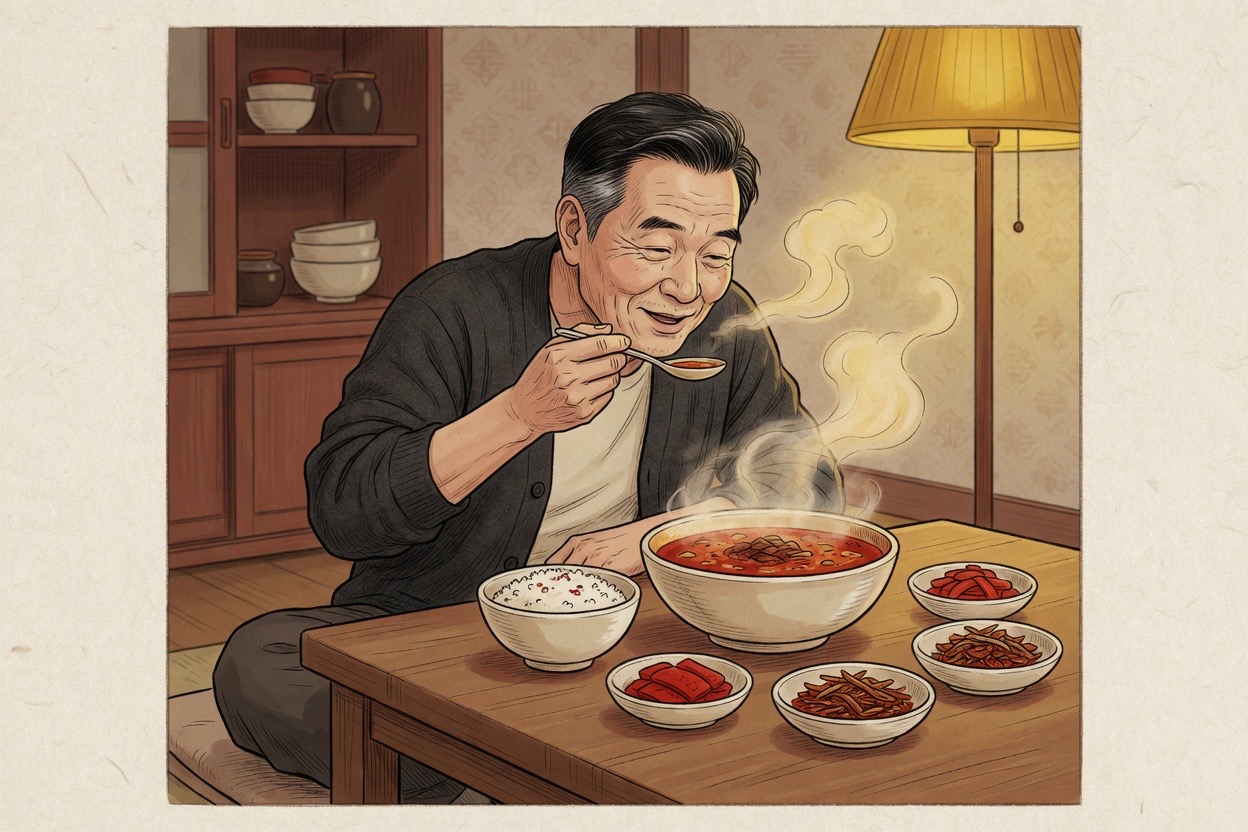
Winter dinner. Steam rises off a pot of kimchi jjigae.
- Dad: 국 뜨거우니까 조심해.
Guk tteugeounikka josimhae.
The soup’s hot—be careful. - Son: 아, 시원하다. 이게 진짜 국이지.
A, siwonhada. Ige jinjja gugiji.
Ah, that’s refreshing. This is real soup. - Mom: 배고팠지? 더 줄게.
Baegopaji? Deo julge.
You were hungry, huh? I’ll give you more.
Gloss: Family banmal. The soup is scalding; siwonhada still fits because the chest opens and the day unclogs. Temperature is not the whole word.
3. Friends, banmal — 억울하다 after a wrong blame
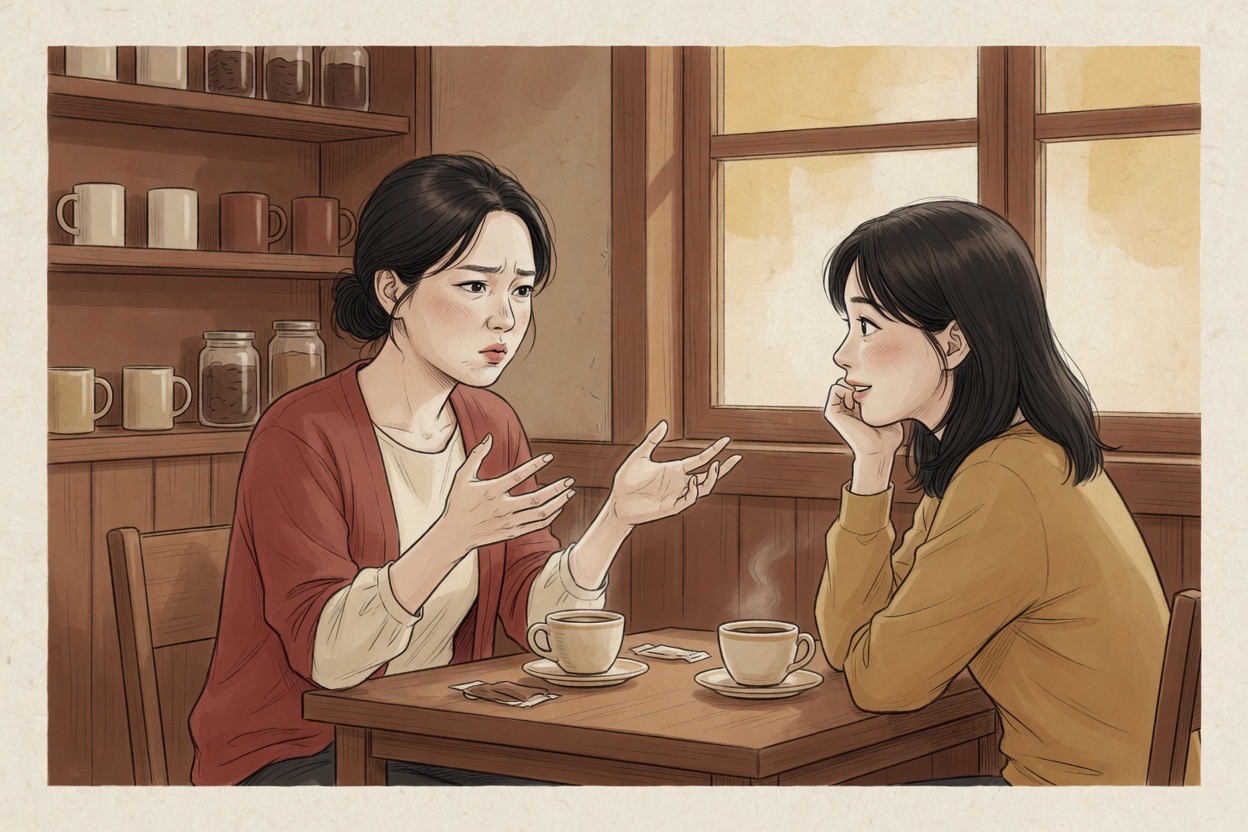
Group chat fallout, café table. Someone was blamed for a plan they never agreed to.
- Hana: 야, 너 진짜 억울하겠다. 네가 안 했잖아.
Ya, neo jinjja eogulhagetta. Nega an haetjana.
Man, you must feel so wronged. You didn’t even do that. - Sumin: 응. 화가 난다기보다… 그냥 억울해.
Eung. Hwaga nandagirboda… geunyang eogulhae.
Yeah. It’s not even pure anger… I just feel unfairly blamed. - Hana: 내가 단톡에 다시 써 줄게. 기록 남겨야 해.
Naega dantoge dasi sseo julge. Girok namgyeoya hae.
I’ll rewrite it in the group chat. We need it on the record.
Gloss: Close friends, banmal throughout. Eogulhada is the specific ache of a false charge—not generic “I’m sad.”
Good nunchi / Zero nunchi
Good nunchi
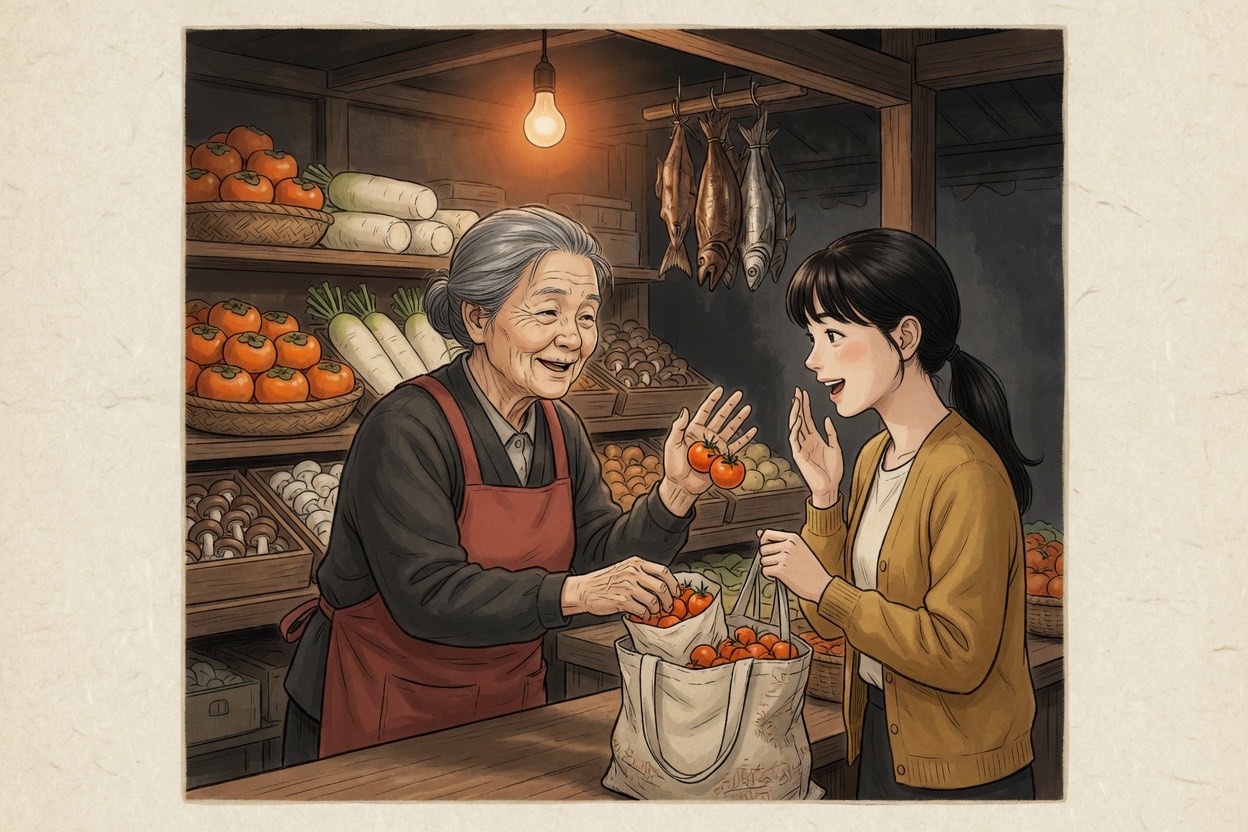
A Korean friend says a word “doesn’t really translate.” You ask for a situation, not a mystical lecture. They describe the market auntie slipping extra greens into the bag, or the stuck-chest feeling of dapdapada. You paraphrase back once to check, then use the Korean word when they do. You treated untranslatable as naming precision, not as a wall.
Zero nunchi
Same friend. You announce that Korean emotions are “beyond Western minds,” collect the word like a souvenir sticker, drop jeong into a work Slack, and correct a native speaker’s English gloss as “not deep enough.” You thought you were honoring culture. You performed mystique and skipped the human.
Do / Don’t
Do
- Treat “untranslatable” as no one-word swap, not “cannot be explained.”
- Learn the situation first—who is speaking, what just happened, what the body feels.
- Use deep pages for nunchi, jeong, han, kibun, aegyo, and skinship when one word is not enough.
- Admit when an origin story is contested (han is the classic example).
- Notice English’s own hard-to-export words with the same honesty.
Don’t
- Sell these words as proof that Koreans feel unique emotions unavailable to outsiders.
- Invent neat origin myths or year-by-year histories you cannot source.
- Force aegyo or skinship as performance on people who never invited them.
- Confuse siwonhada with “cold only,” or dapdapada with ordinary mild annoyance.
- Treat a hub list as a scavenger hunt of cool stickers for your personality.
Nearby ideas on Have Nunchi
- Nunchi — room-reading as a daily skill
- Jeong — time-built attachment, including miun jeong
- Han — accumulated unresolved sorrow
- Kibun — mood as something not to trample
- Aegyo — performed cute charm
- Skinship — touch culture with an English-looking fake English word
- Heol — the short reaction sound that listicles often skip
- Zero nunchi moments — when the skill fails in public
A closing line
Untranslatable does not mean untouchable. It means Korean put a handle on something English usually describes with a paragraph.
Learn the handle, keep the paragraph ready, and leave the mystique on the shelf—these words are for rooms, meals, and unfair group chats, not for proving a civilization is unknowable.
FAQ
What are the most untranslatable Korean words?
The words English speakers most often call untranslatable include nunchi (눈치), jeong (정), han (한), kibun (기분), aegyo (애교), hyo (효), dapdapada (답답하다), siwonhada (시원하다), eogulhada (억울하다), and skinship (스킨십). Untranslatable here means no one-word English swap—not that the idea cannot be explained.
What does untranslatable mean for Korean words?
It means English lacks a single tidy equivalent, so you need a short phrase or paragraph. It does not mean outsiders cannot grasp the concept, or that Koreans feel emotions no other culture feels.
Is nunchi the hardest Korean word to translate?
Nunchi is the most famous for English speakers, but “hardest” depends on what you need. Jeong and han are hard as emotional nouns; dapdapada and eogulhada are hard as bodily-emotional states. Popularity is not the same as difficulty.
Do other languages have untranslatable words too?
Yes. Every language names some experiences with a single word and leaves others to phrases. Korean speakers learning English hit the same wall the other direction. Untranslatable lists are about naming choices, not national mystique.
Why does 시원하다 mean refreshing about hot soup?
Siwonhada (시원하다) covers a release-and-clear feeling—not only cool temperature. Scalding soup, a hard confession, or finishing a clogged task can all feel siwonhae because something blocked is finally open.
Do you have nunchi?
Get short Korean word lessons and social cues in your inbox.