Korean Phrases from K-Dramas — Screen Korean vs Real Life
Drama Korean is real Korean with the volume up—learn which lines travel, and which ones only work under a score.
- Hangul
- 드라마 대사
- Romanization
- deurama daesa
- Pronunciation
- deu-ra-ma dae-sa
- Category
- Phrases
Korean phrases from K-dramas are real Korean—just pitched for cameras. The hangul is correct and native speakers use many of the same words. What changes is register: who would say this, how loud, how soon, and to whom. One-sentence definition: screen Korean is authentic vocabulary at heightened volume—some lines transfer to real life; others only work under a soundtrack.
Copy only drama dialogue and you will sound cast, not natural. Chaebol heirs, courts, and CEOs speak registers ordinary lunch tables never use. 사랑해 lands every episode; in life it is rarer and heavier. This page’s job: what you hear on screen vs what you’d actually say.
Quick facts
| Hangul (umbrella) | 드라마 대사 |
| Romanization | deurama daesa |
| What this hub covers | high-frequency drama lines, register notes, transfer tips |
| What it is not | a subtitle dictionary, or permission to banmal strangers |
| Core misconception | “If I learn phrases from dramas, I’ll sound natural” |
| Better goal | learn the line and the room it belongs in |
The phrases — screen vs real life
For each entry: hangul, romanization, meaning, on-screen job, and whether it survives contact with a real conversation.
1. 아이고 — aigoo
아이고 (aigoo) is a flexible sigh: sympathy, mild scolding, sore knees, soft shock. Subtitles flatten it into “oh my” or “oh no.” On screen, grandmothers and stressed leads fire it constantly. Real life: transfers well as a quiet reaction among friends and family. Loud cartoon aigoo at strangers can feel like costume speech. Full map: aigoo meaning.
| On screen | emotional punctuation in almost every family scene |
| In life | yes—short, situational, not performed |
2. 대박 — daebak
대박 (daebak) is jackpot energy: “wow,” “huge,” “no way”—for good or disastrous news. Dramas and variety use it as instant hype. Real life: common in casual peer talk; wrong for formal pitches. Details: daebak meaning.
| On screen | reaction cutaway, often for plot twists |
| In life | yes—with friends; intensity word, not only praise |
3. 진짜? / 정말? — jinjja? / jeongmal?
진짜? (jinjja?) and 정말? (jeongmal?) both mean “really?” 진짜 skews more casual and spoken; 정말 works in both casual and polite frames depending on endings. On screen they are pure plot fuel—“wait, that can’t be.” Real life: both survive. Prefer 정말요? with new people; 진짜? with peers already in banmal.
| On screen | disbelief every third scene |
| In life | yes—match formality to the relationship |
4. 미쳤어? — michyeosseo?
미쳤어? (michyeosseo?) literally asks “have you gone crazy?” Range matters. Among close friends, it can be playful shock (“you did what?”). In a fight, it is aggressive. Aimed at a senior, a stranger, or someone you barely know, it is a social bomb.
| On screen | leads yell it in rain, parking lots, and breakups |
| In life | only with people who already share that banmal heat |
5. 어떡해 — eotteokhae
어떡해 (eotteokhae, “what do I do / what now”) is the everyday distress word. Dramas milk it with tears and string music. Real life: extremely common for small crises—missed buses, spilled coffee, bad texts—not only tragic plot turns. Soften with polite endings when needed: 어떡해요.
| On screen | melodrama dial at max |
| In life | yes—often for small disasters |
6. 괜찮아? / 괜찮아요? — gwaenchana? / gwaenchanayo?
괜찮아? (casual) and 괜찮아요? (polite) ask “are you okay?” or offer “it’s fine.” On screen, soft lighting and hand squeezes. Real life: one of the most transferable care phrases. Use the polite form by default with people outside your banmal circle.
| On screen | post-injury, post-confession, post-betrayal |
| In life | yes—daily care speech |
7. 오빠 — oppa
오빠 (oppa) is not “handsome Korean man.” It is a kinship/address word: a female speaker calling an older male she is close enough to treat like family—or a romantic partner in that frame. International fandom flattened it into a universal crush label. That is the single most common fan error. Full rules: oppa meaning.
| On screen | romance shortcut, sibling warmth, fan-service energy |
| In life | only when speaker, age, gender, and closeness all fit |
8. 사랑해 — saranghae
사랑해 (saranghae) means “I love you” in casual form. Dramas treat it like a weekly checkpoint. Real Korean couples and families do say it—just not on the schedule subtitles imply. Weight is high; frequency is lower than screen time suggests. See saranghae meaning.
| On screen | climax currency |
| In life | real, but rarer and heavier—do not spray it as practice |
9. 밥 먹었어? — bap meogeosseo?
밥 먹었어? (bap meogeosseo?, “have you eaten?”) is care disguised as a meal check. Dramas use it as soft intimacy. Real life: a classic warm check-in among people who already talk casually—closer to “how are you” than a nutrition survey. Polite version: 밥 먹었어요?. Related greeting culture: hello in Korean.
| On screen | soft romance and family glue |
| In life | yes—among people who share that warmth |
10. 화이팅 / 파이팅 — hwaiting / paiting
화이팅 / 파이팅 (hwaiting / fighting) is a cheer: “you’ve got this.” Screen and stadium both love it. Real life: transfers cleanly among peers and teammates. Deeper note: why do Koreans say fighting.
| On screen | pre-exam, pre-stage, pre-revenge montage |
| In life | yes—short encouragement, not a formal speech |
11. 야! — ya!
야! (ya!) is a sharp “hey!” for calling someone in banmal—usually same age or younger, already close. On screen, heroes yell it across streets. Real life: fine downward or sideways among friends; sharply rude upward (to seniors, strangers, service workers). If you would not clap a hand on their shoulder, do not open with 야.
| On screen | urgent cut, friend energy, sometimes rage |
| In life | only inside existing banmal—never as a default “hey, Korean person” |
The three traps
1. Banmal to strangers because the leads use it
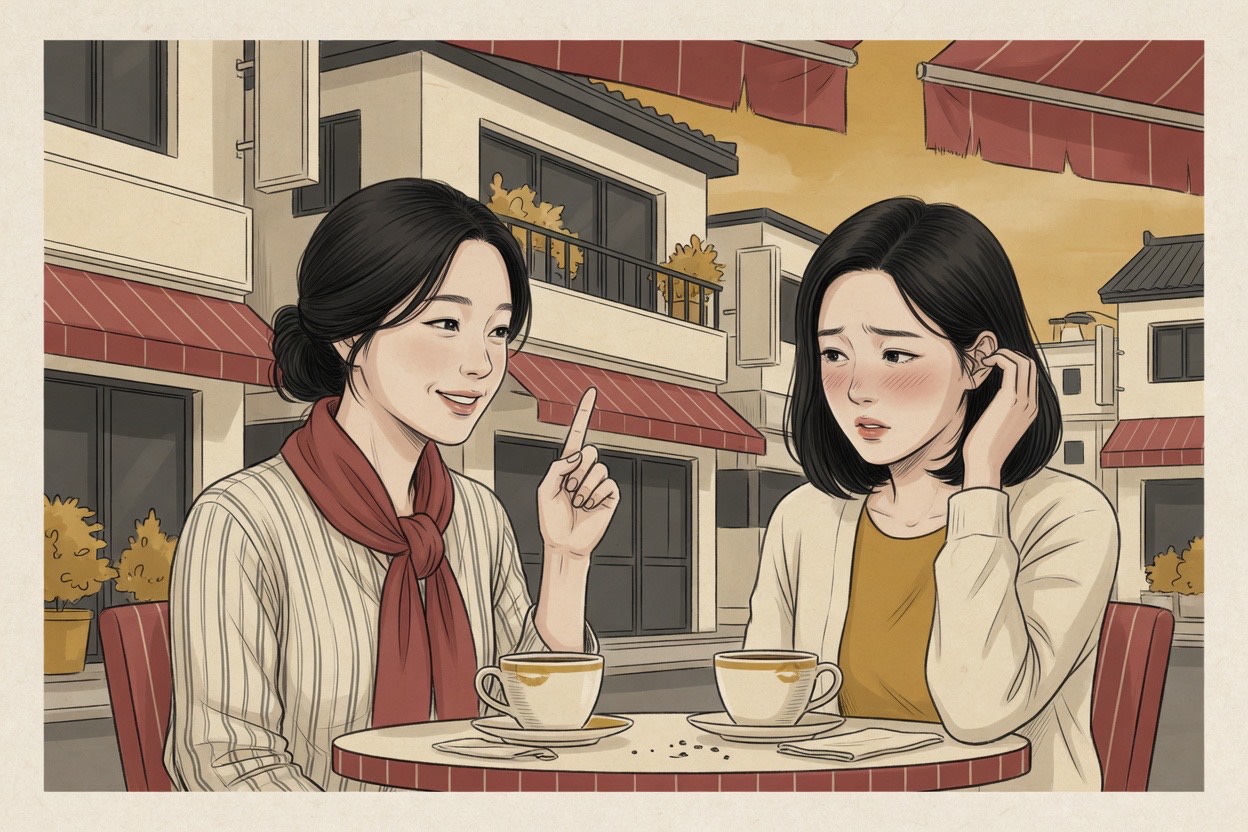
Drama timelines compress intimacy. Two coworkers who meet in episode one may share banmal by episode three because the plot needs chemistry, not HR. Copying that schedule with real strangers is zero nunchi. Default polite speech first; wait for a clear invitation before dropping endings.
2. Oppa to anyone male
If the person is not older and you are not in a relationship frame that earns the title, do not say oppa. Attractive is not a kinship condition. Men do not use oppa as their default address word for other men. When unsure, use a name + 씨, or no title at all.
3. Period-drama endings in modern speech
Sageuk (historical) dramas stack archaic endings, court titles, and speech shapes that modern Seoul does not run at the convenience store. Quoting them as everyday Korean is cosplay. Enjoy the armor. Do not order coffee in it.
What dramas get right
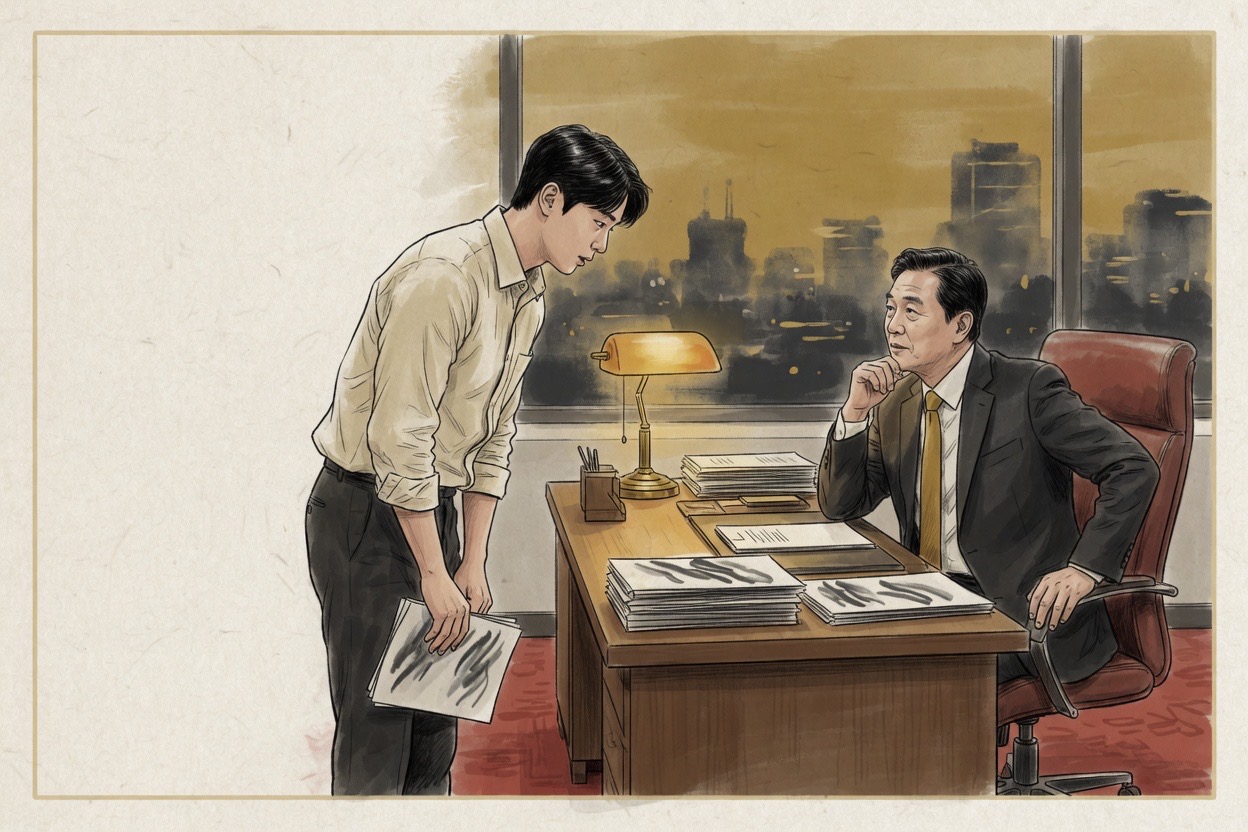
Honest credit: the honorific system is often portrayed accurately enough to learn from. Who bows slightly, who uses 요 endings, who switches when a secret relationship starts—that map is real social software. Watching who uses which form with whom is one of the best free ways to internalize Korean honorifics. Steal the system. Borrow the volume more carefully.
How to watch as a learner
- Track speech-level shifts. When two characters drop into banmal, the relationship just changed—even if nobody said “we’re close now.”
- Watch address words more than monologues. Oppa, unnie, team-lead titles, and name endings tell you the social graph faster than any confession speech.
- Ignore the shouting as a template. Rain-soaked volume is entertainment. Lunch-table Korean is quieter, shorter, and less poetic—and that is the Korean most people actually need.
If a line only works with tears and a score, file it under culture, not phrasebook. For more words that resist neat English, see untranslatable Korean words. For what not to do in a room, keep zero nunchi moments nearby.
Example dialogues
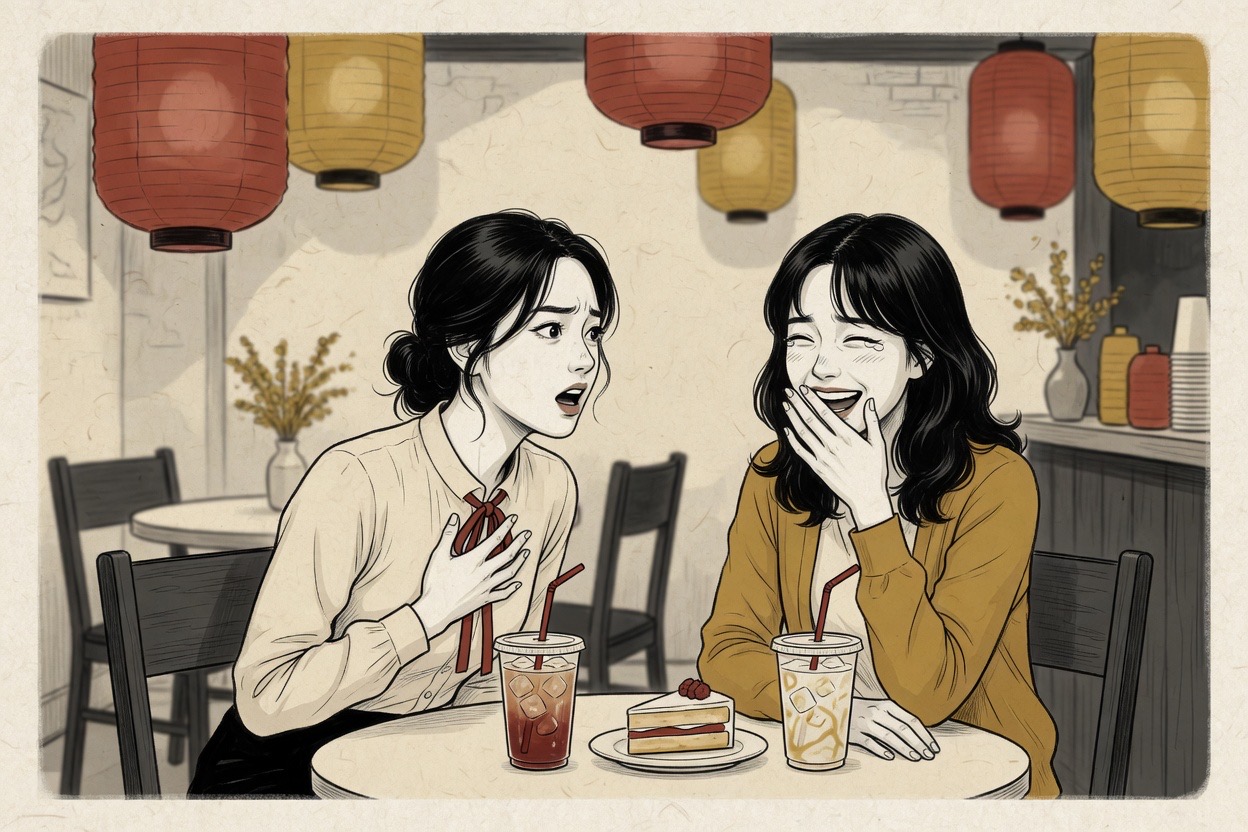
1. Drama line meets real friend (banmal)
Cafe table. A learner friend tries a screen confession after ordinary good news.
- Sam: 대박… 네가 없으면 난 진짜 못 살아.
Daebak… nega eopseumyeon nan jinjja mot sara.
Daebak… without you I really can’t live. - Minji: 야, 지금 드라마 찍냐? 그냥 축하해 하면 돼.
Ya, jigeum deurama jjingnya? Geunyang chukhahae hamyeon dwae.
Hey, are we filming a drama right now? Just say congrats. - Sam: 너무 컸어?
Neomu keosseo?
Too much? - Minji: 한 에피소드 정도 컸어.
Han episodeu jeongdo keosseo.
About one episode too big.
Gloss: Friends in banmal. The vocabulary is Korean; the scale is pure OST. Minji’s 야 works because they are already close equals—not because “ya” is a free greeting.
2. Same feeling, two registers
After a rough day. Same idea—support—said two ways.
Drama register (what the screen rewards):
- A: 내가… 꼭 네 곁에 있을게. 무슨 일이 있어도.
Naega… kkok ne gyeote isseulge. Museun iri isseodo.
I will… stay by your side no matter what happens.
Ordinary register (what a friend more often says):
- A: 힘들었겠다. 오늘 뭐 먹을래? 내가 살게.
Himdeureotgetda. Oneul mwo meogeullae? Naega salge.
That sounds rough. What do you want to eat today? My treat.
Gloss: Both can be sincere. The second is what usually lands across a real table without a camera. Care often looks like food, not a vow.
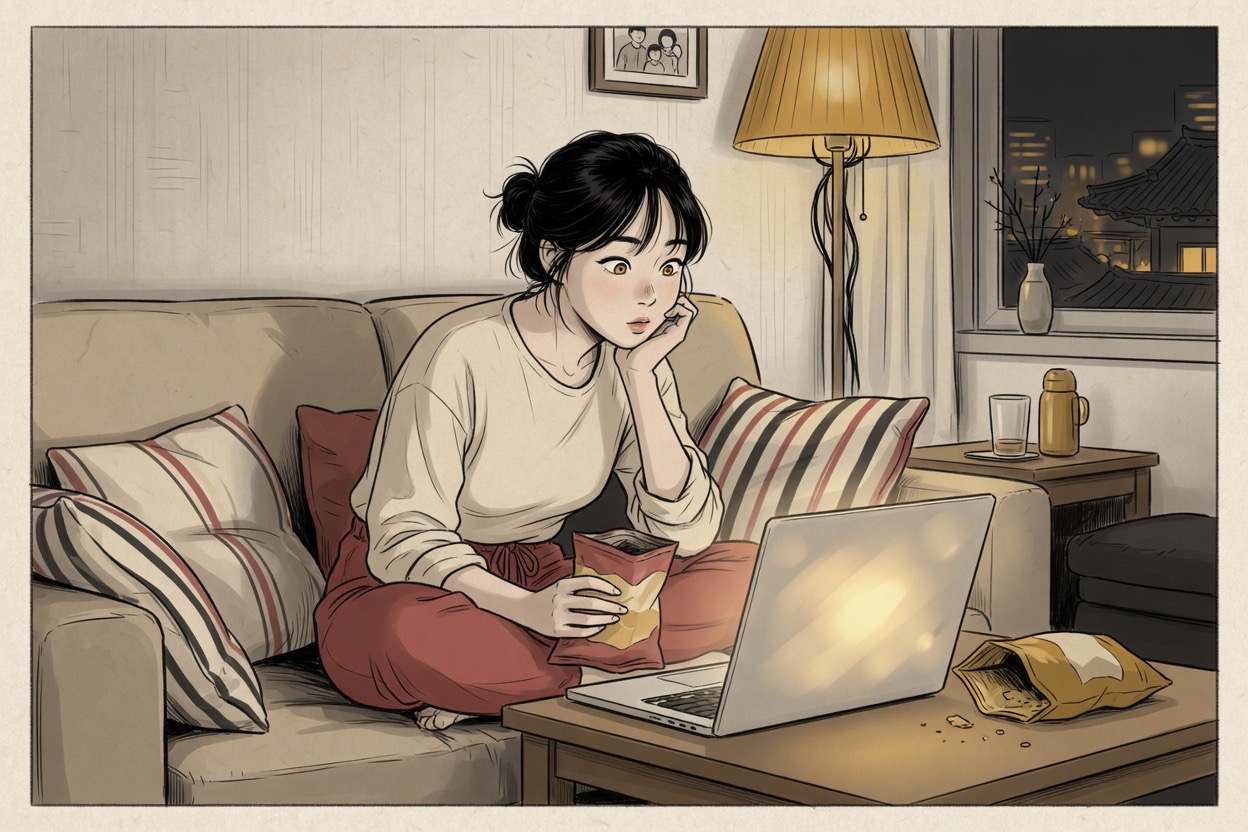
3. Catching a speech-level shift while watching
Sofa, laptop, banmal between two Korean friends.
- Hana: 어, 방금 반말로 바뀌었어.
Eo, banggeum banmallo bakkwieosseo.
Wait—they just switched to banmal. - Yuri: 그렇지. 이제 서로 마음 연 거잖아.
Geureochi. Ije seoro maeum yeon geojana.
Right. That’s them opening up to each other. - Hana: 대사보다 그게 더 로맨스다.
Daesaboda geuge deo romaenseuda.
That’s more romantic than the speech itself. - Yuri: 응. 그래서 드라마로 존댓말 연습하는 게 진짜 도움 돼.
Eung. Geuraeseo deuramaro jondaemal yeonseupaneun ge jinjja doum dwae.
Yeah. That’s why practicing polite speech through dramas actually helps.
Gloss: The useful lesson is not the rain monologue—it is the switch. Relationship change shows up in endings before it shows up in subtitles.
Good nunchi / Zero nunchi
Good nunchi
You learn 괜찮아?, 대박, and 화이팅 from a drama, then use them at the right volume with people who already talk casually with you. When a confession monologue appears, you enjoy it—and do not rehearse it on a classmate who shared their weekend plans. You steal the honorific map, not the OST.
Zero nunchi
Same binge. You call every Korean man 오빠, open with 야! to a store clerk, drop banmal on a first meeting because “the leads did it by episode two,” and say 사랑해 as a party trick. The phrases were Korean. The targeting was a fan-edit of reality.
Do / Don’t
Do
- Keep a two-column habit: screen line vs everyday substitute.
- Learn high-transfer reactions first: 대박, 진짜?, 괜찮아?, 어떡해, 화이팅.
- Watch who addresses whom and when endings soften.
- Default to polite speech with new people—banmal vs jondaemal is the safety rail.
- Use dramas as honorific labs, not as permission slips.
Don’t
- Treat every lead’s banmal timeline as a real-world schedule.
- Say 오빠 to random men, or 야 upward.
- Recycle sageuk endings at modern cafes.
- Confuse emotional volume with fluency.
- Practice 사랑해 on people who did not ask for a finale.
Nearby ideas on Have Nunchi
- Aigoo — the multi-job Korean sigh
- Daebak — jackpot intensity, good or bad
- Oppa — the most mis-copied address word
- Saranghae — love speech with real weight
- Korean honorifics explained — the system dramas actually teach well
- Heol — short shock reaction you’ll hear off-screen too
- Selca — selfie slang adjacent to fan culture, not drama monologues
A closing line
K-drama Korean is not fake Korean. It is Korean with the gain turned up—beautiful for story, risky as a mirror.
Take the words that survive daylight, leave the monologues on the laptop, and let your nunchi decide whether this room wants a subplot… or just lunch.
FAQ
Are Korean phrases from K-dramas real Korean?
Yes—the words are real. The problem is register. Dramas heighten emotion, favor dramatic speech levels, and over-repeat lines like 사랑해 that real people use more carefully.
Can I sound natural if I only learn Korean from dramas?
You will sound like a drama. Some reactions transfer fine (대박, 괜찮아?). Full confession lines, chaebol-heir tone, and period endings mark you as TV-trained, not conversation-trained.
Why do K-drama characters use banmal with each other so fast?
Writers compress intimacy for plot. Leads who meet on Monday may share banmal by episode three. Real Korean usually waits longer—and strangers almost never get casual speech on first contact.
What is the most misused K-drama Korean word by fans?
Oppa (오빠). On screen it is a relationship word; internationally it becomes a label for any attractive Korean man. In real life, speaker gender, age, and closeness all have to fit.
How should language learners watch K-dramas?
Track who calls whom what, notice when speech levels shift as the relationship changes, and treat shouted confession lines as entertainment, not templates for lunch.
Do you have nunchi?
Get short Korean word lessons and social cues in your inbox.