K-Pop Stage Names vs Real Names — Why Idols Perform Under Different Names
Not a cooler nickname—a brand, a boundary, and a search box that has to work worldwide.
- Hangul
- 예명
- Romanization
- yemyeong
- Pronunciation
- ye-myeong
- Category
- Culture
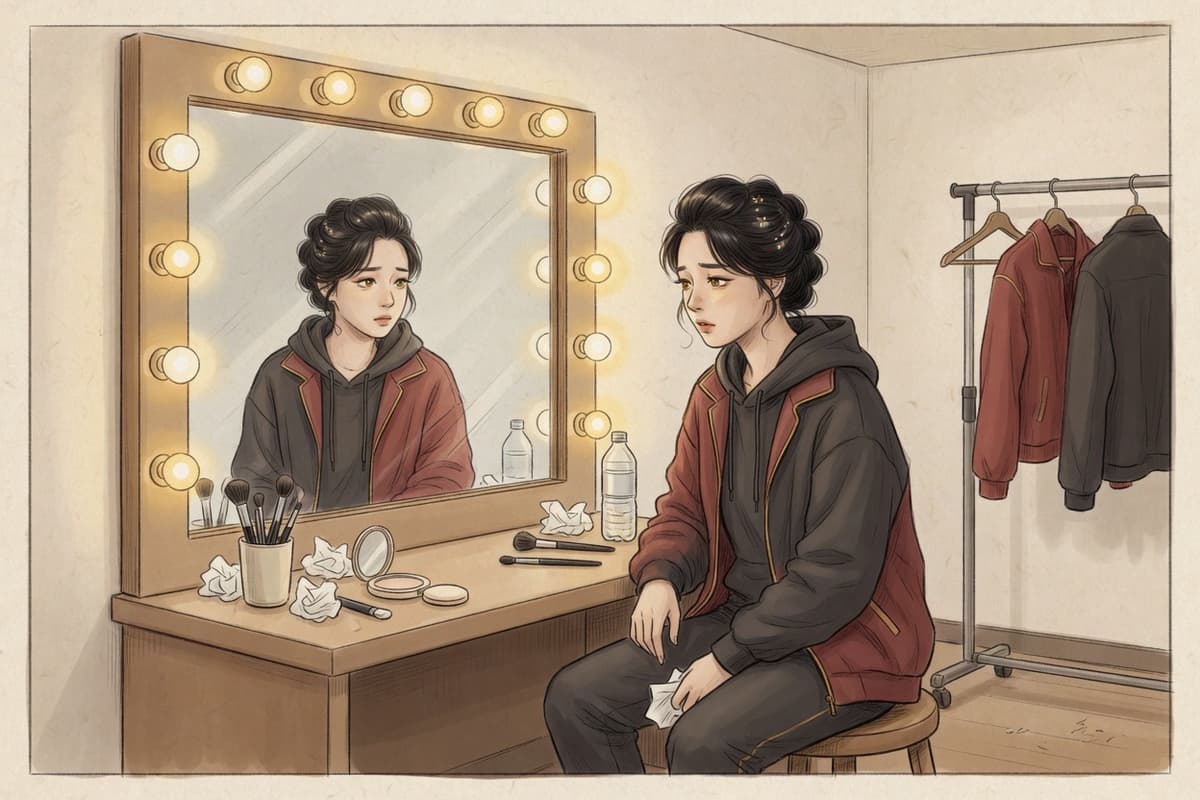
Most Korean artists in hallyu perform under a stage name (예명, yemyeong) while their real name is an ordinary Korean legal name: family name first, then a two-syllable given name. A stage name is not “a cooler nickname.” It is often a brand unit—one syllable or short word that is easy to search, say, and separate from private life. Safe public examples: Jungkook is Jeon Jung-kook (전정국); V is Kim Tae-hyung (김태형); IU is Lee Ji-eun (이지은). One-sentence definition: a K-pop stage name is the performing label; the real name is the Korean civil name behind it, usually three hangul blocks long.
If you searched “bts real names,” “jungkook real name,” “v bts real name,” “iu real name,” or “why do kpop idols change their names,” that is the core map. What follows is how Korean names are built, why stage names exist, the forms they take, and the etiquette fans keep tripping over.
Quick facts
| Hangul for “stage name” | 예명 |
| Romanization | yemyeong |
| Pronunciation | ye-myeong (two short beats) |
| Real-name shape (Korean) | surname (1 syllable) + given name (usually 2 syllables) |
| Name order | family name first in Korean; English bios often flip it |
| What this page will not do | invent private hanja, gossip, or “she was told to change it because…” stories |
| Related skill | reading any Korean name once, not only idol profiles |
What a real Korean name looks like
A standard Korean full name is short and dense:
- One-syllable family name — 김, 이, 박, and the rest of the common set explained in Korean last names.
- Two-syllable given name — the personal half parents chose, often with hanja meaning attached behind the hangul spelling.
So 김태형 is Kim (family) + Tae-hyung (given). 전정국 is Jeon + Jung-kook. 이지은 is Lee + Ji-eun. English fan sites sometimes write given-name-first; Korean order still puts the surname first.
Parents typically choose hanja for the given name—characters that carry meaning. That is a real and interesting general fact. It is also private family information for living people. This page will not print hanja for any specific artist, and it will not invent “his name means X” claims for individuals. For how meanings and syllables work as a system, use Korean names and meanings. For the writing system behind the characters, use hanja explained.

Why a stage name exists (four practical reasons)
English speakers often treat a stage name as pure aesthetic—“pick something cooler.” For Korean artists, the mononym does structural work.
1. Distinctiveness
A large share of the population shares a handful of family names. Inside one generation, certain given-name syllables also cluster hard. A beautiful real name can still be crowded. A stage name creates a unique handle in search bars, credit lists, and light-stick chants.
2. Pronounceability abroad
Global audiences meet the name first as sound. One syllable or a short invented word travels more cleanly than a full three-block Korean name that English speakers keep rearranging. That is branding logistics, not a judgment on the beauty of the real name.
3. Persona separation
The stage name is the performing self. The legal name is the person who still has a private calendar. Fans are curious about the real name for the same reason the boundary exists—because the two labels are not the same job. Curiosity is normal. Crossing into private hunting is where sasaeng territory begins.
4. Collision avoidance
Music industries already hold other artists, trademarks, and search collisions. A new handle can be the cleanest way to own a name online and on a bill. This page will not invent contract stories for any one person; the pattern is industry-wide.
Types of stage names (by form, not by gossip)
Organize by shape, not by fandom lore.
A single syllable from the real name
Very common. The stage handle keeps a thread to the given name so Korean audiences still hear something familiar, while the brand becomes one tight unit. Jungkook is the clearest widely known case where the given name itself is the performing name.
A single English letter or short English word
A letter or short English token becomes the whole brand. V is the textbook public example: the stage mononym is one letter; the real name Kim Tae-hyung sits behind it in profiles and introductions.
A completely separate invented word
Some stage names are not clipped from the legal given name at all. IU is the widely known case—stage brand on the outside, Lee Ji-eun on the civil side. The point is the pattern: the performing label can be designed as a new word, not only shortened from home.
The real name kept as-is
Plenty of artists never change the performing name away from their given name (or a transparent romanization of it). Keeping the real name is also a choice. Stage names are common; they are not mandatory cosplay for every debut.
A shortened childhood nickname
Some handles start as a nickname that already lived in family or school life, then get locked as the professional mononym. Again: pattern, not a dossier on any one childhood.
Non-Korean legal names in K-pop groups
Not every globally famous K-pop idol has a Korean legal name. Lisa of BLACKPINK is Thai; her widely published full name is Lalisa Manoban, and Lisa is the stage short form. That contrast matters: this page’s “surname + two-syllable given name” map is for Korean civil names. International members bring different naming systems into the same industry.
Why fans cannot always find the real name
Sometimes the real name is public and repeated everywhere—agency profiles, Korean news, the artist’s own introductions. Sometimes it is not. Privacy preferences differ. Korean media also names people differently from English fan wikis: full name with surname first, stage name only, or a mix depending on context.
If a real name is not sitting in every reliable public profile, treat the absence as information. Do not treat it as a puzzle to force open. Interest in a stage-versus-legal map is one thing. Hunting addresses, schedules, and family data is how fan curiosity slides into sasaeng behavior.
How to read a Korean name yourself
This is the transferable skill that outlives any one fandom chart.
- Find the surname — usually the first hangul block (or the first syllable in a careful romanization): Kim, Lee, Park, Jeon, and so on.
- Read the next two syllables as the given name — often written with a hyphen in English (Tae-hyung, Ji-eun, Jung-kook), though styles vary.
- Do not assume the hangul tells you the hanja — the same hangul syllables can map to different characters; meaning lives in the characters parents chose, not in the spelling alone.
- Expect order flips — Korean: family name first. Many English bios: given name first for the stage brand, full legal order when they list “real name.”
If you want the reverse direction—building a Korean-style name for yourself rather than parsing someone else’s—see my name in Korean.
| You see | Read it as |
|---|---|
| 김태형 | Kim (surname) + Tae-hyung (given) |
| 전정국 | Jeon + Jung-kook |
| 이지은 | Lee + Ji-eun |
| Stage mononym only (V, IU) | Performing brand; legal full name is separate |
| Lisa / Lalisa Manoban | Thai full name; not the Korean three-block pattern |
The honorifics wrinkle fans hit
English fandom speech loves kinship titles: oppa, unnie, noona, hyung. Those words have real rules—speaker gender, target gender, and age direction—not free stickers for every bias list. Using them online as fandom dialect is one game. Using them with real people in a Korean room is another.
There is a second, quieter rule about names themselves: even when a real given name is public, calling an idol by that bare given name is something Korean fans generally avoid in ordinary talk. The stage name is the public handle. Dropping into the legal given name—especially with a casual 야/아 call ending—can sound either weirdly intimate or like you are performing insider status. Good nunchi keeps the stage name for public reference and leaves the private name where the artist put it: behind the work.

Example dialogues
1. Two fans, banmal, stage name vs real name
Café after a comeback stream. Both women are in their early twenties; they already speak casually.
- Sora: 야, 근데 본명으로 부르는 게 더 친근하지 않아?
Ya, geunde bommyeong-euro bureuneun ge deo chingeunhaji ana?
Hey, but isn’t calling them by their real name more intimate? - Haeun: 친근한 게 아니라 부담스러워. 예명이 있는 이유가 있잖아.
Chingeunhan ge anira budamseureowo. Yemyeong-i inneun iyuga itjanha.
That’s not intimacy—it’s a lot. There’s a reason the stage name exists. - Sora: ……알겠어. 무대 이름은 무대 이름.
……Algesseo. Mudae ireumeun mudae ireum.
……Got it. Stage name stays the stage name.
Gloss: Banmal between friends. 본명 = real/legal name; 예명 = stage name. The correction is social, not grammar.
2. Korean friend steers an international fan off the bare given name
Practice-room hallway talk. Friends in their twenties; casual speech.
- Alex: 오늘 정국 진짜 대박이었다.
Oneul Jeongguk jinjja daebag-ieotda.
Jungkook was insane today. - Minho: 응, 정국이 진짜 잘하더라.
Eung, Jeonggugi jinjja jalhadeora.
Yeah, Jungkook was really good. - Alex: 본명으로 불러도 돼? 더 팬 같고.
Bommyeong-euro bulleodo dwae? Deo paen gatgo.
Can I use the real name? Feels more “fan.” - Minho: 그냥 예명 써. 본명 막 부르는 건 좀 그래.
Geunyang yemyeong sseo. Bommyeong mak bureuneun geon jom geurae.
Just use the stage name. Tossing the real name around is kind of off.
Gloss: Still banmal. Notice Minho answers with the stage given name in normal fan talk—not a sudden full legal full-name performance, and not a lecture about private hanja.
3. Concert merch vs credits, mixed friend group
Venue lobby, light-stick bags in hand.
- Yuri: 어? 티셔츠에는 이 이름인데, 크레딧에는 다른 이름이네.
Eo? Tisyeocheu-eneun i ireum-inde, keuredit-eneun dareun ireum-ine.
Huh? The T-shirt has this name, but the credits have a different one. - Jun: 그게 예명이랑 본명이야. 둘 다 맞아.
Geuge yemyeong-irang bommyeong-iya. Dul da maja.
That’s stage name and real name. Both are correct. - Yuri: 아, 그래서 검색할 때마다 결과가 갈렸구나.
A, geuraeseo geomsaekhal ttaemada gyeolgwaga gallyeotguna.
Ah—so that’s why search results kept splitting.
Gloss: Casual discovery, no celebrity dialogue. Two labels, one person, different jobs.

Good nunchi / Zero nunchi
Good nunchi
You learn a public real name from a reliable profile. You file it as context—how Korean names are ordered, which part is the surname—and you keep using the stage name when you talk about the work. You do not announce the legal name as a personality flex in a group chat full of strangers.
Zero nunchi
You treat the real name like a secret password. You correct other fans mid-sentence, drop the bare given name with casual call endings, and dig for family details “for completeness.” The room did not ask for a private-life demo. You confused trivia volume with closeness.
Do / Don’t
Do
- Use the stage name as the default public handle.
- Read a Korean full name as surname first, then two-syllable given name.
- Remember that keeping the real name is a valid artist choice, not a failure to brand.
- Treat curiosity about naming systems as language learning—and sasaeng lines as hard walls.
Don’t
- Invent hanja or personal name meanings for living artists.
- Assume every idol “changed” a name because the real one was embarrassing.
- Call artists by bare legal given names to sound like an insider.
- Paste kinship titles (oppa / unnie / hyung / noona) without knowing speaker gender and age direction.
Nearby ideas
- Korean last names — why Kim / Lee / Park density makes mononyms useful
- Korean names and meanings — how given-name syllables and meanings work as a system
- Hanja explained — the character layer behind many Korean names
- My name in Korean — reverse direction: mapping your name into Korean form
- Hallyu — the wider wave the idol industry rides
A closing line
A stage name is not a confession that the real name was insufficient. It is a tool—for search, for sound, for the thin wall between the person who clocks out and the persona who still has an encore. Learn the map. Keep the wall.
FAQ
What is Jungkook’s real name?
BTS’s Jungkook is Jeon Jung-kook (전정국). His stage name is his given name; the full Korean name puts the family name Jeon first.
What is V’s real name in BTS?
V’s real name is Kim Tae-hyung (김태형). V is the stage mononym; Kim is the family name and Tae-hyung is the two-syllable given name.
What is IU’s real name?
IU’s real name is Lee Ji-eun (이지은). IU is the stage name; Lee is the family name and Ji-eun is the given name.
What is Lisa of BLACKPINK’s real name?
Lisa’s widely published full name is Lalisa Manoban. She is Thai, not Korean—so her legal name does not follow the Korean surname-plus-two-syllable pattern this page maps for Korean artists.
Why do K-pop idols change their names?
Many perform under a stage name for distinctiveness, easier global pronunciation, persona separation, or to avoid clashing with another artist. Plenty keep their real given name. A stage name is branding and boundary, not proof that the real name was “wrong.”
Read next
Do you have nunchi?
Get short Korean word lessons and social cues in your inbox.