What Does “Noona” Mean in Korean? (Men’s Word for Older Sister)
Older sister, crush energy, idol fandom—same word, different rooms.
- Hangul
- 누나
- Romanization
- noona
- Pronunciation
- noo-nah
- Category
- Words
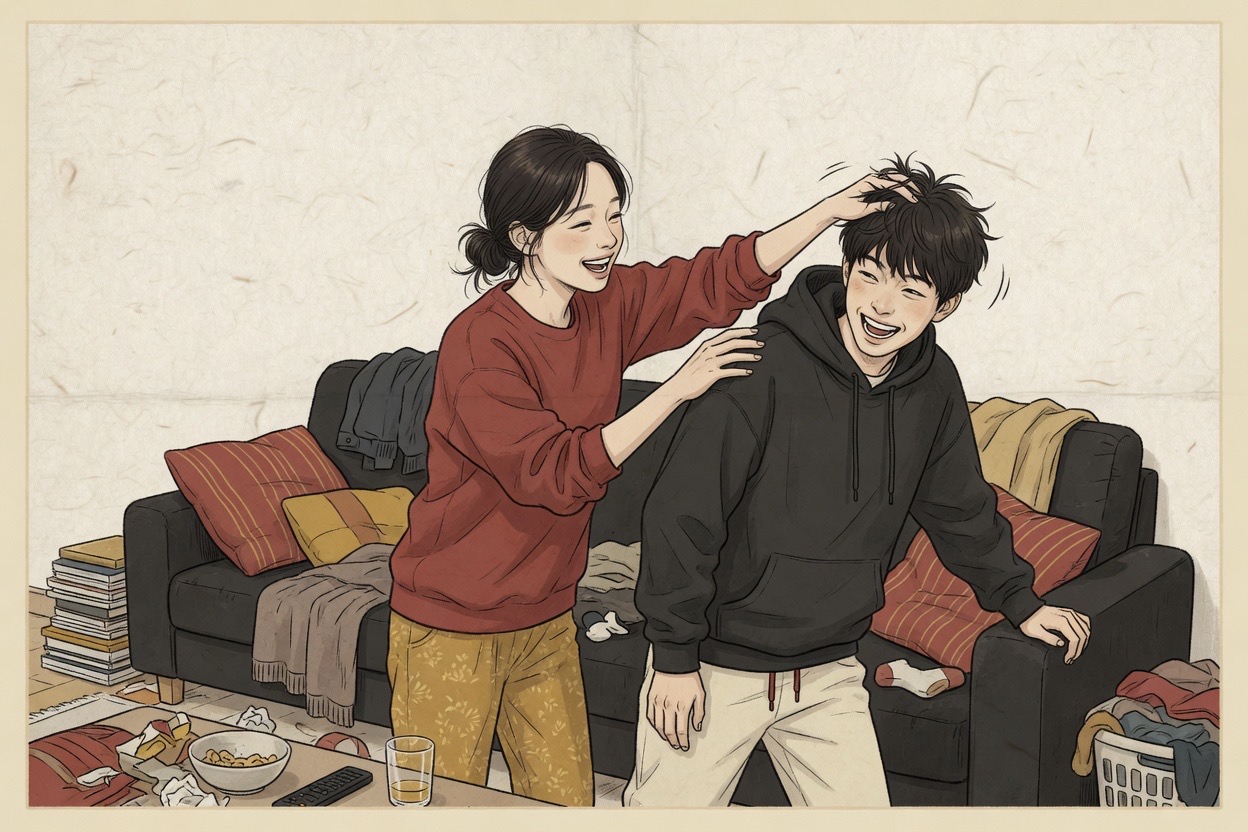
Noona (누나, pronounced noo-nah) is a Korean kinship title a man or boy uses for an older sister—and, by extension, for older female friends, romantic partners, and sometimes older women in entertainment. Women and girls do not say noona for that role; they use unnie (언니) instead. One-sentence definition: noona marks “older female, from a male speaker,” with closeness baked in.
English “older sister” only covers the blood-relative core. The rest of the word’s job is social software: relative age, speaker gender, and how warm the relationship is allowed to sound. Used well, it softens a room. Used on a stranger, a boss, or every slightly older woman in a group chat, it can land as flirty, presumptuous, or simply wrong.
Quick facts
| Hangul | 누나 |
| Romanization | noona |
| Pronunciation | noo-nah (even stress; not “NOO-nuh” with a hard snap) |
| Literal sense | older sister (from a brother’s perspective) |
| Speaker | man / boy |
| Addressee | older female (sister, friend, partner, sometimes colleague or idol) |
| Female equivalent | unnie / eonni (언니) |
| Male-to-male pair | hyung (형) for older males; oppa is the female-speaker version of “older male” |
How do you pronounce noona?
Noo-nah. Two clear syllables, no double consonant drama. The first vowel is like noon without a long English n hold; the second is a soft ah, not a clipped uh.
You may also see nuna—that spelling tracks Korea’s official romanization more closely. In English search and fandom writing, noona won. Both point to the same hangul: 누나.
Why do Koreans say noona?
Korean everyday address leans hard on who is older relative to whom and who is speaking. Where English might use a first name or “hey,” Korean often pulls a kinship title—even when nobody shares DNA.
Noona sits in that grid:
- Blood: a man’s older sister.
- Social: an older female friend he is close enough to address casually.
- Romantic: some younger men call an older girlfriend noona; it can sound tender, protective-in-reverse, or playfully soft.
- Media / fandom: male idols to older women; fans borrowing the word online.
The point is not that Koreans run a genealogy club at every café. The point is that who may call whom what is part of the social OS. Age is not small talk—it is address infrastructure. Getting the title wrong is not only a vocabulary miss; it is a tiny status miss.
If you care about sounding socially tuned, this sits next to nunchi—reading whether the room wants warmth, distance, or titles left alone.
Noona vs unnie (and the rest of the set)
People search “noona vs unnie” because both get glossed as “older sister” or “older woman.” The real split is who is speaking.
| Title | Hangul | Who says it | To whom |
|---|---|---|---|
| noona | 누나 | man / boy | older female |
| unnie / eonni | 언니 | woman / girl | older female |
| oppa | 오빠 | woman / girl | older male |
| hyung | 형 | man / boy | older male |
So:
- Younger brother → older sister: noona
- Younger sister → older sister: unnie
- A man to his slightly older female friend: often noona once they are close
- A woman to that same older female friend: unnie, never noona
Can a girl say noona?
Normally, no. The system is speaker-gendered, not “vibe-gendered.” A female speaker reaching for an older female uses unnie. If a girl says noona, listeners usually hear one of these:
- a joke or meme quote
- a learner mixing the chart
- a character bit (cosplay, variety gag, online persona)
It is not the everyday path. Teach the system rather than a flat ban: women say unnie; men say noona; both mean older female relative to the speaker.
What does noona mean at home?
At home, noona is the older sister from a younger brother’s mouth—and often from a younger male cousin’s, once the family tone is casual enough.
The role is care plus leverage:
- She may feed him, scold him, and cover for him in the same afternoon.
- He gets teasing rights and protection duties in reverse—she can still boss the remote.
- Parents may recruit him to “listen to noona” as if she were a junior manager of the household.
Blood-noona is ordinary furniture of family life. It is not flirty by default. The soft romantic coloring that English speakers sometimes hear in the word is a social extension, not the kitchen-table baseline.
Noona romance (누나 연애)
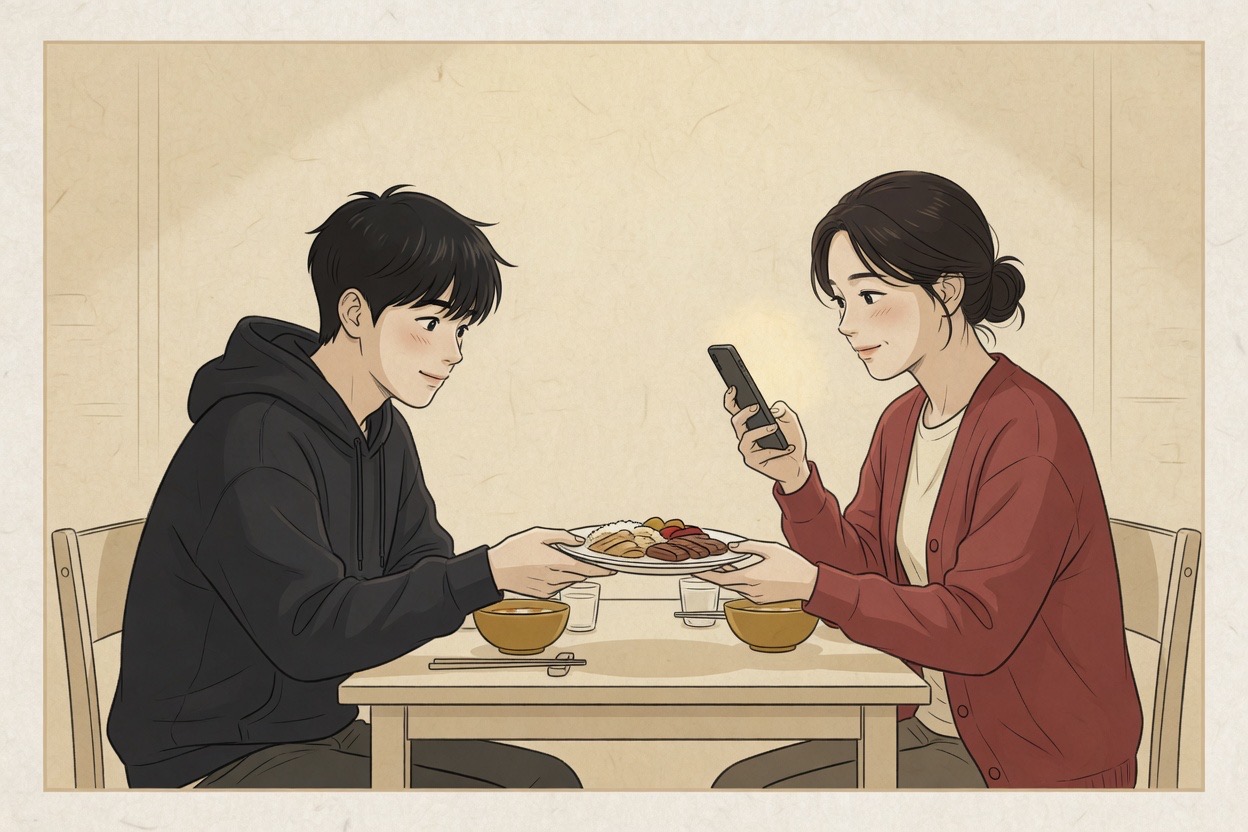
Search “noona romance” and you are usually hunting a media pattern, not a legal category. In Korean pop culture talk, noona-yeondae (누나 연애) points to the older-woman / younger-man pairing: she leads a little (or a lot); he looks up, frets, and falls hard; the age gap is part of the plot weather.
Why it carries extra weight:
- Korean address culture makes age audible. A younger man calling his partner noona announces the gap every time he opens his mouth.
- Family and peer comment often treats “she is older” as more of a story than the reverse pairing gets in casual English chat.
- Dramas and webtoons use that friction as romance fuel: hesitation, pride, protective jokes, the question of who takes care of whom.
Describe it as a genre pattern, not a census fact. Plenty of real couples ignore the fuss. Plenty of stories amplify it for tension. English “cougar” stereotypes are a poor match—noona romance in Korean media is often tender, stylish, and emotionally earnest, not only tabloid-coded.
If you are dating across that gap
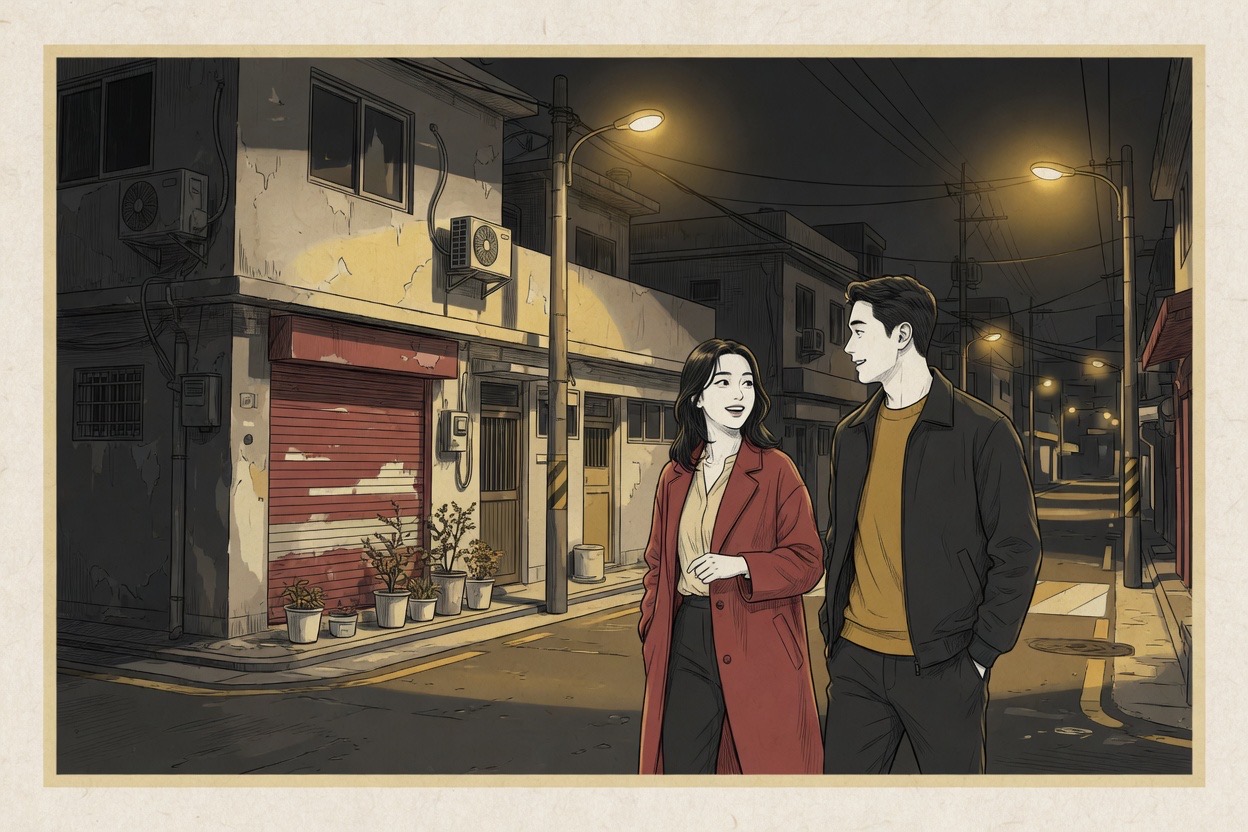
Some younger men do call an older partner noona. It can mean affection with a soft hierarchy—“you’re a little older, I like that frame.” It can also feel wrong if she wants equal, name-first intimacy, or if the title only appears as a drama performance she never asked for.
Mirror what she already accepts. Romantic noona is chemistry plus consent, not a rule you impose after three dates.
What does noona mean in K-pop?
In group life and fandom speech, noona shows up in a few different rooms:
- Male idols → older female members or staff. If he is younger and the relationship is close enough, noona is ordinary kinship logic on a schedule board.
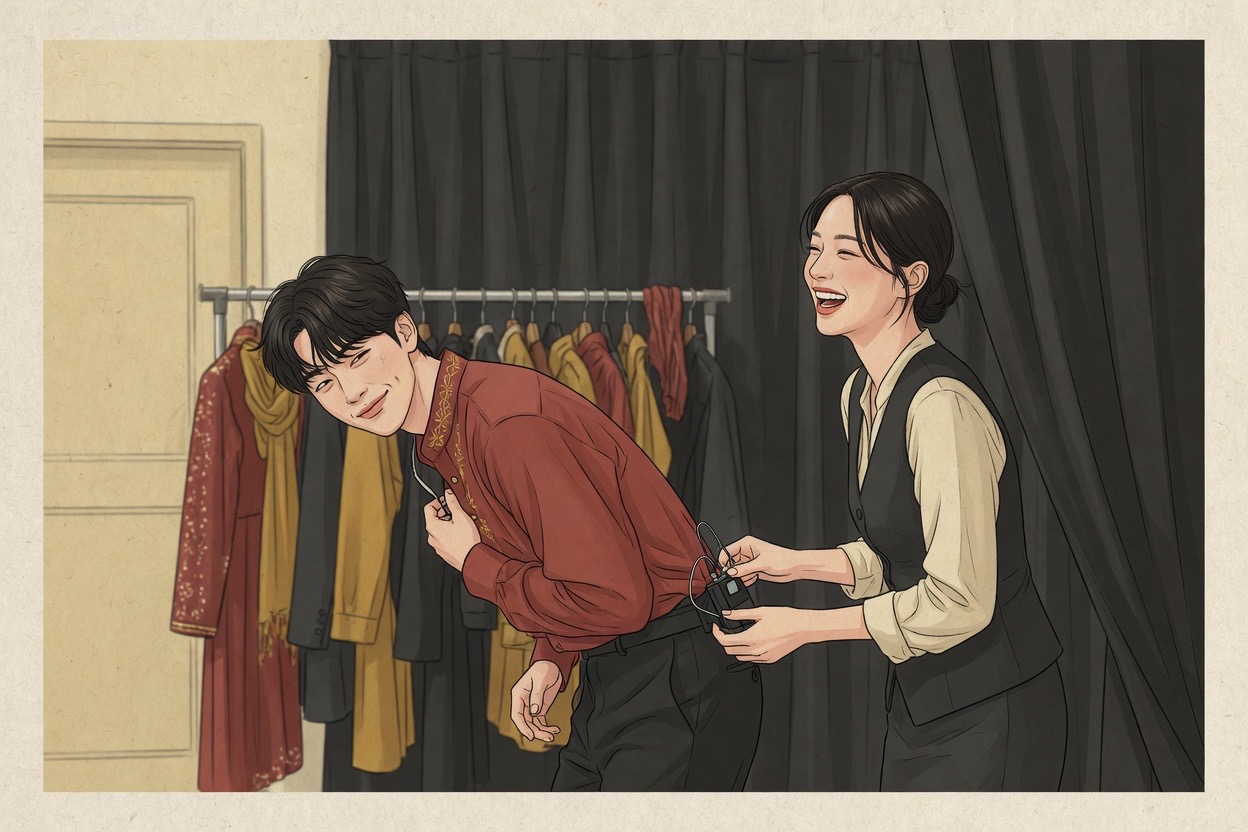
- Variety and behind-the-scenes. Playful bows, mic-pack fixes, “thank you, noona” after a scolding that was clearly love.
- Fan speech. Fans borrow noona online the way they borrow oppa—affectionate, slightly loose, not a real sibling claim.
Useful boundaries:
- Fan noona ≠ personal claim. Captioning an idol “noona” does not put you in her family chat.
- Age math can fuzz online. Fandom dialect drifts; real rooms with real people stay stricter.
- Not every Korean uses fan titles. Some find them cute; some find public overuse noisy.
If your only exposure is fandom English, remember: the kinship core still matters when you are standing in someone’s living room.
Calling someone noona when you are not close
This is where learners get burned.
Often warm
- Real older sister or older female cousin in a casual family
- Close older female friend who already accepts the title
- Older partner who likes it
- Workplace-adjacent friendship after banmal and nicknames are mutual—not on day one
Often presumptuous or flirty-wrong
- A woman you just met at a shop, gym, or networking event
- Seniors, clients, professors (default to names + polite speech levels)
- Any woman who has not opened that door
- Foreign-speaker overuse: every older woman becomes “noona,” every sentence becomes a performance
Age hierarchy makes the word powerful. Power without closeness is how sweetness turns sticky. A soft noona from a man who barely knows her can read as a dating probe he never announced. Sometimes she laughs it off. Sometimes the room goes polite and quiet.
The maknae of a friend group might call an older woman noona if the whole circle already runs on kinship titles. Copy the group’s software; do not install your own overnight.
When you’ll hear it
- A younger brother yelling for his sister to open the bathroom door.
- Friends at a café: he is 24, she is 27, and he has been calling her noona for years.
- A couple texting; he opens with 누나, 뭐 해?
- Backstage chatter: junior male staff to an older female manager he trusts.
- A foreign learner trying it once, then freezing when the smile becomes professional.
You will not typically hear a woman call another woman noona unless she is joking, quoting, or still sorting the chart.
Example dialogues
1. Real sister, casual home speech
Living room, evening. Younger brother wants the good snacks.
- Brother: 누나, 과자 어디 있어?
Noona, gwaja eodi isseo?
Noona, where are the snacks? - Sister: 부엌 선반 위에. 그리고 다 먹지 마.
Bueok seonban wie. Geurigo da meokji ma.
On the kitchen shelf. And don’t eat them all. - Brother: 조금만 먹을게.
Jogeumman meogeulge.
I’ll just have a little.
Gloss: Banmal (casual speech). Blood-noona is ordinary home logistics—not a romance cue.
2. Older girlfriend, soft check-in
Texting after work.
- Boyfriend: 누나, 오늘 많이 피곤해?
Noona, oneul mani pigonhae?
Noona, are you really tired today? - Girlfriend: 좀. 집에 가서 뭐 먹을까?
Jom. Jibe gaseo mwo meogeulkka?
A bit. What should we eat when we get home?
Gloss: Romantic noona often replaces her name. Warm hierarchy, not formal distance—only if she likes the frame.
3. Friend group, age clear, closeness earned
Cafe, close friends. He is younger; she is older by a few years.
- Junho: 수진 누나, 다음에 영화 보러 갈래?
Sujin noona, daeume yeonghwa boreo gallae?
Sujin noona, want to catch a movie next time? - Sujin: 그래. 스릴러 말고 코미디로 가자.
Geurae. Seurilleo malgo komidiro gaja.
Sure. Let’s do a comedy, not a thriller. - Junho: 알겠어. 누나가 골라.
Algesseo. Noonaga golla.
Got it. Noona, you pick.
Gloss: First-name + noona is common among close friends. He would not use this with a professor he just met.
Good nunchi / Zero nunchi
Good nunchi
You are a man at a Korean friend’s hangout. Your friend introduces his older sister. She already answers to noona from him; after a warm conversation, she laughs and says you can use it too. You try it once, lightly. The room stays easy. You did not force intimacy—you accepted an invitation.
Zero nunchi
Same hangout. You have never met her. You greet her with a loud “Noona~!” because a drama taught you it was charming. She freezes. Your friend does the smile that is not a smile. You meant warmth. The room heard stranger-level overfamiliarity with a kinship title—and a possible flirt you never earned.
Do / Don’t
Do
- Use noona only if you are speaking as a man/boy (or knowingly performing that role in play/fandom).
- Check age and closeness. Noona is warm; it is not a universal female honorific.
- Learn the chart next to hello in Korean basics: titles and speech levels travel together.
- Accept correction gracefully. Titles are renegotiated as relationships change.
Don’t
- Call a female coworker noona on day one of the job.
- Assume every older Korean woman wants to be anyone’s noona.
- Use it as random “Korean flavor” for any woman slightly older than you.
- Confuse fan-caption noona with real-room permission.
Nearby ideas (for later on Have Nunchi)
- Oppa (오빠) — older male, from a female speaker
- Hyung (형) — older male, from a male speaker
- Unnie / eonni (언니) — older female, from a female speaker
- Maknae (막내) — youngest in a group; the other end of the age stick
- Nunchi (눈치) — reading whether this room wants teasing, titles, or quiet respect
A closing line
Noona is not a free costume. It is a relationship label with age and speaker gender baked in.
Use it where closeness already lives—and keep your nunchi for the rooms where a first name, or polite distance, is kinder.
FAQ
What does noona mean in Korean?
Noona (누나) is what a man or boy calls an older sister, or an older female friend or partner. Women and girls use unnie (언니) for the same kind of relationship instead.
Noona vs unnie—what’s the difference?
Both mean “older sister / older female.” The speaker’s gender decides: men and boys say noona; women and girls say unnie. Mixing them up marks you as still learning the system.
Can a girl say noona?
Normally no. A female speaker uses unnie for an older female. A girl saying noona usually sounds like a joke, a quote, or a learner’s slip—not standard address.
What is noona romance?
A familiar K-drama and media pattern where a younger man dates or falls for an older woman. The age gap often carries more social comment in Korean settings than the same pairing does in English.
What does noona mean in K-pop?
Male idols may call older female members or staff noona when the age and closeness fit. Fans also borrow the word online as affectionate fandom speech—less strict than real-room kinship rules.
Do you have nunchi?
Get short Korean word lessons and social cues in your inbox.