What Does “Sasaeng” Mean? The Line Between Fan and Invasion
When fandom stops being support and starts being surveillance.
- Hangul
- 사생
- Romanization
- sasaeng
- Pronunciation
- sa-seng
- Category
- Slang
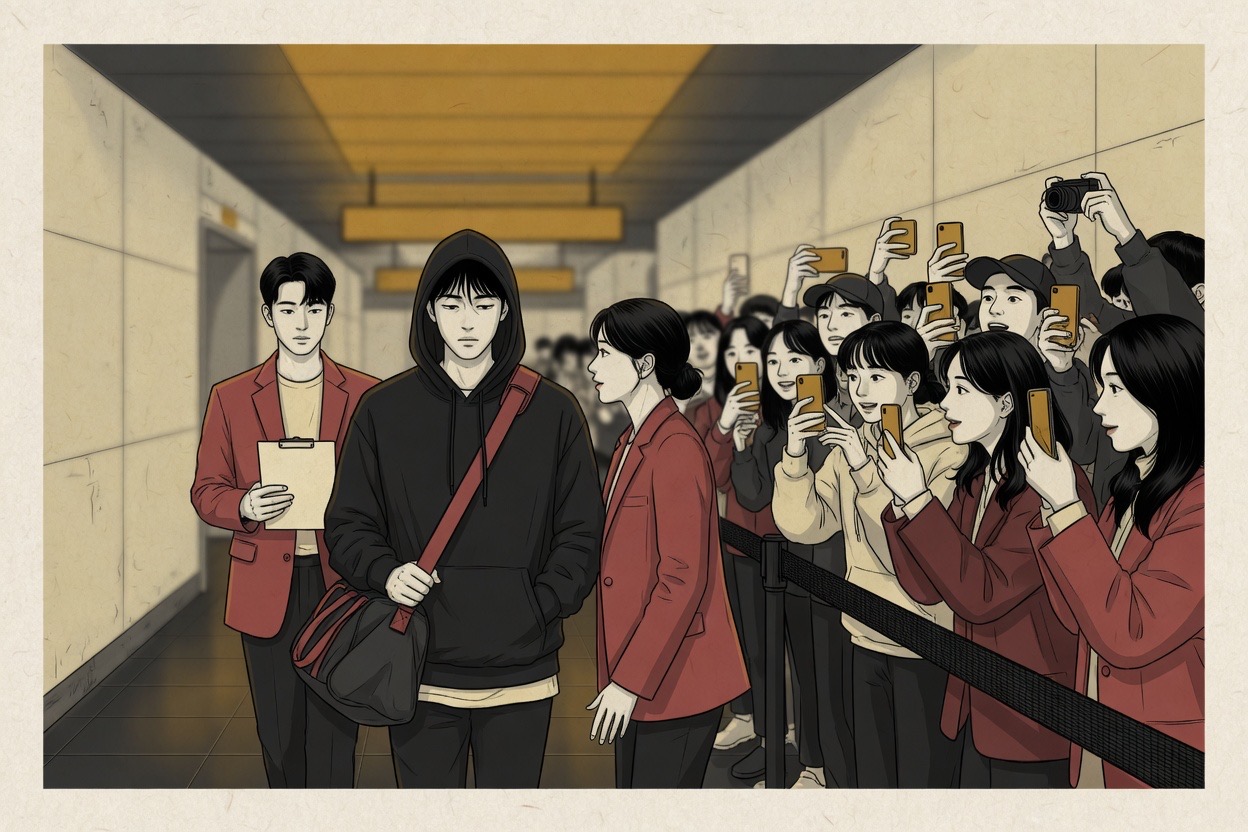
Sasaeng (사생, pronounced sa-seng) is Korean fandom shorthand for someone who invades a celebrity’s private life. The word clips 사생활 (sasaenghwal), “private life.” A sasaeng fan (사생팬) is not “super dedicated.” It is the label for fans who stalk schedules, camp outside dorms or homes, chase cars, trade phone numbers, or force contact after the workday ends. One-sentence definition: sasaeng marks invasion of privacy, not volume of love.
English “obsessed fan” or “stalker fan” gets close, then flattens the culture around it. In Korean discourse, the word carries real moral weight—used by other fans, agencies, and media to draw a bright line between support and surveillance. Loving a performer hard is ordinary. Treating their off-stage life as open inventory is not.
Quick facts
| Hangul | 사생 |
| Romanization | sasaeng |
| Pronunciation | sa-seng (two short syllables; not “say-sang”) |
| From | 사생활 (sasaenghwal) — private life |
| Full label | 사생팬 (sasaeng-paen) — sasaeng fan |
| Category | fandom ethics / privacy, not “cute slang” |
| Not the same as | ordinary fan · polar / extreme fan · anti-fan |
How do you pronounce sasaeng?
Say sa-seng: two clean beats, even stress. The first vowel is short (like sa in “saga”), not “say.” The second syllable is seng as in “sending,” not “sang” as in a choir.
You will also hear the fuller form sasaenghwal when people talk about private life in general, outside fandom. In idol talk, the clipped form sasaeng plus 팬 (fan) is the usual compound: 사생팬.
What does sasaeng actually cover?
Searches for “what does sasaeng mean” usually want a definition and a behaviour list. The core is always the same: private life without consent. Common patterns people group under the label include:
- Following and tracking — using tips, photos, or schedule leaks to appear wherever a performer goes off-stage
- Airport and dorm camping — waiting hours or days for a forced sighting, not an official event
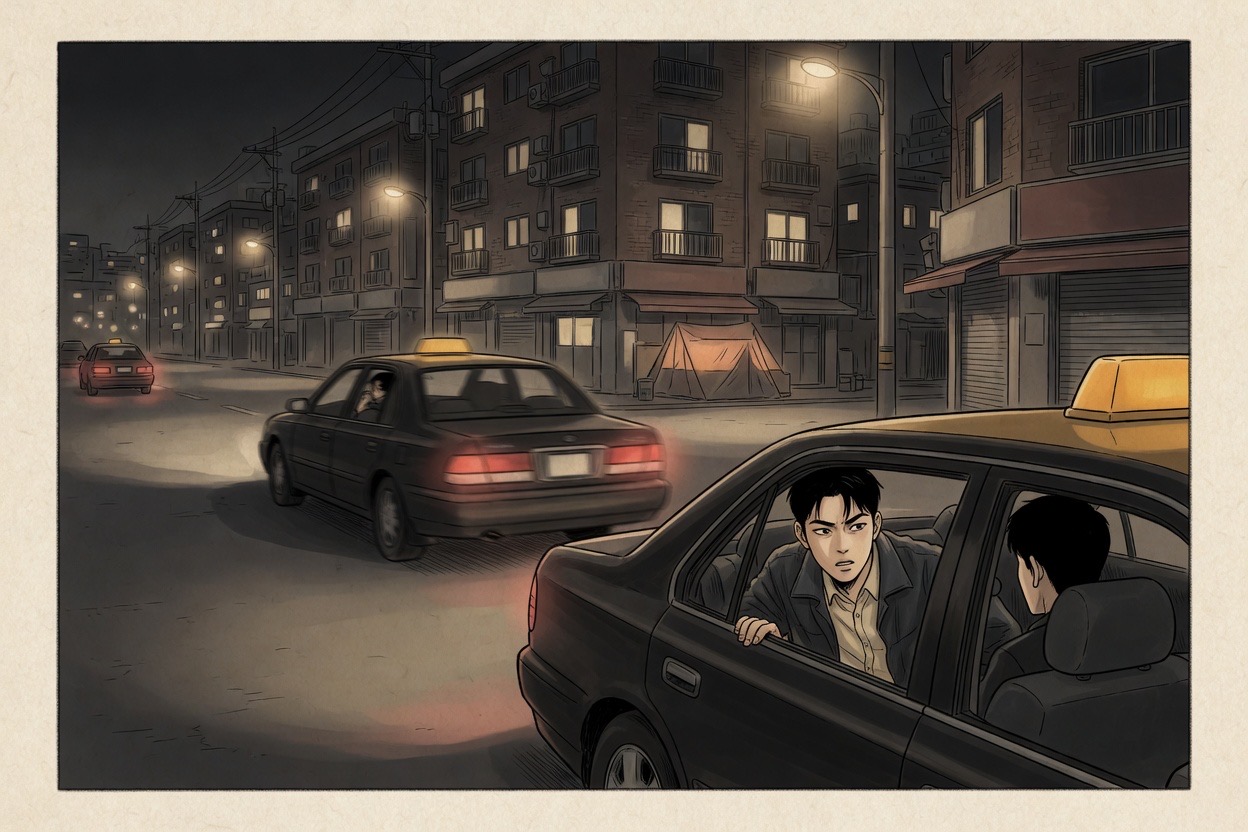
- Taxi and car chasing — trailing vehicles after schedules end
- Phone and address trading — buying, selling, or circulating personal contact details and home locations
- Uninvited contact — messages, gifts, or appearances at private spaces framed as “support”
- Hacking / account intrusion — accessing private accounts or devices (criminal territory, not “fandom intensity”)
Not every intense fan does these things. Not every awkward airport photo is automatically sasaeng. The pattern that matters is pursuit of private access: treating off-duty time as a stage the fan is entitled to enter.
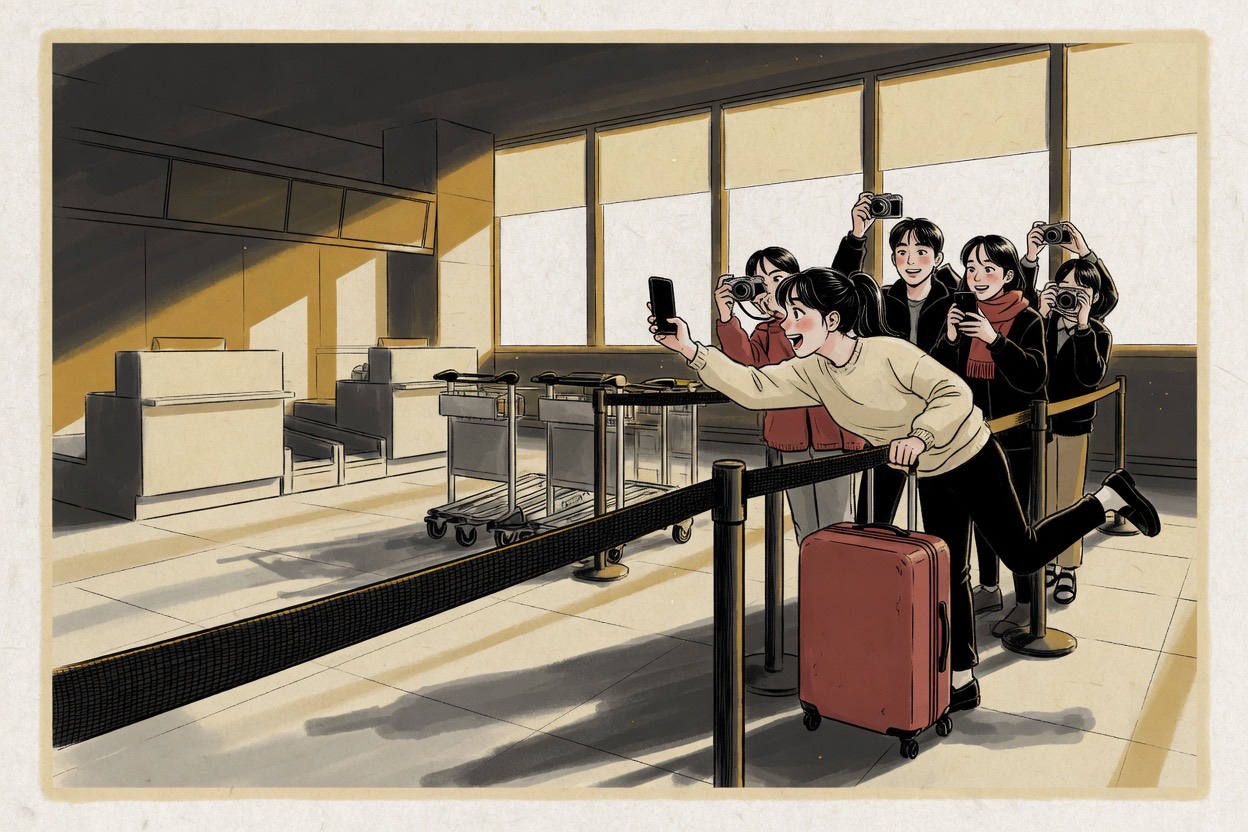
Sasaeng fan vs fan vs polar fan
This is the triangle English-language K-pop talk often collapses into one word: “crazy fan.” Korean fandom speech usually keeps the layers separate.
| Label | Hangul | Rough sense | The line |
|---|---|---|---|
| Fan | 팬 | Supports work, attends official events, buys music, cheers | Stays in public / official space |
| Polar fan (extreme fan) | 극성팬 | Very intense: long waits, heavy spending, loud online defense | Intensity without private invasion |
| Sasaeng fan | 사생팬 | Invades private life for access, info, or proximity | Private space becomes the prize |
A polar fan can wait all night for a ticket lottery, buy every album version, and argue on forums until sunrise. That can be exhausting for everyone—including other fans—but it is still aimed at public fandom activity. A sasaeng fan aims at the person after the lights go down: where they live, which car they took, who they met, how to get a direct number.
Two cautions so this page does not become fandom-shaming:
- Devotion is not a crime. Most fans who stream, collect, travel for concerts, or run fan projects are not sasaeng. Intensity and invasion are different axes.
- The label is serious. Calling someone 사생 is not light teasing like calling a group’s youngest an “evil maknae.” Misusing it to dunk on anyone more hardcore than you empties the word of its job.
Why the word carries real weight
In English internet slang, “stan” can mean anything from “I love this song” to “I built a shrine.” Korean sasaeng did not soften into a cute intensifier. It stayed a condemnation.
That weight comes from a few overlapping facts of idol work culture:
- Idols are public workers with thin walls. Schedules are long; dorms, vans, and airports become semi-visible. The temptation for some fans is to treat visibility as an invitation.
- Other fans police the line. Fandom communities often write explicit rules: no dorm visits, no chasing, no private number trades. Calling out sasaeng behaviour is framed as protecting the artist and the fandom’s reputation.
- Agencies treat it as a safety issue. When companies issue statements or file complaints about stalking and privacy invasion, they are not scolding “too much love.” They are drawing a legal and ethical boundary.
- The harm is concrete. Sleep loss, fear of leaving buildings, leaked addresses, and family contact being dragged into public are not abstract “drama.” They are why the word stays sharp.
If you only remember one cultural note: sasaeng is closer to a ethics charge than a personality type. People use it to name a behaviour pattern, not a “kind of fan” you can proudly claim.
How fandoms and the industry police it
Korean idol fandoms are not only cheering sections. Many run soft law:
- Fan rules / notice posts — no private-space waiting, no filming inside restricted zones, no spreading personal addresses
- Tip culture with brakes — sharing official schedule news is common; sharing home locations is not
- Peer shaming — “That is sasaeng behaviour” is a sentence designed to stop someone mid-plan
- Agency channels — reports of stalking, harassment, or leaked personal data can go through company contacts or legal teams
This policing is imperfect. Rules get broken. Rumours get weaponized. Still, the existence of the category matters: the community has a named wrong and expects people to recognize it. International fans who only meet the word as a meme can miss that local fans treat it as serious as a fire exit sign—not as a spicy username.
What international fans often misread
This is the section for people who found “sasaeng meaning” after an airport video or a “fansite tips” thread. Some behaviours that feel normal in other celebrity cultures sit differently in Korean idol fandom:
| Often framed as “normal fandom” elsewhere | How it can read in Korean discourse |
|---|---|
| Ambushing arrivals for a selfie | Pressure at a non-event moment; can tip into sasaeng-adjacent |
| Waiting outside a hotel “just to wave” | Private recovery space treated as a stage |
| Tracking flights and car routes “to support” | Surveillance dressed as care |
| Trading “private schedule” leaks in DMs | Information economy that feeds pursuit |
| Sending gifts to home or dorm addresses | Boundary break even if the gift is expensive and loving |
None of this means you must never take a respectful photo at a public arrival when security has organized a path. Context matters: official access vs forced access, distance vs contact, one public moment vs a hunting pattern.
A useful test is nunchi—reading the room without needing a rulebook. If staff are forming a corridor, if the person has a hood up and eyes down, if other fans are holding the line while one person lunges—the room already answered. Good nunchi does not invent a private meet-and-greet.
Korean address culture makes the privacy issue sharper, not softer. Fans who yell kinship titles like oppa at a barrier are playing with closeness language. That play is common at concerts. Carrying the same “we are family” feeling into a taxi chase is how performance intimacy gets mistaken for personal access. The title is not a key to someone’s front door.
What it is not
Clearing the false friends keeps the definition usable:
- Not “any fan who is intense.” Streaming parties and light-stick oceans are ordinary.
- Not “any fansite with a good camera.” Professional-looking concert photos are not sasaeng by default.
- Not “anti-fan.” Antis attack reputation; sasaeng behaviour hunts access. Different harm profiles.
- Not a personality quiz result. People can stop. People can refuse the label for themselves and still need to change a behaviour.
- Not a joke title for your group chat. Using it as a quirky self-roast blurs a word communities need when something actually goes wrong.
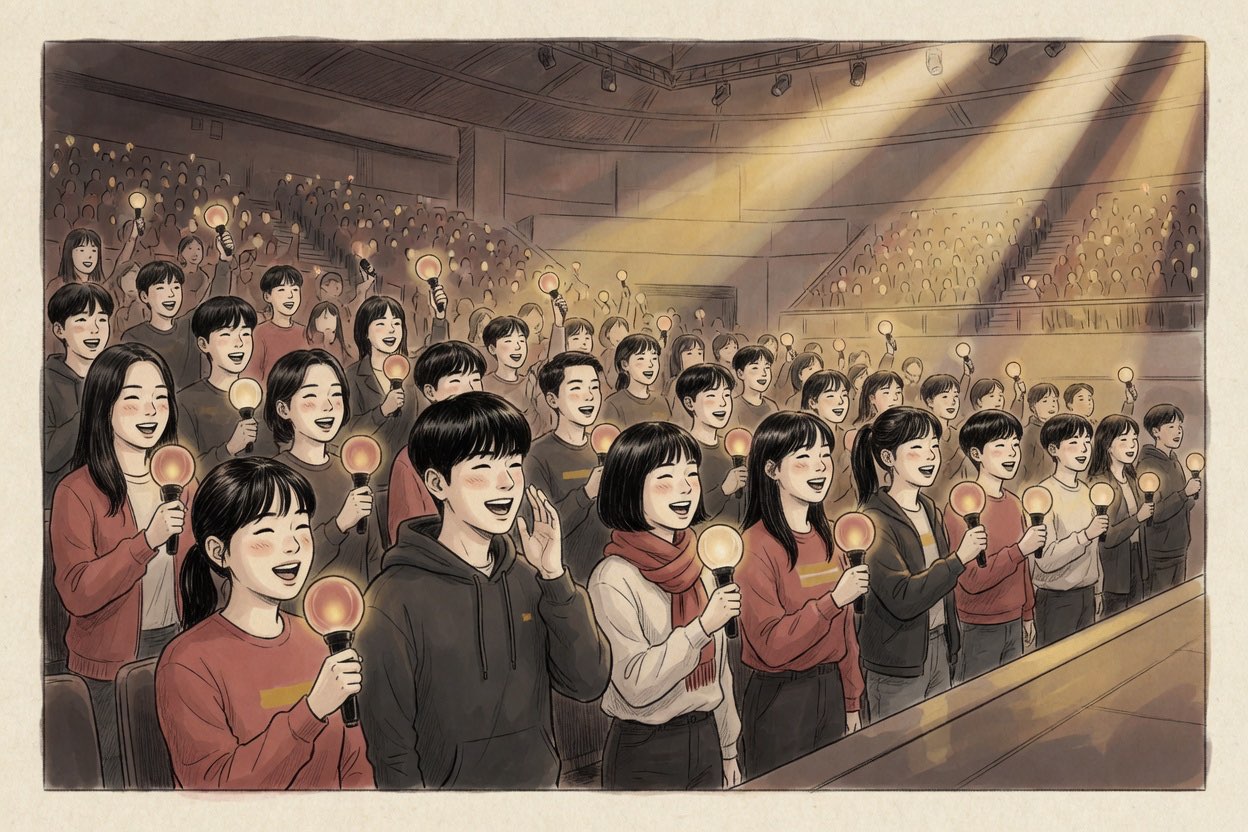
For contrast, think of a concert floor of teens and people in their twenties holding light sticks, singing in time, leaving when the show ends. That is the default case—joy with a schedule and an exit.
How the word shows up in talk
You will hear 사생 and 사생팬 when people:
- warn a friend not to wait at a dorm gate “just this once”
- criticize a tip account for posting home-area photos
- separate “hardcore fan” from “privacy problem” in arguments
- discuss why an agency tightened security or asked fans to disperse
- explain Korean fandom norms to someone new from overseas
You will less often hear it as a casual compliment. If someone says “I am a sasaeng for this group” the way English speakers say “I am unhinged for this album,” native ears may not laugh. They may flinch.
Speech level note: among friends, the warning is often banmal and blunt. In public notices, it turns formal and collective—“please refrain,” “this causes harm,” “report.” The moral content stays the same; only the grammar changes.
Example dialogues
1. Friends after a schedule, banmal, drawing the line
Convenience store near the venue. The show is over. One friend has a second plan.
- A: 야, 끝나고 숙소 앞에서 기다릴까?
Ya, kkeunnago sukso apeseo gidarilkka?
Hey, want to wait in front of the dorm after this? - B: 그건 사생 행동이잖아. 가지 마.
Geugeon sasaeng haengdong-ijana. Gaji ma.
That’s sasaeng behaviour. Don’t go. - A: 그냥 멀리서 보기만 하려고.
Geunyang meolliseo bogiman haryeogo.
I was only going to watch from far away. - B: 멀리서도 사생활이야. 팬미팅 때 보자.
Meolliseodo sasaenghwal-iya. Paenmiting ttae boja.
Even from far away, it’s private life. Let’s see them at the fan meeting.
Gloss: Banmal between peers. B names the category out loud and redirects to an official space. “Only looking” is not treated as a free pass.
2. Online group chat, mixed formality, tip culture with brakes
Fan chat after a blurry photo drops. Someone wants the location pinned.
- C: 이 사진 어디서 찍은 거예요? 위치 공유해 주세요.
I sajin eodiseo jjigeun geoyeyo? Wichi gongyuhae juseyo.
Where was this photo taken? Please share the location. - D: 공식 일정 아닌 것 같아서 올리지 않는 게 좋을 듯.
Gongsik iljeong anin geot gataseo olliji anneun ge joeul deut.
It doesn’t look like an official schedule, so better not to post it. - E: 사생 정보 공유하면 안 된다고 우리 규칙에도 있잖아요.
Sasaeng jeongbo gongyuhamyeon an doendago uri gyuchik-edo itjanayo.
Our rules already say we don’t share sasaeng information. - C: 알겠어요. 삭제할게요.
Algesseoyo. Sakjehalgeyo.
Got it. I’ll delete it.
Gloss: Polite endings in a large chat. The group treats private-location info as forbidden cargo, not as a prize.
3. Older fan to newer fan, soft warning without contempt
Café after a first concert. The new fan is buzzing and planning “next-level” support.
- Mentor fan: 콘서트 온 거 정말 좋았지?
Konseoteu on geo jeongmal joatji?
Coming to the concert was really great, right? - New fan: 네! 다음엔 공항이랑 숙소도 가보고 싶어요.
Ne! Daum-en gonghang-irang sukso-do gabogo sipeoyo.
Yes! Next I want to try the airport and the dorm too. - Mentor fan: 공항은 공개된 이동일 때도 있지만, 숙소는 진짜 사생활이야.
Gonghang-eun gonggaedoen idong-il ttaedo itjiman, sukso-neun jinjja sasaenghwal-iya.
Airports are sometimes public transit moments, but dorms are real private life. - New fan: 아, 그게 사생팬이군요.
A, geuge sasaeng-paen-igunyo.
Ah—so that’s a sasaeng fan. - Mentor fan: 응. 응원은 크게, 경계는 분명히.
Eung. Eungwon-eun keuge, gyeonggye-neun bunmyeonghi.
Yeah. Cheer loud; keep the boundary clear.
Gloss: Warm correction, not humiliation. The mentor separates possible public sightings from private-space hunting so the new fan can stay enthusiastic without sliding into invasion.
Good nunchi / Zero nunchi
Good nunchi
You finish a concert still vibrating. Online, someone drops a dorm-area photo “for close fans only.” You do not ask for the cross street. You mute the tip account, stream the official replay, and plan the next ticket application. Your support stays where the artist invited the crowd.
Zero nunchi
Same night. You join a group chat hunting taxi plate numbers “just to send energy from behind.” You tell yourself it is love because you spent money and time. The performer gets home later, more tired, less safe. You performed closeness without consent—and called it dedication.
Do / Don’t
Do
- Use sasaeng for privacy invasion, not for “likes this group more than I do.”
- Learn the triangle: fan · polar fan · sasaeng fan.
- Follow fan-community rules about dorms, private addresses, and contact leaks.
- Redirect energy into official schedules, light sticks, streaming, and projects that do not require a home address.
- Teach newer international fans that “chance meetings” engineered by tracking are not cute meet-cutes.
Don’t
- Wear the word as a quirky badge of intensity.
- Trade phone numbers, family details, or housing info as fandom currency.
- Chase cars, camp at private buildings, or frame surveillance as “protection.”
- Collapse every loud fan into 사생—that helps nobody and dilutes the warning.
- Assume Korean fandom is “anti-passion.” It is anti-invasion; the light-stick ocean still exists on purpose.
Nearby ideas on Have Nunchi
- Nunchi (눈치) — reading when a room wants distance, not one more photo
- Maknae (막내) — youngest in a group; a role word, not a free pass to baby a stranger
- Aegyo (애교) — performed cuteness; stage intimacy is still a performance
- Korean honorifics explained — why closeness language has rules offstage too
- Oppa (오빠) — a kinship title fans shout at shows; not a personal access card
A closing line
Sasaeng is not the Korean word for “biggest fan.” It is the word for crossing into private life without invitation—and Korean fandom keeps it sharp so ordinary devotion does not get confused with surveillance.
Cheer at full volume. Leave when the corridor closes. If the plan only works because someone does not know you are there, it is not support anymore—and your nunchi should have already said so.
FAQ
What does sasaeng mean in Korean?
Sasaeng (사생) is short for sasaenghwal (사생활), private life. A sasaeng fan (사생팬) is someone who invades an idol’s private life—stalking, camping outside homes or dorms, chasing taxis, or trading personal contact details.
What is a sasaeng fan?
A sasaeng fan is not “a very dedicated fan.” The label marks invasive behaviour that treats a performer’s off-stage life as content—following movements, collecting private numbers, or forcing proximity after work ends.
What is the difference between a sasaeng fan and a polar fan?
A polar fan (극성팬) is extremely passionate—long waits, heavy spending, intense online defense. A sasaeng fan crosses into private life. Passion is not the crime; invasion is.
Is sasaeng just internet slang?
No. In Korean fandom discourse, sasaeng is a serious moral category used by fans, agencies, and media to name privacy violations. It is not a cute badge or a generic “stan” synonym.
What counts as sasaeng behaviour for international fans?
Behaviours that can feel normal elsewhere—airport ambushes for photos, waiting outside hotels, tracking schedules to force a “chance” meeting—often read as sasaeng-adjacent in Korean fandom, even when the person means well.
Do you have nunchi?
Get short Korean word lessons and social cues in your inbox.