What Does “Hallyu” Mean? The Korean Wave, Explained
Not a band name—an umbrella for the Korean culture wave that keeps showing up in your feed.
- Hangul
- 한류
- Romanization
- hallyu
- Pronunciation
- hal-lyu
- Category
- Culture
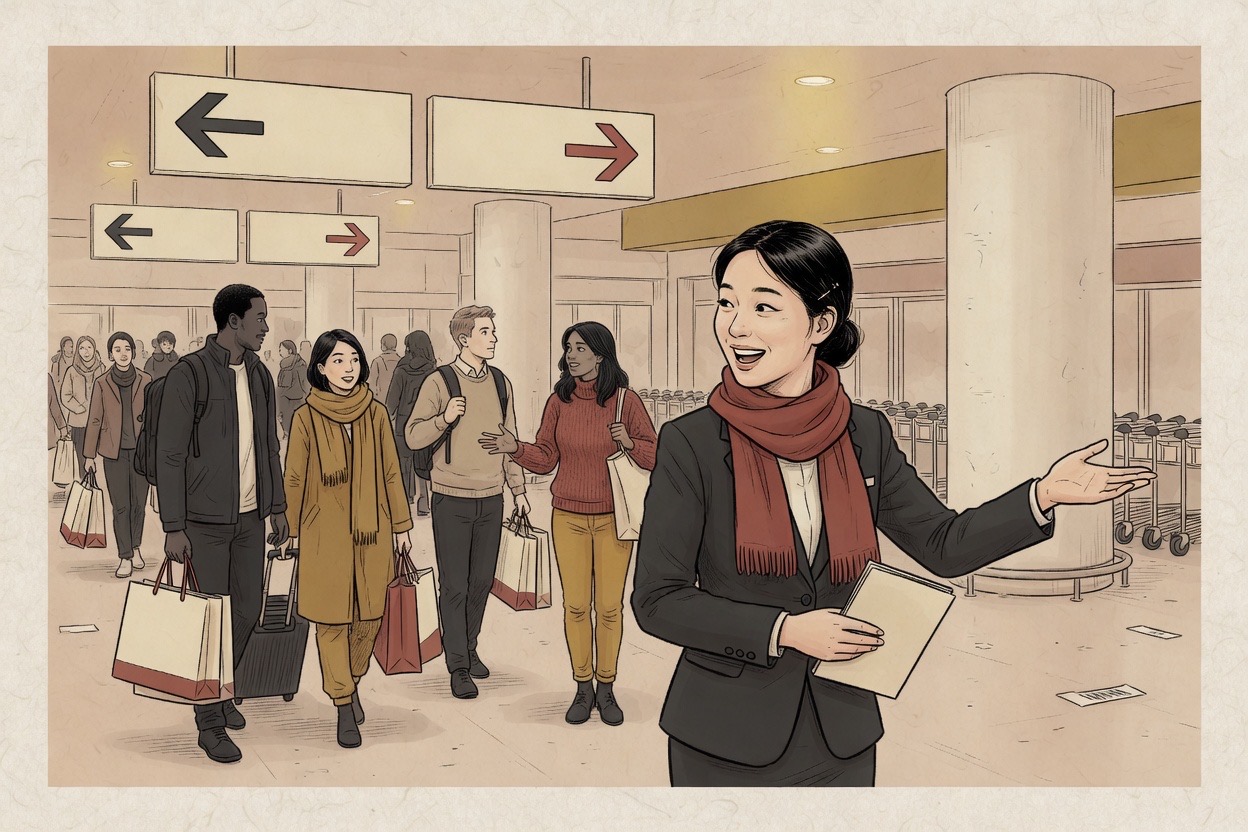
Hallyu (한류, pronounced hal-lyu) is the Korean word for the Korean Wave—the global spread of Korean pop culture. In plain English: dramas that travel, idols that tour, films that win awards, beauty routines that leave airport duty-free, food that becomes a weekend plan, webtoons that turn into live-action, and language apps that suddenly care about hello in Korean. One-sentence definition: hallyu names the overseas boom of Korean culture as a whole, not one fandom and not “anything Korean.”
If you searched “hallyu meaning,” that is the answer. Hangul 한류 is usually glossed as Korean Wave; the two halves are 한 (Korea / Korean) and 류 (flow, current, wave). What follows is how the term is used, what it covers, why it is not a synonym for K-pop, and how Koreans themselves sound when they say it—with pride, fatigue, and the occasional cringe.
Quick facts
| Hangul | 한류 |
| Romanization | hallyu (sometimes hanryu in older notes) |
| Pronunciation | hal-lyu (two short beats; the ll is a light flap, not a hard L-L slam) |
| Literal sense | Korean flow / Korean wave |
| English label | Korean Wave |
| Scope | drama, pop music, film, beauty, food, games, webtoons, fashion, tourism, language learning |
| Not the same as | K-pop alone, “Korean culture” as a museum label, or every product made in Korea |
How do you pronounce hallyu?
Say hal-lyu, even stress, two compact syllables. English speakers often stretch it into HAHL-yoo or turn the middle into a hard double-L. Spoken Korean is lighter: the liquid in the middle is brief, closer to a soft l/r bridge than an English “hall-you.”
You may also see hanryu in older romanization notes. Search and headlines almost always lock hallyu, so keep that spelling for recognition and let the mouth stay soft on the middle consonant.
What does hallyu mean? (The full map)
Hallyu meaning in everyday English talk is simple: Korean pop culture going international. In Korean conversation, 한류 is less “our daily life” and more the overseas phenomenon—how Korean media and lifestyle products move through other countries’ screens, shops, and weekends.
Think of it as a category label for circulation, not a personality type. A show can be popular at home without being framed as hallyu. A snack can be ordinary in Seoul and still count as hallyu cargo when it starts selling out in a foreign city because of a drama scene.
What hallyu covers
The wave is multi-channel. Common currents:
| Current | What people actually mean |
|---|---|
| K-drama | Serialized TV that exports emotions, fashion, and catchphrases |
| K-pop | Idol music, stages, fandom logistics, light-stick nights |
| Film | Features and festival titles that carry Korean storytelling abroad |
| Beauty | Skincare, makeup, packaging rituals, airport shopping lists |
| Food | Restaurants, grocery finds, late-night noodles, mukbang as internet dinner company |
| Webtoons / games | Scroll-native stories and playable worlds that feed live-action and fandom |
| Language | Learners who start because of subtitles, then stay for the grammar grind |
None of these needs to “win” for the word to apply. Hallyu is the umbrella weather system. Individual storms have their own names.
Where did the word hallyu come from?
The widely credited account places the term’s rise in 1990s Chinese-language press coverage of Korean dramas. In that telling, observers needed a short label for a new export pattern—Korean TV stories catching fire across the region—and the “Korean wave / Korean flow” framing stuck hard enough that Korean media and policy talk later adopted 한류 as the domestic shorthand for the same boom.
Treat that as the standard public narrative, not a courtroom fact pattern. Media history is messy: labels travel through newspapers, TV commentary, industry talk, and later academic papers. What matters for English readers is the consensus shape of the story:
- Korean cultural products start traveling more visibly in East Asia.
- Chinese-language coverage helps freeze a catchy name for the phenomenon.
- The Korean side reimports the label and builds around it—news, tourism, export pride, brand decks.
- The map expands beyond drama into music, film, beauty, food, and the rest of the stack.
Do not need a single “first article” citation to use the word correctly. You need the idea: hallyu is a reception term that became a production identity.
Hallyu vs K-pop — stop conflating them
This is the confusion that burns the most search traffic.
Hallyu is the umbrella. K-pop is one current inside it.
| Hallyu | K-pop | |
|---|---|---|
| What it names | Global spread of Korean pop culture overall | Korean popular music / idol industry as a genre and system |
| Typical units | dramas, films, beauty, food, music, webtoons, tourism | songs, groups, stages, fandoms, comebacks |
| Can exist without the other? | Yes—drama-first or beauty-first waves still count as hallyu | Yes—K-pop can boom while other sectors lag |
| Learner trap | Using “hallyu” only when someone is an idol fan | Using “K-pop” as a synonym for all Korean soft power |
If someone says, “I’m into hallyu,” they might mean a weekend of drama marathons, a skincare haul, a fried-chicken recipe, and a playlist. If someone says, “I’m into K-pop,” they usually mean the music machine: groups, choreo, fandom vocabulary, tour logistics, maknae discourse, the whole stage grammar.
Why the mix-up happens
- English headlines love short labels, and K-pop is louder in Western feeds than “Korean Wave.”
- Idols appear in dramas, variety, ads, and beauty campaigns—so the borders blur on purpose.
- Fans learn Korean kinship words like oppa from both romance plots and concert chants, then treat every Korean word as “K-pop Korean.”
Useful correction line you can actually say:
- Accurate: “K-pop is part of hallyu.”
- Sloppy: “Hallyu means K-pop.”
- Also sloppy: “If it’s Korean and online, it’s hallyu.” (A Korean news app is not automatically a wave; export + pop-culture reception still matter.)
한류 열풍 and 한류 스타 — set phrases you’ll hear
Two collocations do a lot of everyday work.
한류 열풍 (hallyu yeolpung)
한류 열풍 means hallyu craze / Korean Wave fever—the boom as heat and momentum. News anchors, variety hosts, and aunties at dinner all use it when the overseas buzz feels especially loud.
- “There’s a real 한류 열풍 in that country right now.”
- Tone range: excited, proud, slightly tired, or all three in one breath.
한류 스타 (hallyu seuta)
한류 스타 means a hallyu star—an entertainer whose fame is framed as international wave fame, not only domestic celebrity. It is marketing-adjacent language: useful, a bit glossy, sometimes overapplied to anyone who filmed one drama that got a foreign streaming tile.
Related everyday talk:
- 한류 콘텐츠 — hallyu content
- 한류 관광 — tourism drawn by the wave
- 한류 열풍이 불다 — for the craze to “blow” / sweep through
These phrases mark reception and export framing. Koreans do not usually call their own morning commute “hallyu.”
How Koreans talk about hallyu (pride, fatigue, cringe)
English coverage often freezes hallyu as pure soft-power triumph. Domestic talk is more three-toned.
Pride
Real wins land: packed concerts abroad, foreign friends quoting dramas, beauty shelves abroad stocking Korean brands, language learners who stick past the first week. Pride here is not abstract nationalism only—it is also “our production quality traveled.”
Fatigue
When every success story gets the same headline template, people tune out. 한류 can start to sound like a press-release noun. Someone who works in culture industries may roll their eyes at the thousandth “global fever” slide while still being glad the work sells.
Embarrassment at the marketing tone
There is a mild social cringe when the word feels too brochure. Over-slick tourism ads, forced “hallyu experience” packages, or treating foreign fans as walking GDP can make locals flinch—not because they hate the culture, but because the packaging is loud. This is a nunchi problem as much as a culture problem: reading whether the room wants celebration, understatement, or a change of subject.
None of these tones cancel the phenomenon. They just keep the word human.
When you’ll hear it
- News segments about overseas charting, tourism spikes, or drama remakes
- Airport conversations about duty-free skincare runs
- Friends explaining why a foreign coworker knows more idol lore than they do
- Classrooms where learners arrived through subtitles, not textbooks
- Family chat that swings between “isn’t this cool?” and “can we talk about something else?”
You will not typically hear someone label every Korean dinner “hallyu” the way English speakers label every kimchi photo. The word wants circulation and reception, not ethnicity as a sticker.
Example dialogues
1. Friends, banmal — fixing the K-pop conflation
Late-night group chat energy, but in person. Someone just said “hallyu” and meant only idols.
- Minho: 너 한류 좋아한다며?
Neo hallyu joahandamyeo?
You said you’re into hallyu, right? - Sora: 응. 드라마랑 화장품이랑, 음식도.
Eung. Dramarang hwajang-irang, eumsik-do.
Yeah. Dramas, makeup, food too. - Minho: 아, 케이팝만 말하는 거 아니었어?
A, K-pop-man malhaneun geo anieosseo?
Oh—so you didn’t only mean K-pop? - Sora: 아니. 한류가 더 큰 거고, 케이팝은 그중 하나야.
Ani. Hallyu-ga deo keun geogo, K-pop-eun geujung hanaya.
No. Hallyu is the bigger thing; K-pop is one piece of it.
Gloss: Casual banmal. Clean teaching moment without lecture energy—umbrella vs current.
2. Coworkers, polite speech — 한류 열풍 in the wild
Office kitchen, morning coffee. Someone saw a foreign trainee humming a Korean OST.
- Jiwon: 요즘 한류 열풍 진짜 느껴지지 않아요?
Yojeum hallyu yeolpung jinjja neukkyeojiji anayo?
Don’t you really feel the hallyu craze these days? - Hyejin: 느껴져요. 우리 팀에 온 외국인 분도 드라마 얘기 먼저 하더라고요.
Neukkyeojyeoyo. Uri time on oegugin bundo drama yaegi meonjeo hadeoragoyo.
I do. Even the foreign person who joined our team started with drama talk. - Jiwon: 맞아요. 케이팝만이 아니라 되게 넓어졌어요.
Majayo. K-pop-mani anira doege neolbeojyeosseoyo.
Right. It’s not only K-pop anymore—it got really wide.
Gloss: Soft jondaemal among colleagues. 한류 열풍 is natural newsy vocabulary, not fan slang.
3. Siblings, banmal — 한류 스타 and mild eye-roll
Living room, TV news playing in the background.
- Older sister: 또 한류 스타 공항 뉴스네.
Tto hallyu seuta gonghang nyuseune.
It’s another hallyu-star airport news segment. - Younger brother: 이번엔 누가 왔대?
Ibeonen nuga watdae?
Who came this time? - Older sister: 이름은 모르겠고, 가방이 뉴스야.
Ireumeun moreugessgo, gabang-i nyuseya.
I don’t know the name—the shopping bags are the news. - Younger brother: 한류는 좋은데, 멘트는 맨날 똑같다.
Hallyu-neun joeunde, menteu-neun maennal ttokgatda.
Hallyu’s fine, but the soundbites are the same every time.
Gloss: Affectionate fatigue. Pride in the phenomenon, boredom with the packaging—very ordinary domestic tone.

Good nunchi / Zero nunchi
Good nunchi
A Korean friend mentions hallyu once, lightly. You ask what they actually watch or listen to, notice whether they sound proud or tired, and do not force them to become a free tour guide for every idol comeback. You treat the wave as culture in motion—not a quiz they must pass for your content.
Zero nunchi
Same friend. You interrupt with “So you’re basically K-pop, right?”, demand a ranked bias list, film their reaction for your story, and call every Korean snack in the kitchen “hallyu merch.” They go polite and short. You thought you were celebrating. You collapsed an umbrella into a costume.
Do / Don’t
Do
- Use hallyu for the Korean Wave as a multi-sector export/reception story.
- Keep K-pop inside the umbrella, not as a full synonym.
- Learn the set phrases 한류 열풍 and 한류 스타 as media-natural collocations.
- Notice local tone: pride, fatigue, and marketing cringe can share one dinner table.
- Let people name their own entry point—drama, food, beauty, music, language—without ranking which one is “real.”
Don’t
- Equate hallyu with “anything Korean anywhere.”
- Assume every Korean is a full-time hallyu ambassador.
- Use “hallyu star” as empty flattery for anyone slightly famous.
- Invent origin trivia (specific outlets, dates, first dramas) you cannot verify.
- Treat foreign fandom as proof that Korean daily life is a theme park.
Nearby ideas (for later on Have Nunchi)
- Maknae — youngest in a group; essential K-pop hierarchy vocab that sits inside one hallyu current
- Mukbang — eating on camera; food media that traveled with the wider wave
- Aegyo — cute performance style that shows up on stage and in variety
- Oppa — kinship title English often first meets through drama and idol talk
- Nunchi — reading whether this room wants celebration or a quieter subject
A closing line
Hallyu is not a single fandom password. It is the name for Korean pop culture when it leaves home and keeps finding new living rooms—drama tabs, concert floors, skincare shelves, late-night noodles, and language apps that started as curiosity and turned into practice.
Hold the umbrella open wide enough for more than one current, and keep your nunchi for when the marketing volume rises higher than the actual conversation.
FAQ
What does hallyu mean?
Hallyu (한류) is the Korean Wave—the global spread of Korean pop culture, including drama, music, film, beauty, food, webtoons, and language learning. It is a culture umbrella, not one genre.
What does hallyu mean in Korean?
In Korean, 한류 literally combines 한 (Korea / Korean) and 류 (flow or wave). Speakers use it for the overseas boom of Korean cultural products, not for everyday Korean life inside Korea.
Is hallyu the same as K-pop?
No. Hallyu is the umbrella; K-pop is one current inside it. Dramas, film, beauty, food, and webtoons ride the same wave even when nobody is dancing on stage.
Where did the word hallyu come from?
The standard telling widely credits 1990s Chinese-language press coverage of Korean dramas with coining or popularizing the term. Treat that as the widely-cited account, not a single sealed origin myth.
How do Koreans feel about hallyu?
Often with pride, sometimes with fatigue, and occasionally with embarrassment at the marketing tone. Success is real; so is the sense that “한류” can sound like a slogan when overused.
Do you have nunchi?
Get short Korean word lessons and social cues in your inbox.