What Does “Skinship” Mean? Korean Touch Culture, Explained
Not an English word—Korean talk for the whole spectrum of casual and romantic touch.
- Hangul
- 스킨십
- Romanization
- skinsip
- Pronunciation
- seu-kin-sip
- Category
- Words
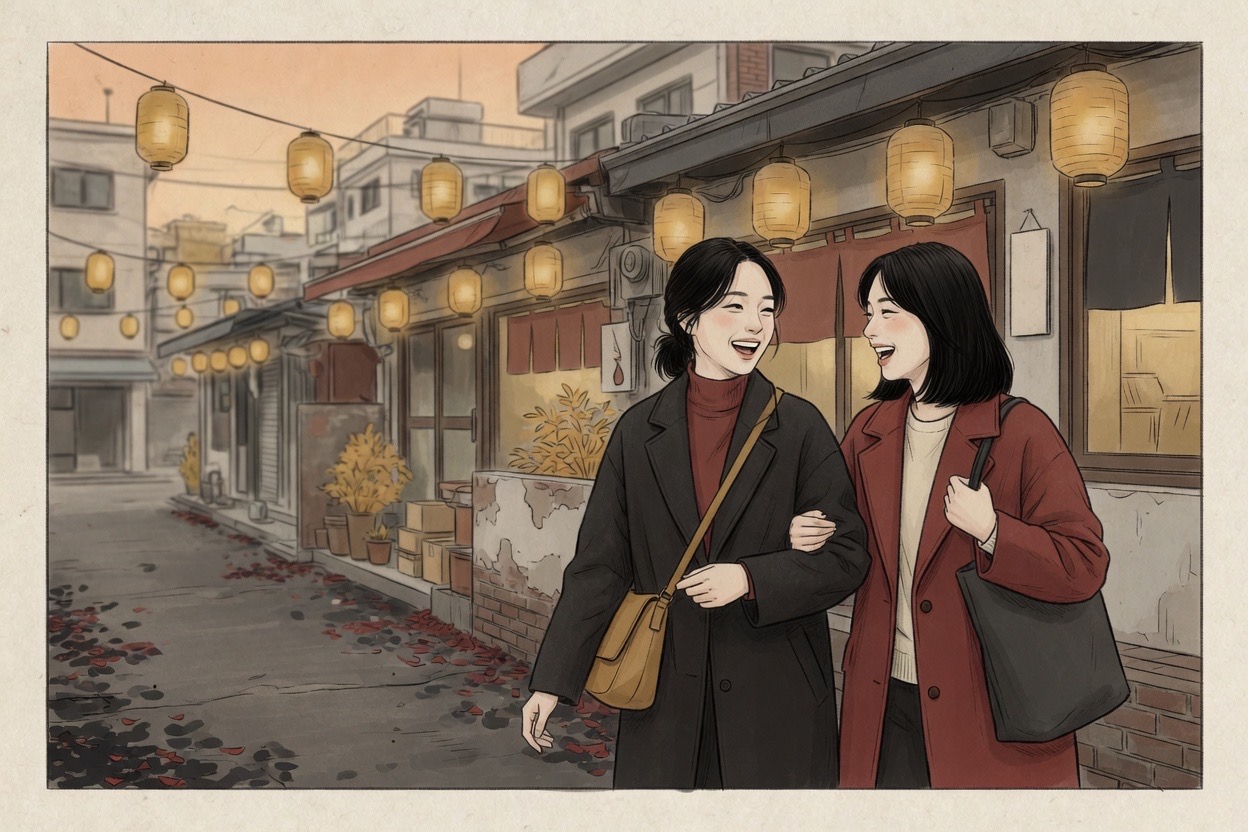
Skinship (스킨십, pronounced seu-kin-sip) is not a real English word. It is a Korean (and Japanese) coinage built from English parts—skin + -ship—and it means physical affection and casual touch: linked arms between friends, a hand on a shoulder, head pats, hand-holding, leaning together on the subway, and romantic contact too. One-sentence definition: skinship names the spectrum of skin-level closeness, from everyday friend touch to couple intimacy. If you say “skinship” in pure English conversation without K-drama or anime context, most people will not recognize it. Koreans say 스킨십 as normal slang.
The highest-value correction for English readers is this: same-sex friend skinship is normal in Korea and is routinely misread by Westerners as romance. Two men walking with arms around each other’s shoulders are often just close. Two women linking arms down the street are often just close. The word itself does not mean “dating.” Context does.
Quick facts
| Hangul | 스킨십 |
| Romanization | skinsip (you’ll also see skinship in English) |
| Pronunciation | seu-kin-sip (three short beats) |
| Is it English? | No—English-looking loan blend used in Korean/Japanese |
| Core range | friend touch + romantic touch; not one single gesture |
| Verb form | 스킨십하다 — to do skinship / be physically affectionate |
| Common misread | same-sex friend contact assumed romantic by outsiders |
| Nearby skill | nunchi — reading whether touch is welcome |
How do you pronounce skinship (스킨십)?
In Korean, 스킨십 lands as seu-kin-sip: three light syllables, even stress, no English “skin-SHIP” trumpet. The first syllable is closer to suh than a hard English skin.
English explainers often keep the spelling skinship because that is how the coinage was built. Inside Korean sentences you will hear the hangul form more than any carefully taught romanization. Say it casually—like a word people actually use on the phone, not a museum label.
Is skinship a real English word?
No. That is the first thing this page should settle.
- Native English speakers do not grow up with “skinship” as vocabulary.
- The word is a loan blend: English skin + English -ship, popularized in Japanese and Korean media talk, then re-exported through dramas, variety shows, and fandom English.
- Dictionaries of everyday British or American English will not treat it as a household word. K-culture English will.
So when search engines surface “skinship meaning,” the honest answer is dual: what the Korean slang means, plus why your English-speaking friends may stare blankly if you drop it unannounced.
If you want a plain English substitute, use physical affection, casual touch, or PDA for public romantic contact—knowing that none of those English phrases covers the full friend-to-couple range the way 스킨십 does in Korean.
What does skinship mean in practice?
Skinship is a category, not one pose. Koreans use it for a wide band of body contact that signals closeness, comfort, care, or romance—depending on who is touching whom, and where.
The everyday range
Typical “this counts as skinship” territory:
- linking arms while walking
- draping an arm over a friend’s shoulder
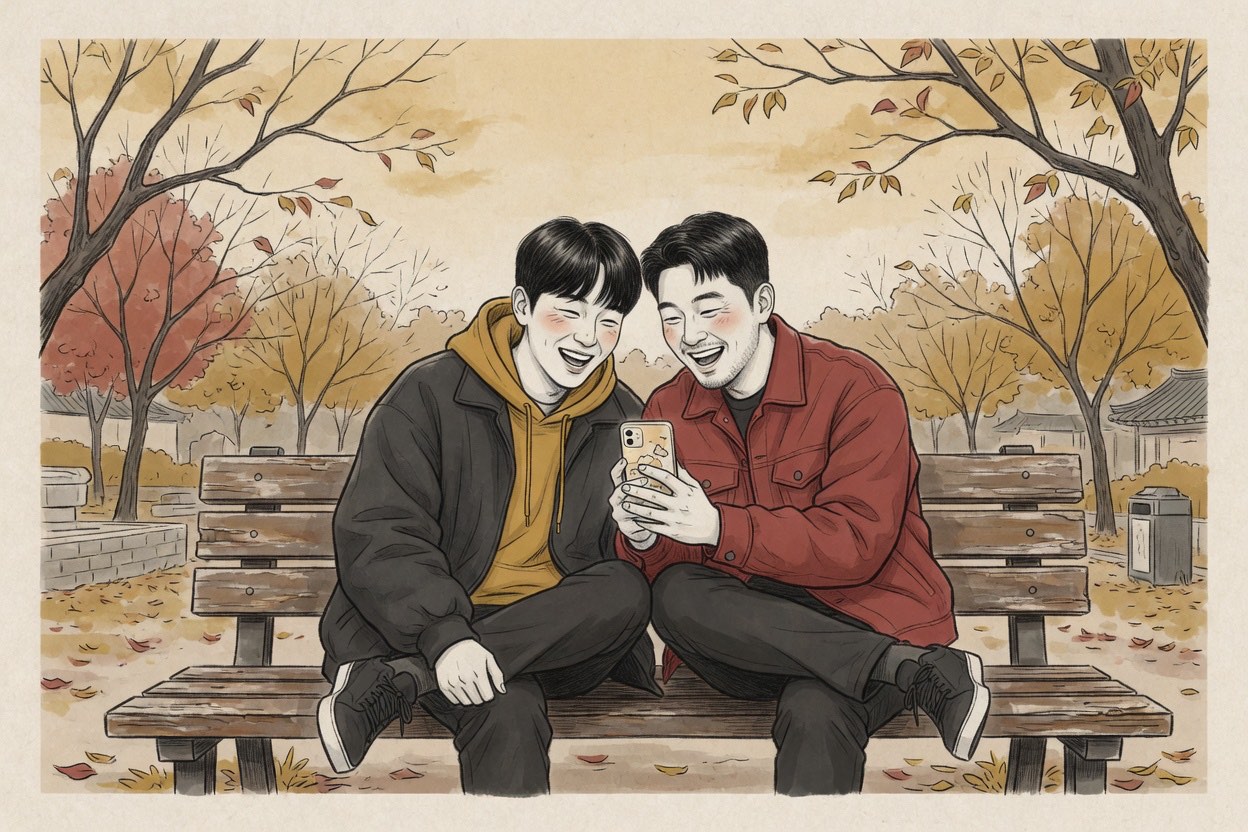
- sitting shoulder to shoulder, heads almost touching over one phone
- a hand on someone’s back guiding them through a crowd
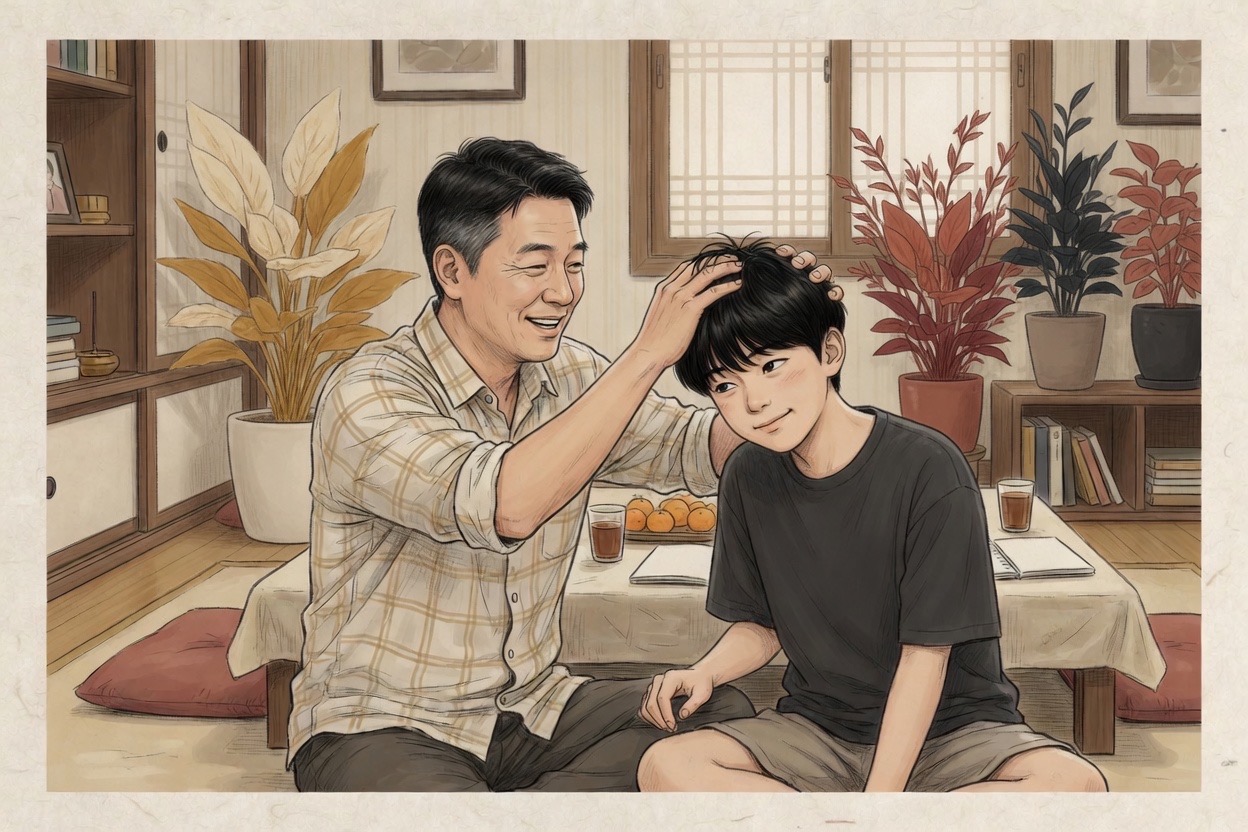
- head pats, light shoulder squeezes, playful shoves that stay soft
- hand-holding (friend or romantic—context decides)
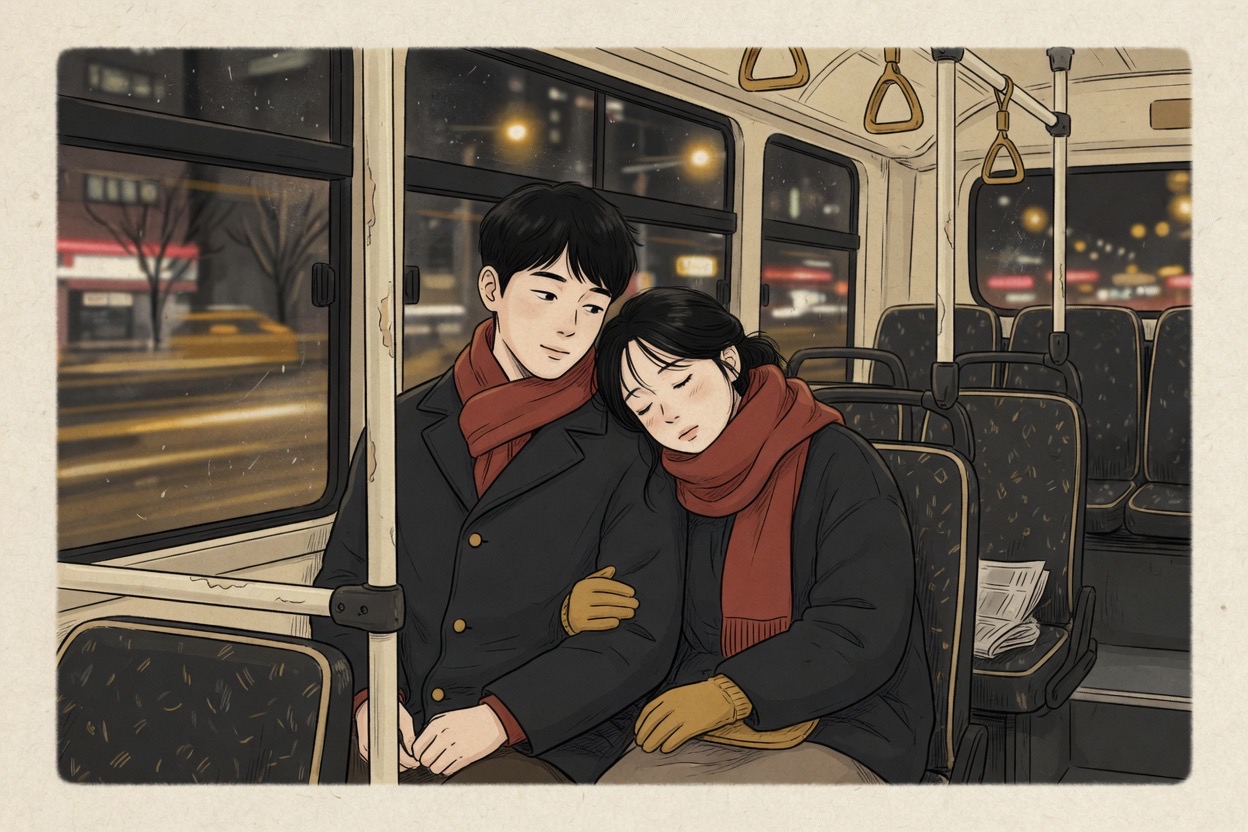
- leaning on someone on a bus or late-night subway
- couple contact: longer hugs, more intimate touch, private physical affection
What it is not: a medical term, a formal etiquette title, or proof that every Korean wants constant contact. Plenty of people dislike touch. Plenty of friendships run warm without much physical contact. The word names a social practice, not a national personality.
Friend skinship vs couple skinship
Same vocabulary, different stakes.
| Setting | How skinship often reads | What outsiders miss |
|---|---|---|
| Close same-sex friends | warmth, play, “we’re a unit today” | often misread as romance |
| Close mixed-gender friends | can be normal in some groups; riskier if the room is conservative or one person is interested | ambiguous on purpose sometimes |
| Early dating | signal of pace—how much contact feels okay yet | treated as a stage, not only a mood |
| Established couple | routine affection; also a topic people negotiate | “lots of skinship” can mean the relationship feels physical, not only sweet talk |
| Work / strangers | usually limited; default is low touch | importing friend skinship here is zero nunchi |
Couples especially talk about skinship as volume and timing: not only “did we hug,” but “are we a high-touch couple,” “are we moving too fast,” “I want less tonight.” That is closer to relationship language than to a single dictionary gesture.
Same-sex friend skinship — the point of this page
If you only keep one cultural fact, keep this one.
In Korea, physical closeness between same-sex friends is common and often non-romantic. You will see:
- two men in their twenties with arms around each other’s shoulders after dinner
- two women walking arm in arm through a market street
- male friends piled onto one another on a living-room floor during a game
- female friends sharing one earbuds wire, heads tilted together
Western viewers trained on stricter public same-sex touch rules—or on “men don’t lean on men unless it’s a date”—often flip straight to a couple reading. Sometimes the couple reading is correct. Often it is not. The default Korean friend script allows more skin contact as ordinary closeness than many North American or Northern European friend scripts do.
That does not mean:
- every touch is welcome forever
- queer people do not exist in Korea (they do)
- public contact is identical across age, region, and generation
- you should copy the behavior with Korean strangers
It means friendship has a higher touch ceiling in many Korean peer groups, and English-language eyes miscalibrate that ceiling as romance by default. Correct the default. Then still watch the actual people in front of you.
스킨십하다 — the verb, and how couples use it
Korean does not only noun the idea. People do skinship.
- 스킨십하다 — to engage in skinship / be physically affectionate
- 스킨십이 많다 / 적다 — a lot of / little physical affection
- 스킨십을 좋아하다 / 부담스러워하다 — to like skinship / to find it burdensome
As relationship talk
Couples and almost-couples use the word when they negotiate pace:
- how soon hand-holding feels okay
- whether public affection is comfortable
- whether one person wants more contact and the other wants less
- whether “we’re dating” includes more physical closeness than “we text a lot”
You may hear someone say they want to take skinship slowly, or that a previous relationship had too much or too little. That conversation sits next to other intimacy language—pet names like jagiya, soft couple talk, and the wider set of Korean terms of endearment—but skinship is specifically about bodies in contact, not only sweet words.
As friend talk
Friends use it more lightly: joking that someone is clingy, noting that a group is “skinship heavy,” or teasing two people who always walk linked. Among close friends the verb can be playful. Among people still figuring each other out, it can be a careful boundary word.
When you’ll hear it
- Drama subtitles and fandom posts translating 스킨십 as “skinship”
- Friends teasing: “You two are doing a lot of skinship today.”
- Dating conversations about comfort and pace
- Variety shows commenting on idols’ fan-service hugs or member closeness
- Advice columns and forums where people ask whether low skinship means low interest
You will not typically hear a Korean grandmother teach it as a classic pure-Korean root word. It is modern social slang with English bones—everyday, not archaic.
Example dialogues
1. Two male friends, banmal — the outsider flinch
Night street after dinner. They usually walk close. One friend stiffens because tourists are staring.
- Junho: 야, 왜 갑자기 떨어져?
Ya, wae gapjagi tteoreojyeo?
Hey, why’d you suddenly pull away? - Min: 아, 그냥. 사람들이 이상하게 볼까 봐.
A, geunyang. Saramdeuri isanghage bolkka bwa.
Ah, nothing. I’m worried people will look at us weird. - Junho: 우리 친구인데 어깨 좀 기대는 게 어때서.
Uri chinguinde eokkae jom gidaeneun ge eottaeseo.
We’re friends—so what if you lean on my shoulder a little.
Gloss: Casual banmal. The point is not “they are secretly dating.” The point is ordinary male-friend contact meeting an outsider gaze.
2. Early couple, banmal — negotiating the stage
After a movie. One person wants slower physical pace.
- Sora: 나 스킨십은 천천히 하고 싶어.
Na seukinsip-eun cheoncheonhi hago sipeo.
I want to take skinship slowly. - Hyeon: 알았어. 불편하면 바로 말해.
Arasseo. Bulpyeonhamyeon baro malhae.
Got it. If anything feels uncomfortable, tell me right away. - Sora: 손 잡는 건 괜찮은데, 그 이상은 아직.
Son japneun geon gwaenchanheunde, geu isang-eun ajik.
Holding hands is fine, but anything more—not yet.
Gloss: 스킨십 here is relationship software—pace and consent—not a joke about being cute.
3. Two female friends, banmal — arm-link logistics
Windy sidewalk, crosswalk countdown ticking.
- Yuna: 추워. 팔짱 끼자.
Chuwo. Paljjang kkija.
It’s cold. Let’s link arms. - Hyejin: 응. 길 건너기 전까지 안 놓칠게.
Eung. Gil geonneogi jeonkkaji an notchilge.
Okay. I won’t lose you before we cross. - Yuna: 고마워. 너랑 걸으면 안 무서워.
Gomawo. Neorang georeumyeon an museowo.
Thanks. Walking with you doesn’t feel scary.
Gloss: Friend skinship as practical warmth and safety, not a confession scene.
4. Bonus office-adjacent joke, mixed polite/casual among peers
Team dinner, same generation, already friendly.
- Jiyoon: 저 둘 요즘 진짜 스킨십 많다.
Jeo dul yojeum jinjja seukinsip manta.
Those two have been doing a lot of skinship lately. - Ara: 사귀는 거지, 뭐. 우리 팀 스캔들.
Sagwineun geoji, mwo. Uri tim seukaendeul.
They’re dating, basically. Our team scandal. - Jiyoon: 아, 난 또 그냥 친한 줄.
A, nan tto geunyang chinhan jul.
Ah—I thought they were just close.
Gloss: The joke only works because friend skinship and couple skinship can look similar until someone confirms the relationship. Koreans run that ambiguity too; they just start from a higher friend-touch baseline than many Western workplaces.
Skinship, aegyo, and honorific distance
Skinship is body contact. Nearby ideas people mix up:
- Aegyo — performed cute charm (voice, face, gestures). Can include soft touch, but aegyo is the cute act, not the full touch category.
- Honorific distance — titles and speech levels from the Korean honorifics system tell you how formal the relationship sounds. High formality usually pairs with lower casual touch, especially early on.
- Age-rank warmth — a group maknae might get more head pats or playful contact inside a close group; that is relationship privilege, not a free pass for outsiders to touch the youngest person in the room.
If the language is still stiff and titled, do not invent skinship to “break the ice.” Warmth without permission is just pressure.
Consent and reading the room (where nunchi applies)
Skinship is social, not automatic. Nunchi is the skill that keeps touch from becoming a trap.
Watch for:
- Do they lean in, or go still?
- Do they return the contact, or leave a gap?
- Is this a private friend bubble or a formal mixed group?
- Did alcohol raise volume past what sober them wanted?
- Are you copying a drama couple onto a coworker?
Good skinship is mutual. The Korean cultural note about same-sex friend contact explains why a scene might be non-romantic. It does not license you to touch people who have not opted in. “It’s normal in Korea” is not a spell that overrides a person stepping back.
Good nunchi / Zero nunchi
Good nunchi
You visit Seoul with a Korean friend group. Two guys in the circle walk linked after karaoke; two women share one coat shoulder-to-shoulder in the cold. You do not film them as “look, a secret couple,” do not force a coming-out narrative onto strangers, and do not freeze them out either. When someone links arms with you, you either match the warmth if you like it or politely create space if you do not—without a lecture on Western personal space theory.
Zero nunchi
Same trip. You assume every same-sex shoulder touch is romantic gossip, announce that loudly at the table, then “prove you’re comfortable with Korean culture” by grabbing a quiet acquaintance into a side-hug they did not offer. They laugh a thin laugh. You call it skinship. They call it a long subway ride home.
Do / Don’t
Do
- Treat skinship as Korean/Japanese-origin slang, not native English.
- Assume same-sex friend touch can be platonic until the relationship says otherwise.
- Use 스킨십하다 / “how much skinship” as pace and comfort language with partners.
- Match contact to the actual person—return signals, not stereotypes.
- Keep workplace and stranger touch conservative unless the other person clearly leads.
Don’t
- Tell English-only speakers “skinship” and expect instant recognition.
- Romanticize or exoticize every Korean friend pair you see on the street.
- Copy drama-level couple contact onto people who only know you politely.
- Use “Korean culture says so” to override hesitation.
- Confuse skinship with aegyo, pet names, or hierarchy titles—related neighborhood, different tools.
Nearby ideas
- Nunchi (눈치) — reading whether this touch is welcome right now
- Aegyo (애교) — cute performance that may include soft gestures
- Jagiya / endearments — verbal closeness; skinship is physical closeness
- Maknae dynamics — youngest-in-group care can look touch-heavy inside the family or team bubble
- Honorific distance — formal titles and jondaemal usually mean less casual contact, not more
A closing line
Skinship is what happens when English word-parts move to Korea and come back looking familiar—until you learn the social map underneath. It is touch as relationship volume, from arm-links between friends to the quiet negotiation of how close a couple wants to be.
Believe the friend reading more often than Western habit allows, ask before you upgrade contact, and keep your nunchi louder than your hands.
FAQ
What does skinship mean?
Skinship (스킨십) is a Korean and Japanese coinage—skin plus -ship—for physical affection and casual touch. It covers friend contact like linked arms and romantic contact alike. English speakers will not know the word unless they watch Korean or Japanese media.
Is skinship a real English word?
No. It looks English, but native English speakers do not use it. In Korean, 스킨십 is ordinary slang for touch and physical closeness. If you say skinship in London or Chicago without context, people will blank.
Can friends do skinship in Korea, including same-sex friends?
Yes. Same-sex friend skinship is common and usually read as closeness, not romance—two men with arms around each other, two women linking arms on the sidewalk. Westerners often misread that as a couple. In Korea it is often just friendship volume.
What does 스킨십하다 mean for couples?
스킨십하다 is the verb form—to do skinship, to be physically affectionate. Couples also talk about how much skinship they want as a relationship stage and boundary topic, not only as a one-off hug.
Is skinship always okay? How does nunchi fit in?
No. Skinship still needs consent and room-reading. Touch that feels warm in one friend group can feel wrong on a first date, at work, or with someone who freezes. That is nunchi—watching whether the other person leans in or pulls away.
Do you have nunchi?
Get short Korean word lessons and social cues in your inbox.