What Does “Yeobo” Mean? Korean “Honey” Between Spouses
Married honey, not dating slang—and not the same as jagiya.
- Hangul
- 여보
- Romanization
- yeobo
- Pronunciation
- yuh-bo
- Category
- Words
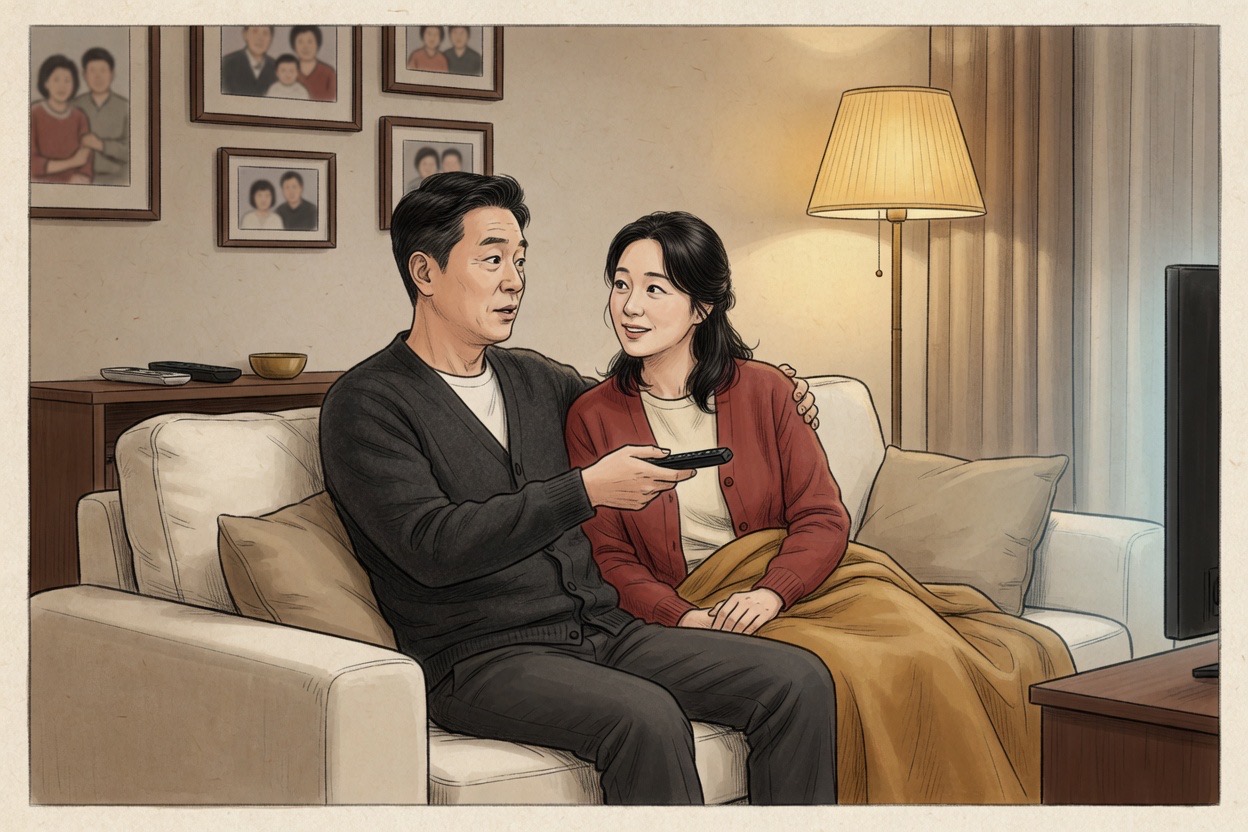
Yeobo (여보, pronounced yuh-bo) is the classic Korean way married partners call each other—roughly “honey,” “dear,” or “hon.” One-sentence definition: yeobo is the standard spousal address that says “we are married,” not “we are dating.” You will hear it across living rooms, kitchen tables, and long park walks: a short two-syllable call that is less baby-talk than jagiya (자기야) and warmer than the riskier dangsin (당신). If you searched yeobo meaning, that is the core: married honey, with a whole map of alternatives around it.
Quick facts
| Hangul | 여보 |
| Romanization | yeobo |
| Pronunciation | yuh-bo (two even syllables) |
| Literal folk sense | often linked to “look here” (see etymology) |
| Practical sense | honey / dear — between spouses |
| Who uses it | married couples (and some long-term partners who sound married) |
| Close cousins | jagiya (dating/newlywed soft call); 당신 (spousal “you,” can turn cold); 애기 아빠 / 애기 엄마 (parent-role nicknames) |
How do you pronounce yeobo?
Say yuh-bo—first syllable like the yu in “yuck” without the ck, second like bo in “boat” clipped short. Even stress. Not YEE-oh-bo, not English “yo-bo.”
In writing you may see yeobo or yŏbo. Spoken Korean is simply two short beats. Couples often stretch it a little when they want attention: 여~보, the same way English stretches “hoooney.”
Do not confuse it with phone-only 여보세요 (yeoboseyo). That line is “hello?” on a call—not a face-to-face spouse call. If you are sorting everyday greetings, our hello in Korean guide keeps the phone line in its own box.
What does yeobo mean, really?
In daily life, yeobo means “you, my spouse, the person I am allowed to call without a formal title.” English “honey” is the closest bulk translation, but honey floats across dating, marriage, and sarcasm. Yeobo is narrower: it sounds married.
That is the social job. Korean address culture is full of kinship titles—oppa, unnie, hyung, noona—that sort age and closeness outside the marriage. Yeobo sits on a different shelf. It does not mark who is older. It marks who shares the household bond.
You will hear it when:
- one partner wants the remote / the salt / five seconds of attention
- someone is leaving the house or coming back
- soft care is happening: fruit peeled, soup heated, jacket held
- a couple is performing “we are a real married pair” for parents or for themselves
You will not typically hear a first-date couple open with yeobo unless they are joking. That joke works because the word is married-coded.
The folk etymology many Koreans know
Search long enough and you will meet the story: 여보 wore down from 여기 보오 — roughly “look here.” In that telling, a spouse calls for the other’s eyes the way you call someone over from another room, and the phrase compressed into two syllables.
Treat this as a widely repeated folk account, not settled linguistics. Koreans tell it because it feels right: yeobo is an attention-getter with warmth, not a legal title. For learners, the useful takeaway is cultural—the word is old enough and domestic enough that people invent a “look here” origin without blinking. Your goal is social use, not winning an etymology duel at dinner.
Yeobo vs jagiya — the comparison readers actually want
This is the spine of the page. Same general job (call your partner), different social costume.
| Yeobo (여보) | Jagiya (자기야) | |
|---|---|---|
| Core feel | married honey / dear | babe / honey / soft “you” |
| Typical bond | marriage (or marriage-like) | dating, newlywed, long soft romance |
| Generation vibe | classic; slightly older-coded | younger; still common across ages in romance mode |
| Drama / media | long-married households, parent couples | dating scenes, honeymoon energy |
| Warmth type | settled, domestic, adult | cute, intimate, a little playful |
| Risk if mistimed | can sound like play-acting if you are not actually a couple | can sound too young or too sticky in a formal room |
| English rough match | honey (married register) | babe / baby / hun (romance register) |
Read the table as taste, not law. Plenty of young married couples still say yeobo. Plenty of middle-aged couples live on jagiya. Some couples use both in the same afternoon. The point is the default association English searchers feel when they hear the words in dramas: yeobo = married house energy; jagiya = dating or newly-soft energy.
A useful test: if grandparents smile when they hear it, you are probably in yeobo territory. If the couple is still negotiating whose apartment they sleep at, jagiya is more likely.
당신 — another spousal “you,” sharper edges
Dangsin (당신) can mean “you” in several registers. Learners meet it in song lyrics and dictionary rows and assume it is a safe romantic “you.” Between spouses, it is more complicated.
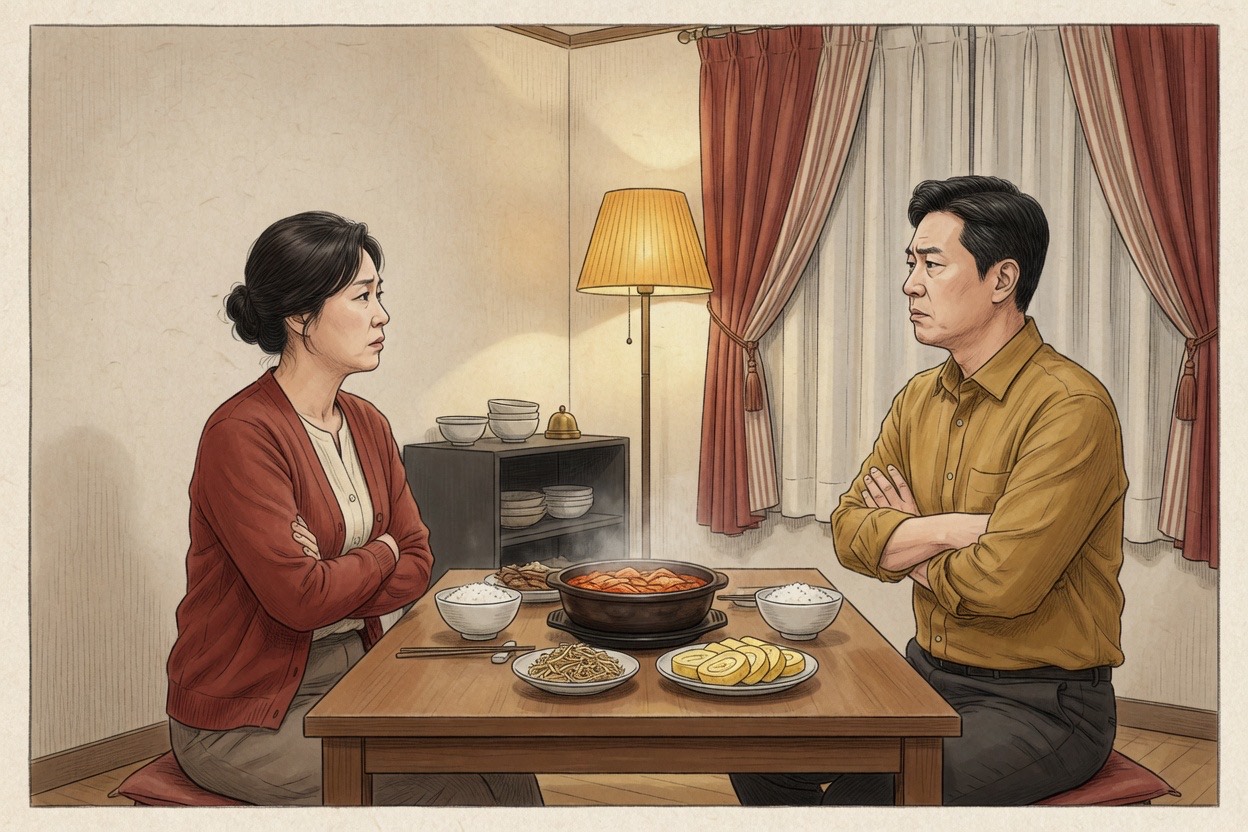
In calm, old-fashioned, or literary speech, a husband or wife might use 당신 the way English uses a formal “you, my dear.” In a fight, 당신 often hardens: distance, accusation, courtroom energy at the dining table. Tone and timing decide everything.
Rough map:
| Form | Warmth in couple talk | Common trap |
|---|---|---|
| 여보 | high, everyday married | sounds odd if you are not a couple |
| 자기야 | high, soft romance | too sticky with strangers or elders present |
| 당신 | variable; can go cold fast | argument mode can make it sound like a slap |
| given name / nickname | depends on the pair | fine if that is your couple’s system |
This is where nunchi matters more than vocabulary lists. The same syllable that sounds tender in a quiet kitchen can sound like a weapon when arms are folded and both people are staring at the wall.
After kids: 애기 아빠 / 애기 엄마
Many Korean couples shift address once a child arrives. Instead of (or alongside) yeobo, they call each other by parent role:
- 애기 아빠 — baby’s dad / the dad
- 애기 엄마 — baby’s mom / the mom
Sometimes the child’s name replaces “애기”: 민준 아빠, 서연 엄마. The logic is practical and affectionate at once. You are no longer only lovers in private language; you are co-parents in a shared project. The nickname keeps warmth while routing the day through diapers, school forms, and who is late from work.
This is not a rule that deletes yeobo. Plenty of parents still say yeobo at night and 애기 아빠 at the pediatrician. The pattern simply shows how Korean couple-address tracks life stage, not only romance temperature.
Do young married couples still use yeobo?
Short answer: yes, some do—and many do not default to it.
Younger couples often keep jagiya, personal nicknames, or first names through early marriage. Yeobo can feel like “our parents’ word” until one day it does not. Triggers that bring it online: legal marriage and a shared household, speaking in front of parents, joking into adulthood (“we sound married now”), or simply growing into the word after years of softer nicknames.
K-dramas still teach international viewers that married = yeobo. Real apartments are messier. Treat media as a signal of recognizability, not a census of private speech. Learn yeobo early for dramas; do not promote yourself to it in a new relationship unless they open that door first.
How yeobo fits the wider honorific map
Yeobo is intimate address, but it still lives inside Korea’s larger system of titles and speech levels. Korean honorifics sort public rooms by age and role; couple nicknames sort the private room by bond.
- Oppa / unnie / hyung / noona — age + closeness + speaker gender, often outside marriage
- Yeobo / jagiya — partner bond (married vs romance-soft)
- Speech level — banmal between spouses is common once allowed; yeobo does not license banmal with everyone else in the house
A couple can say yeobo to each other and still use careful polite speech with a visiting parent. The marriage word carves out a two-person zone; it does not erase the rest of the hierarchy.
When you’ll hear it
- A spouse calling from the next room: remote, keys, “come eat.”
- Market or hospital waiting rooms, soft and practical.
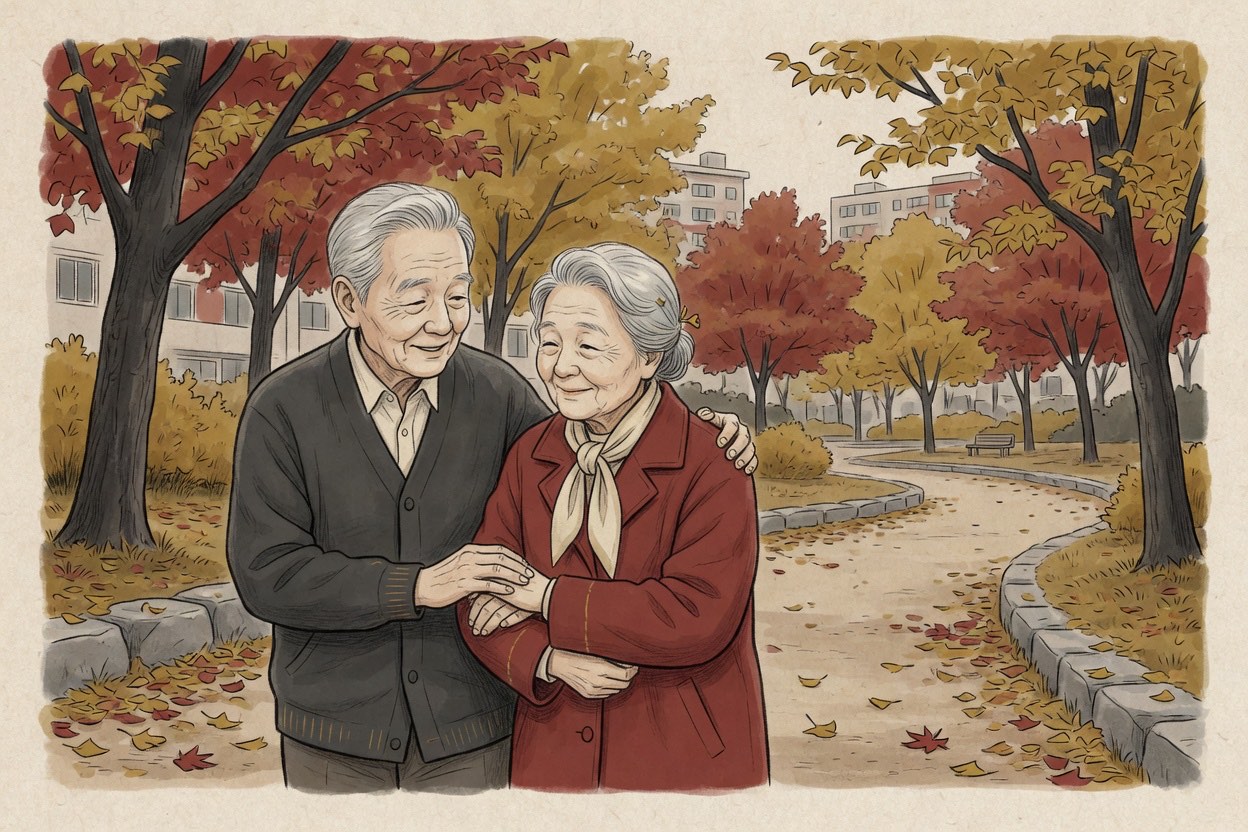
- Long-married couples on a walk—sometimes more than dating couples on a date.
- Family gatherings where “여보” marks the pair for everyone else.
- Dramas signaling “these two are the married unit,” even in one syllable.
You will not usually hear it as a pickup line, a service-industry smile word, or a safe default for classmates. It is relationally expensive in the good way: it assumes a bond.
Example dialogues
1. Sofa remote, banmal, everyday yeobo
Weeknight living room. One person holds the remote; the other has opinions.
- Husband: 여보, 뭐 볼까?
Yeobo, mwo bolkka?
Honey, what should we watch? - Wife: 아무거나. 근데 뉴스 말고.
Amugeona. Geunde nyuseu malgo.
Anything. Just not the news. - Husband: 알았어. 여보 골라.
Arasseo. Yeobo golla.
Got it. You pick, honey.
Gloss: Classic married banmal. Yeobo is the address; the verbs stay casual because the couple already shares that level. No polite endings leaking into a private sofa fight about channels.
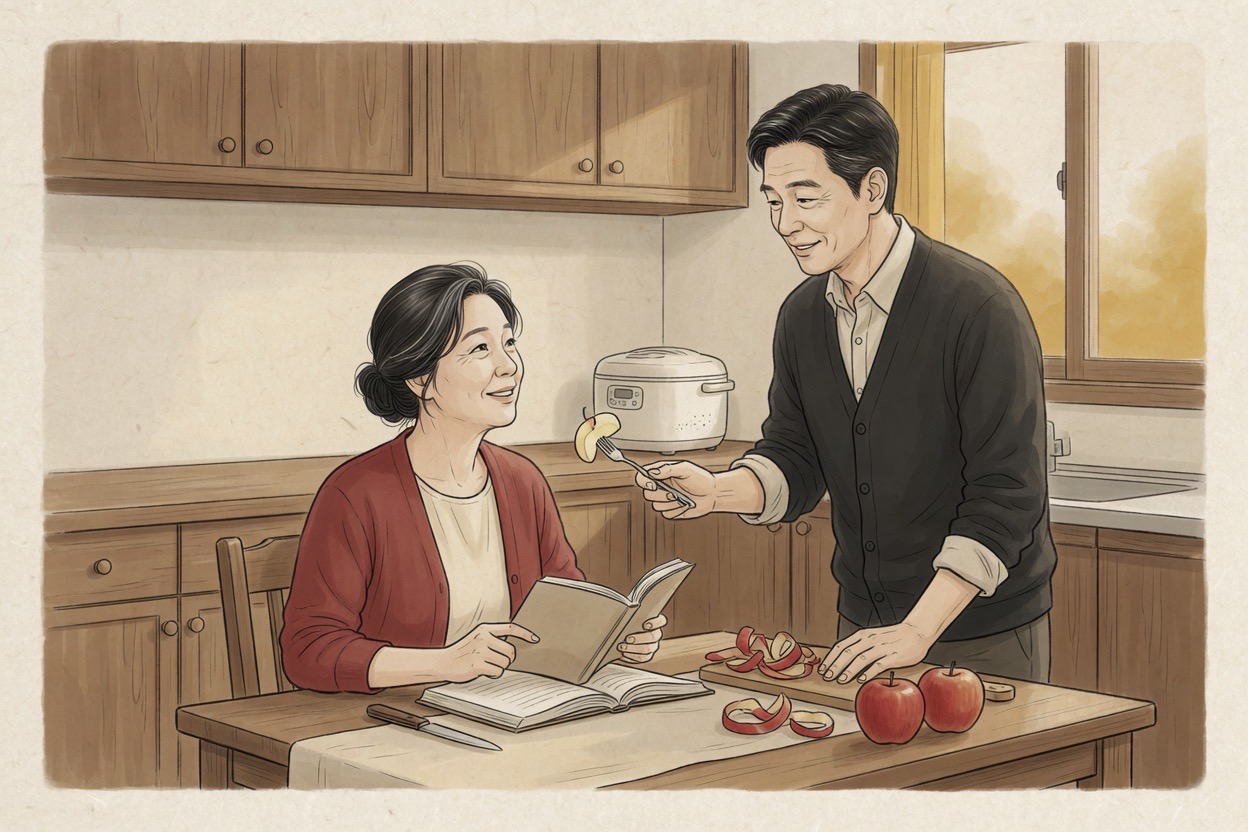
2. Kitchen care, soft attention
Late evening. One partner peels fruit; the other is half in a book.
- Husband: 여보, 사과 먹어.
Yeobo, sagwa meogeo.
Honey, have some apple. - Wife: 고마워. 피곤하지 않아?
Gomawo. Pigonhaji ana?
Thanks. Aren’t you tired? - Husband: 안 피곤해. 여보 먹는 거 보니까 좋아.
An pigonhae. Yeobo meongneun geo bonikka joa.
I’m fine. I like watching you eat.
Gloss: Care language without baby-talk. Yeobo carries adult warmth—closer to “dear” than to “cutie.”
3. Dating vs married register — jagiya on the phone
Early relationship, evening commute. Soft romance, not household mode.
- Partner A: 자기야, 어디야?
Jagiya, eodiya?
Babe, where are you? - Partner B: 거의 다 왔어. 자기는?
Geoui da wasseo. Jagineun?
Almost there. What about you? - Partner A: 나 카페 앞. 천천히 와.
Na kape ap. Cheoncheonhi wa.
I’m in front of the cafe. Take your time.
Gloss: Same banmal intimacy as the married scenes, different address. Jagiya keeps the couple in dating/newly-soft register. Swap in yeobo too early and it can sound like costume.
4. After the baby — parent-role nickname
Night, small apartment. Logistics over romance vocabulary.
- Mom: 애기 아빠, 기저귀 어디 있어?
Aegi appa, gijeogwi eodi isseo?
Baby’s dad, where are the diapers? - Dad: 서랍 두 번째. 내가 갈게.
Seorap du beonjjae. Naega galge.
Second drawer. I’ll get them. - Mom: 고마워. 여보, 물도 좀.
Gomawo. Yeobo, muldo jom.
Thanks. Honey, water too, please.
Gloss: Both systems can coexist. 애기 아빠 routes the chore; yeobo returns for the soft ask. Life stage stacks nicknames; it does not always replace them.
Good nunchi / Zero nunchi
Good nunchi
You are close with a Korean married couple in their forties. At dinner the husband says 여보 without performing for you. You do not mimic it back at him, do not call his wife yeobo yourself, and do not ask them to “say the cute word again” for your camera. You treat yeobo as their married channel, not audience participation.
Zero nunchi
Same dinner. You have been dating your partner for three weeks. You loudly open with 여보 at the table to show you “know Korean couple culture,” then correct them when they still use names. The room goes polite. You thought you were fluent in drama dialogue. You wore a wedding word as a party hat.
Do / Don’t
Do
- Hear yeobo as married-coded honey, not generic cute Korean.
- Compare it with jagiya when you are sorting drama lines or real couple speech.
- Expect 당신 to change temperature in conflict—listen for tone, not only the dictionary row.
- Notice 애기 아빠 / 애기 엄마 as a life-stage nickname system after kids.
- Match speech level to the relationship you actually have; titles and endings still move together in the wider honorifics system.
Don’t
- Call a new dating partner yeobo because a subtitle taught you it means honey.
- Assume every young married couple has retired jagiya.
- Treat 당신 as a safe romantic default in every mood.
- Use yeobo for strangers, teachers, or service workers as a friendly flourish.
- Confuse 여보 with phone 여보세요—different words, different rooms.
Nearby ideas
- Jagiya (자기야) — soft “babe/honey”; dating and newlywed energy
- Dangsin (당신) — spousal/lyric “you”; can turn cold in a fight
- Aegi appa / aegi eomma — parent-role couple nicknames after children
- Oppa / unnie / hyung / noona — age-direction kinship titles outside the marriage pair
- Nunchi (눈치) — reading whether this room wants yeobo, a name, or silence
A closing line
Yeobo is not “Korean for honey” as a free sticker. It is honey with a marriage stamp—short, domestic, and still alive in kitchens where someone is already holding the remote.
Use it when the bond is real, keep jagiya when the bond is still soft, and let your nunchi decide which word the room can bear.
FAQ
What does yeobo mean in Korean?
Yeobo (여보) is the standard affectionate address between married spouses—roughly “honey,” “dear,” or “hon.” It signals a married bond more than a dating nickname.
What is the difference between yeobo and jagiya?
Yeobo reads as married and often slightly older-generation. Jagiya (자기야) is the soft “babe/honey” used by dating couples and many newlyweds. Same job, different social age and marital weight.
Where does the word yeobo come from?
A widely repeated folk etymology says 여보 wore down from 여기 보오 (“look here”). Present it as a common story Koreans tell—not as a settled linguistic proof.
Do young Korean couples still say yeobo?
Some do, especially after marriage or when playing at “real couple” formality. Many young spouses stick with jagiya, names, or 애기 아빠/엄마 once kids arrive. Usage is couple-specific, not a rule.
Is 당신 the same as yeobo?
No. 당신 can mean “you” to a spouse, but in an argument it often sounds cold or confrontational. Yeobo is warmer everyday address; 당신 is a different register with sharper edges.
Do you have nunchi?
Get short Korean word lessons and social cues in your inbox.