Father in Korean: 아빠 (Appa) vs 아버지 (Abeoji) and How to Use Them
Dad, father, father-in-law—Korean picks the word by warmth, not by a single English label.
- Hangul
- 아버지
- Romanization
- abeoji
- Pronunciation
- ah-buh-jee
- Category
- Words
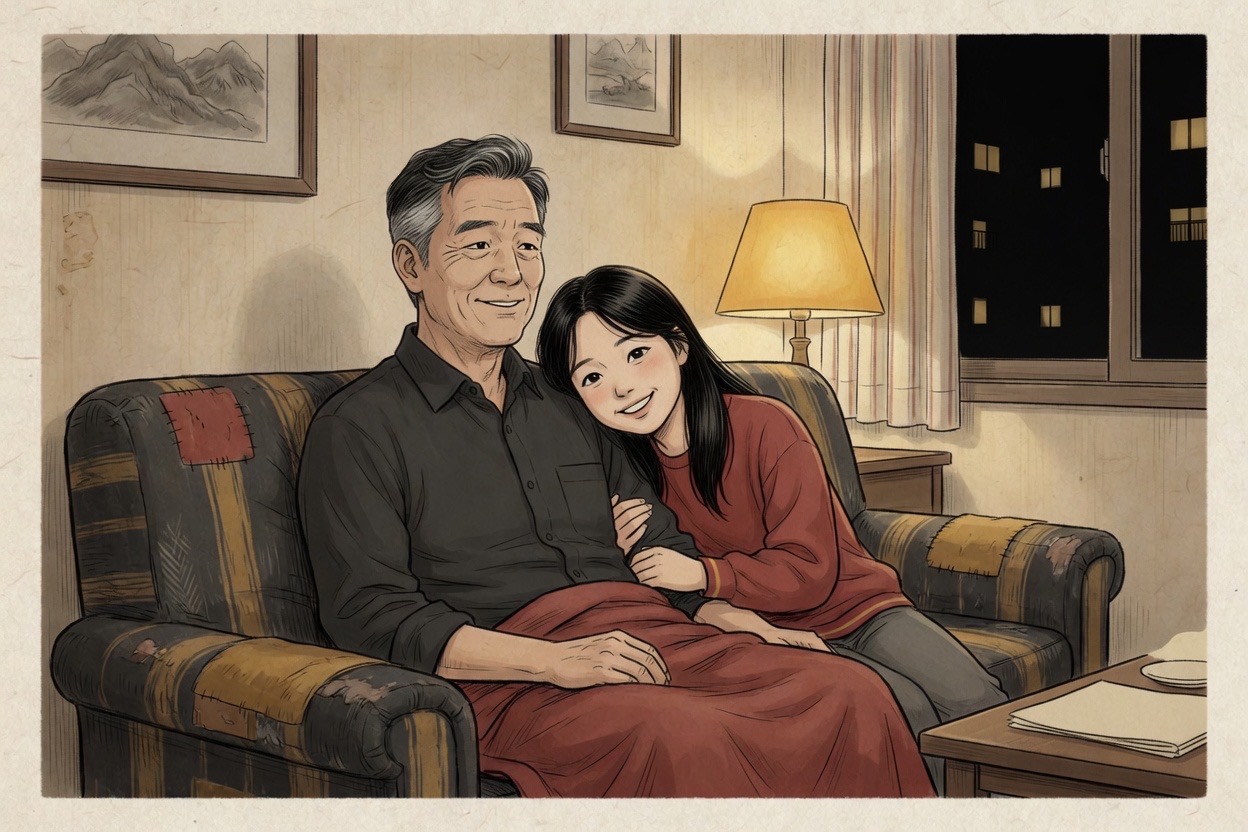
Father in Korean is usually 아버지 (아버지, abeoji, pronounced ah-buh-jee) or 아빠 (아빠, appa, pronounced ah-ppa). Appa is warm, childhood-soft, and casual—the word that feels like “dad.” Abeoji is more formal and respectful—the word that feels like “father.” Korean does not force you to pick one forever: many adults still call their own dad 아빠 at home, then shift to 아버지 when the room, the story, or the emotion gets more serious. One-sentence answer: say 아빠 for intimate dad energy, 아버지 when respect or formality is doing more of the work.
That register split is the whole page in miniature. English “dad / father / father-in-law” collapses into several Korean words that also track whose father you mean and whether you are speaking to him or about him.
Quick facts
| Hangul | 아버지 / 아빠 |
| Romanization | abeoji / appa |
| Pronunciation | ah-buh-jee / ah-ppa |
| Core sense | father / dad |
| Register | abeoji = more formal-respectful; appa = warm-casual |
| Honorific form | 아버님 (abeonim) |
| Not the same as | father-in-law terms (장인어른, 시아버지) |
| Related system | Korean honorifics — titles, endings, speech levels |
How do you say father in Korean? Quick map
Search intent often arrives as “father in Korean”, “dad in Korean”, or “how to say father in Korean.” Real rooms answer with a situation chart, not a single flashcard.
| Situation | Word | Notes |
|---|---|---|
| Talking to your own dad (warm / everyday) | 아빠 | Most common intimate address today |
| Talking to your own dad (formal / careful / emotional) | 아버지 | Family-dependent; can sound stiff or solemn |
| Talking about your own dad (casual) | 우리 아빠 | “Our dad” / “my dad” in friendly talk |
| Talking about your own dad (polite / public) | 저희 아버지 | Humble “our father” toward outsiders |
| Someone else’s father (respectful) | 아버님 | Default honorific for their dad |
| Father-in-law, husband speaking of wife’s father | 장인어른 | Common respectful reference / address frame |
| Father-in-law, wife speaking of husband’s father | 시아버지 / 시아버님 | 시아버님 is warmer-respectful |
When in doubt with a stranger’s parent: use 아버님, keep speech polite, and let the family show you their house rules. That is nunchi applied to kinship, not a grammar quiz.
Appa vs abeoji — the distinction you actually came for
If you only keep one section, keep this one.
아빠 (appa) — dad energy
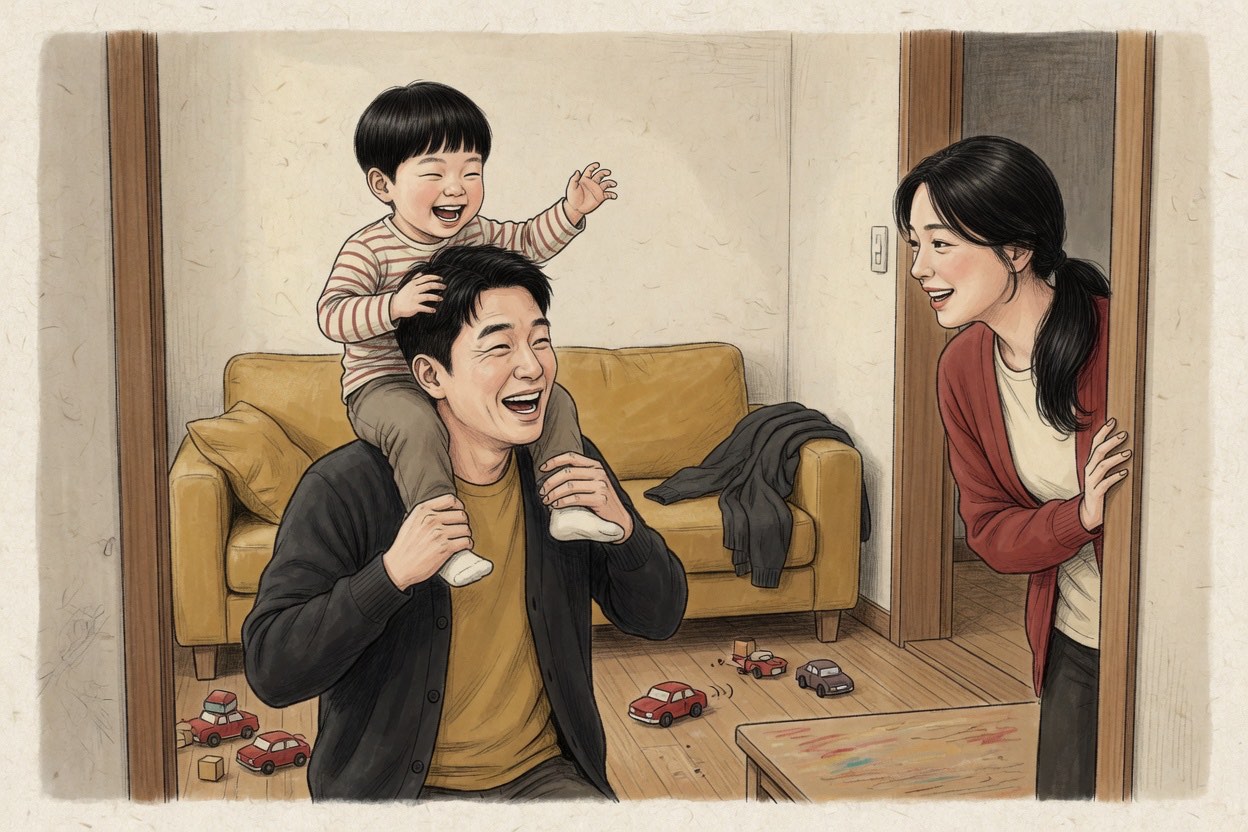
Appa is the soft, close word. Children learn it early. Adults keep it. A thirty-five-year-old texting 아빠, 뭐 먹을래? is not regressing; they are using the default intimacy many Korean families never retire.
You will hear appa when:
- someone wants a favor without a speech
- the mood is kitchen-table, not courtroom
- adult children still treat the relationship as warm and everyday
- friends talk casually about their dads
Appa is not “only for little kids.” Thinking that is the most common foreigner mistake.
아버지 (abeoji) — father energy
Abeoji is the full, respectful, more formal noun. It can be:
- the dictionary word for “father”
- the word you use when the relationship is being framed with dignity
- the word that appears in careful speech, eulogies, essays, and many drama lines
- the word some families still use as daily address—especially older generations, or houses that prefer formality
Abeoji is not cold by default. It is heavier. Where appa is a hoodie, abeoji is a pressed shirt: same person, different social fabric.
Same person, different moment
Many people live with both:
- home banmal: 아빠
- talking to a coworker: 저희 아버지는…
- an emotional apology or a formal holiday greeting: 아버지
The switch is not hypocrisy. It is register literacy—the same skill that decides hello in Korean and kinship titles like oppa.
How to address your father vs how to talk about him
Korean kinship often splits vocative address (what you call him to his face) from reference (how you name him to other people).
To his face
- Warm default in many modern homes: 아빠
- More formal / solemn / family-style: 아버지
- You almost never open with a bare English-style first name for your own father in Korean family speech.
About him, to other people
- Casual friends: 우리 아빠 (“our dad”—the “our” is ordinary Korean possessiveness, not a second parent claim)
- Polite / outsider / workplace: 저희 아버지 (humble “our father”)
- Talking to someone higher-status about your dad: still often 저희 아버지, not a cute mini-lecture in English
About their father
- Safe respectful default: 아버님
- Avoid casually demoting someone else’s dad to 아빠 unless that friend already frames him that way and the room is very close
This is the same social software as the rest of Korean honorifics: the word encodes relationship, not just biology.
What children call fathers today vs a generation ago
There is no single national decree, and families differ. Still, the cultural weather has been softening:
- Older patterns: more homes defaulted to 아버지 as everyday address, with formality treated as respect itself.
- Younger patterns: many children grow up on 아빠 as the everyday call, and keep it into adulthood.
- In between: mixed households where kids say appa, public speech still says abeoji, and holiday dinners can flip depending on who is listening.
“Softening” does not mean respect disappeared. It means intimacy got a louder daily voice, while abeoji kept the formal, emotional, and public lanes. You will still hear older speakers correct a child toward abeoji, and you will still hear young adults who never switched off appa.
If a drama shows a child saying 아버지 every line, that can be period flavor, family formality, or emotional staging—not a claim that every Seoul toddler talks that way in 2026.
아버님 (abeonim) — someone else’s father, and father-in-law respect
Abeonim (아버님) is abeoji plus the respectful -님 ending. Think of it as “father” with the social volume turned up.
Use it when:
- you meet a friend’s dad
- you refer politely to someone else’s father
- you need a respectful address that will not sound like you are claiming him as your casual 아빠
In many families, father-in-law address also lands on 아버님 in conversation—even when the more specific in-law nouns exist for reference. That is why English learners hear abeonim in meeting-the-parents scenes long before they memorize the full in-law chart.
Do not use 아버님 for your own father as a default flex. For your own dad, stick to appa/abeoji according to family style. Abeonim points outward: your father, their father, the respected older man in that role.
Father-in-law terms (by speaker)
English “father-in-law” is one label. Korean often asks whose side and who is speaking.
From a husband: wife’s father
Common respectful frame: 장인어른 (장인어른, jangin-eoreun).
- Used when a man talks about or addresses his wife’s father with proper weight
- The “어른” piece marks senior respect, not a joke title
You may also hear shorter reference forms in real families; if you are not sure which house form is preferred, describe the relationship politely or follow what your partner already uses. Guessing flashy in-law vocabulary is how meeting-the-parents scenes go sideways.
From a wife: husband’s father
Common forms:
- 시아버지 (시아버지, siabeoji) — husband’s father
- 시아버님 (시아버님, siabeonim) — same role, more honorific warmth/respect
The 시- prefix marks the husband’s family side (as in other in-law terms). In spoken address, many wives still land on 아버님 depending on the household’s custom.
Practical rule for learners
If you are a guest, partner, or future in-law and the room has not trained you yet:
- Start with polite hello energy and 아버님 if you must address him.
- Let your partner or the family supply the house term.
- Do not improvise English-drama nicknames.
아버지 in set phrases and K-drama dialogue
Abeoji is not only a household call. It is also the form that shows up when language wants weight.
Everyday and formal reference patterns
- 저희 아버지는 선생님이세요. — “My father is a teacher.” (polite outward reference)
- 아버지께서 오셨어요. — “Father has come.” (honorific subject marking on the father)
- 아버지 덕분에… — “Thanks to Father…” (grateful framing)
Drama-shaped lines you will recognize
K-dramas love abeoji when the camera wants solemnity, distance, or a crack in the stoic surface:
- a grown child standing stiff in a hallway: 아버지…
- a careful apology after years of silence
- a hospital-corridor whisper that would feel too small as “dad” in the subtitle track
- chaebol-family formality where the house runs on titles as much as affection
Appa appears too—especially in warm flashbacks, childhood memories, and families written as modern and close. If a show flips from appa to abeoji mid-arc, watch the relationship weather, not just the dictionary.
None of this requires you to act like a drama heir. It only helps you hear why the two words are not free synonyms on screen.
Example dialogues
1. Casual home moment with 아빠
Weeknight kitchen. Adult daughter home late, shoes still on.
- Daughter: 아빠, 나 왔어.
Appa, na wasseo.
Dad, I’m home. - Dad: 밥은? 아직 안 먹었지?
Babeun? Ajik an meogeotji?
Food? You haven’t eaten yet, right? - Daughter: 응. 아빠는 먹었어?
Eung. Appaneun meogeosseo?
Yeah. Did you eat, Dad?
Gloss: Banmal, full appa mode. No ceremony—just the default warm channel many adult children never close.
2. Formal / emotional moment with 아버지
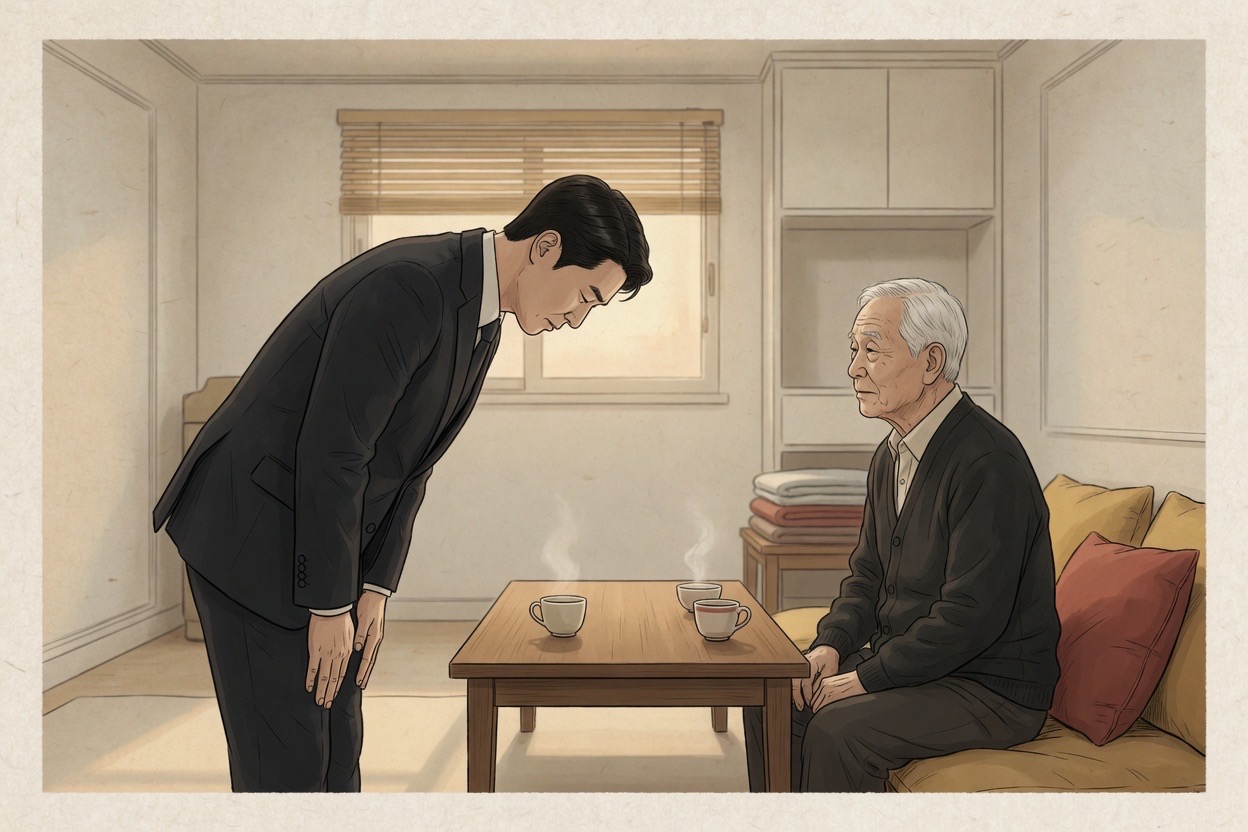
After a long argument, evening living room. Adult son trying again.
- Son: 아버지, 저 잠깐 얘기해도 될까요?
Abeoji, jeo jamkkan yaegihaedo doelkkayo?
Father, may I talk with you for a moment? - Father: 말해 봐라.
Malhae bwara.
Go ahead and speak. - Son: 그때 제가 잘못했어요. 죄송합니다.
Geuttae jega jalmothaesseoyo. Joesonghamnida.
I was wrong then. I’m sorry.
Gloss: The title itself does emotional labor. Abeoji + careful polite speech marks repair, not a vocabulary upgrade for its own sake.
3. Meeting-the-parents moment with 아버님
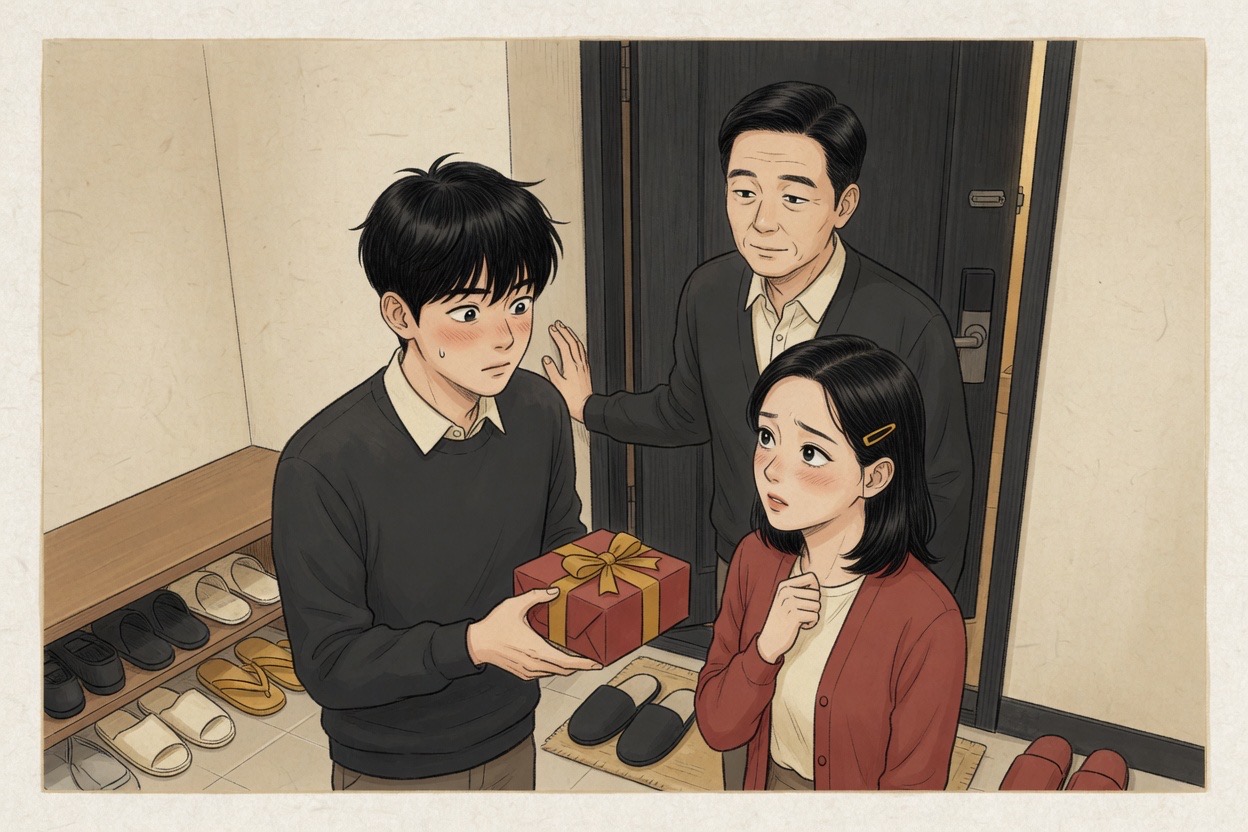
Front door, first visit. Friend’s father opens; shoes, gift bag, pulse rate all negotiating.
- Visitor: 안녕하세요, 아버님. 처음 뵙겠습니다.
Annyeonghaseyo, abeonim. Cheoeum boepgetseumnida.
Hello, sir (father). It’s an honor to meet you. - Friend’s father: 어, 그래. 들어와.
Eo, geurae. Deureowa.
Ah, right. Come in. - Visitor: 네. 이거 약소하지만…
Ne. Igeo yaksohajiman…
Yes. This is only a small thing, but…
Gloss: Abeonim + first-meeting politeness. You are not claiming him as dad; you are marking respectful distance. Let the family teach any warmer term later.
Good nunchi / Zero nunchi
Good nunchi
You visit a Korean friend’s home. Their dad greets you at the door. You say a clear 안녕하세요, use 아버님 once if you address him, accept tea, and do not narrate a TED Talk about “appa versus abeoji.” When your friend later says “our 아빠” in private, you mirror their warmth without demoting their father to a sitcom nickname in front of him.
Zero nunchi
Same doorway. You boom “Appa!” because a variety-show clip taught you it was cute, call him “Daddy” in English for the bit, and ask whether he prefers 장인 or 시아버지 before anyone has established you are even dating. He smiles the polite smile. You collected kinship words. You skipped the relationship.
Do / Don’t
Do
- Learn 아빠 vs 아버지 as a warmth/formality pair, not as child-only vs adult-only.
- Use 아버님 for someone else’s father until the house teaches you otherwise.
- Separate address (to his face) from reference (about him to others).
- Treat in-law terms as side-and-speaker specific—and follow the family’s live usage.
- Remember adult children absolutely still say 아빠.
Don’t
- Assume appa is baby talk you must retire at eighteen.
- Call a stranger’s father 아빠 for friendliness points.
- Confuse father words with father-in-law words and force them in the first five minutes.
- Copy drama solemnity in a kitchen that runs on appa and leftovers.
- Lecture a Korean friend about what they “should” call their own dad.
Nearby ideas
- Korean honorifics explained — the wider map of titles, -ssi/-nim, and speech levels
- Maknae — youngest in the family stack opposite the parental pole
- Oppa — another kinship title where age, gender, and closeness all matter
- Hello in Korean — the greeting register that arrives before any father-word
- Nunchi — reading whether this room wants appa warmth or abeoji weight
A closing line
Father in Korean is not one trophy word. It is a small switchboard: 아빠 for closeness, 아버지 for respect and gravity, 아버님 when the father is not yours to claim casually, and a careful in-law branch when marriage redraws the family map.
Pick the word the relationship can carry—and keep enough nunchi to hear when the house already chose for you.
FAQ
How do you say father in Korean?
The two main words are 아빠 (appa) for warm, casual dad and 아버지 (abeoji) for respectful father. Adults still use both; which one you hear depends on the family’s style and the moment.
What is the difference between appa and abeoji?
Appa (아빠) is the intimate, childhood-soft word—still common among adults at home. Abeoji (아버지) is more formal and respectful, used in careful speech, emotional scenes, and many public references to one’s father.
How do you say dad in Korean?
Dad maps most closely to 아빠 (appa). For a more formal or distant English “father,” use 아버지 (abeoji). There is no single word that covers every English nuance.
What is abeonim in Korean?
아버님 (abeonim) is the honorific form of 아버지. Use it for someone else’s father, and often for a father-in-law when you want respectful address.
How do you say father-in-law in Korean?
From a husband, wife’s father is often 장인어른 (jangin-eoreun). From a wife, husband’s father is 시아버지 or the more respectful 시아버님. Many people also address a father-in-law as 아버님 in conversation.
Do you have nunchi?
Get short Korean word lessons and social cues in your inbox.