Korean Boy Names — Popular Names, Meanings, and Trends
What Korean parents are choosing now, what sounds older, and why Hangul still does not fix a name’s meaning.
- Hangul
- 남자 이름
- Romanization
- namja ireum
- Pronunciation
- nam-ja ee-reum
- Category
- Words
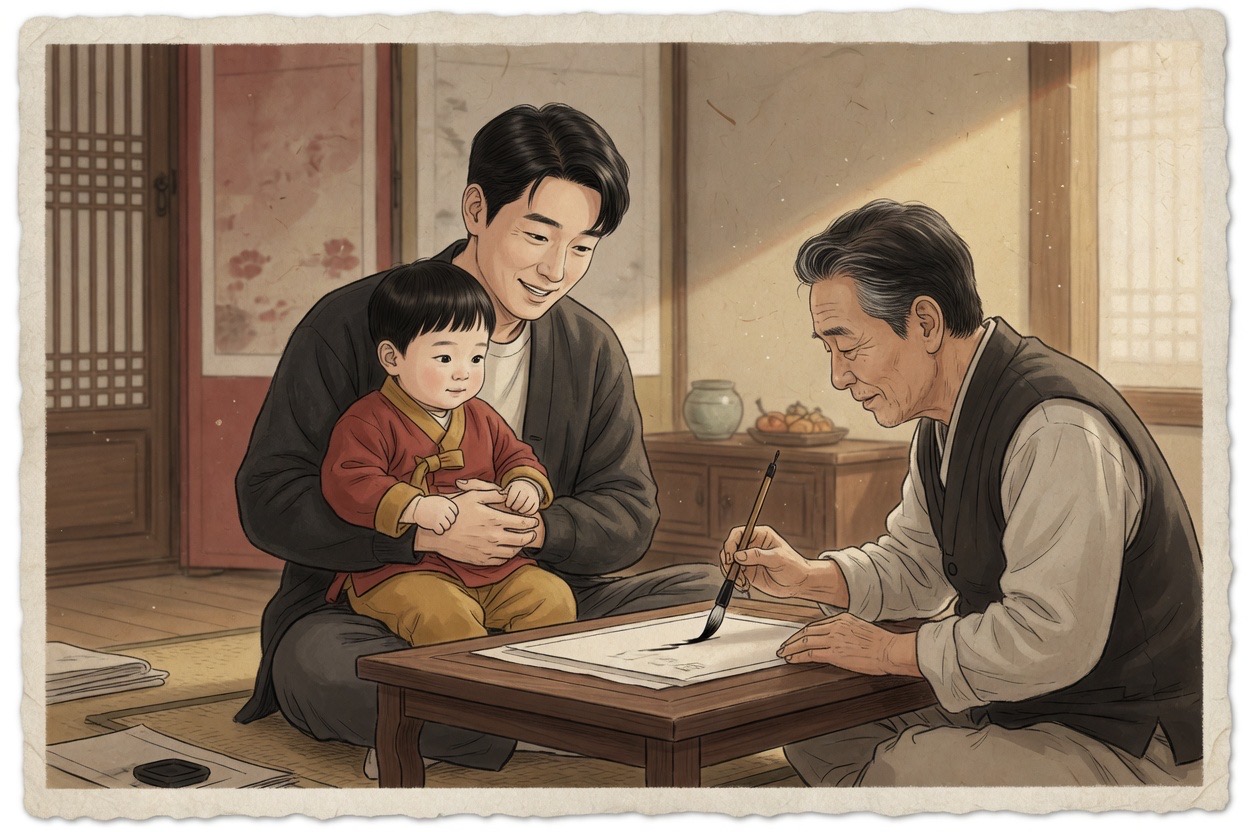
Completed-year snapshot
Popular Korean baby names in 2025
These rankings show names registered for babies—not a promise that the same name will fit an adult. Use them as a view of current sound fashion, then check age, gender use, and Hanja separately.
Boys’ list
- 1도윤Do-yun
- 2이준I-jun
- 3시우Si-u
- 4하준Ha-jun
- 5태오Tae-o
- 6도현Do-hyeon
- 7이안I-an
- 8이현I-hyeon
- 9서준Seo-jun
- 10은우Eun-u
Korean boy names—what English searches call Korean names male or Korean boy names with meaning—usually follow the same core pattern as Korean girls’ names: a one-syllable surname plus a two-syllable given name. A 2025 registration-data compilation put 도윤, 이준, 시우, 하준, and 태오 at the front of its boys’ list. Those names sound current for babies; adult fit is a different question. Meanings often come from hanja chosen by the family, and syllables that skew male include 준, 민, 우, 현, 진, 성, 훈, 재, 태, and 호—but they are not a closed boys-only club.
If you only wanted “unique Korean boy names,” keep reading. The useful layer is how the system works: shared syllables, unisex traps, clan memory, celebrity overlap, and names that read a generation too early.
Quick facts
| Hangul | 남자 이름 |
| Romanization | namja ireum |
| Pronunciation | nam-ja ee-reum |
| Typical shape | surname (1 syllable) + given name (2 syllables) |
| Meaning source | usually hanja, not hangul sound alone |
| Male-leaning syllables | 준 · 민 · 우 · 현 · 진 · 성 · 훈 · 재 · 태 · 호 |
| Unisex caution | 지 · 민 · 서 · 현 appear for all genders |
| Lineage tools | 본관 (clan seat), 돌림자 (generational syllable) |
How are Korean boy names built?
When people search “korean names male”, English pages often dump twenty hangul pairs and call it culture. The skeleton is simpler.
Surname first
A full name is usually three hangul syllables in speech: family name, then given name. The big three surnames—김 (Kim), 이 (Lee/Yi), 박 (Park/Pak)—are the most common by a wide margin. You will meet many more, but Kim–Lee–Park sit at the top of daily life.
Same surname does not mean same family. Koreans also track 본관 (bon-gwan, clan seat): the historic place-name that marks which lineage a Kim or Lee belongs to. Two people can both be Lee and still be from different bon-gwan—different books, different relatives. The well-known link between the Joseon royal house and the Jeonju Yi clan is public history; do not upgrade every Lee into royalty. Surname is logistics, not a crown.
Two-syllable given names
Modern given names are overwhelmingly two syllables. Pure-Korean names without hanja—sky or soft nature words like 하늘 (Haneul) or 다솜 (Dasom)—exist, but they are a minority next to the mainstream template.
For boys, the two syllables are often a generational or style syllable (sometimes a true 돌림자, sometimes a fashionable sound of the decade) plus a personal syllable the parents liked for meaning or feel. Short enough to shout across a schoolyard; dense enough to carry grandparents’ hopes.
Meaning lives in hanja—not in the hangul sound alone
This is the single most misunderstood point in English name articles.
Hangul writes sound. Hanja usually carries the meaning. The syllable 준 can take different characters; a common “talented / outstanding” reading is associated with 俊, among others. 민 can lean “quick, clever” or “people.” 현 often maps to a “virtuous / wise” character (賢). 호 may be “vast” in one name and something else in another. 진 can be “precious” or “true.” 성, 훈, 재, 태, 우 all work the same way: one hangul spelling, multiple possible hanja, multiple possible meanings.
When a list says “Jun-ho means X,” treat that as one common reading, not a universal entry. For a specific person, ask which characters they use—or accept that many modern registrations lean hangul-first and treat meaning more loosely than grandparents did.
Male-leaning syllables (and why they only lean)
English listicles love a clean boys column and girls column. Korean ears work with probabilities, not bathroom signs.
| Syllable | Feel in naming culture (not a single locked meaning) |
|---|---|
| 준 | sharp, capable, “talented” energy in many modern pairs |
| 민 | bright/quick feel; also heavily unisex |
| 우 | soft excellence / friendliness in many contemporary names |
| 현 | virtue/wisdom vibe; also unisex |
| 진 | precious/true flavor in common pairs |
| 성 | solid, accomplished; slightly formal in some stacks |
| 훈 | merit / instruction color; common mid-to-late 20th-century male names |
| 재 | talent / “presence” feel in many male names |
| 태 | great / grand scale |
| 호 | wide, grand, classic male ending or mid-slot |
Stack two of those and many Korean listeners hear “boy”: 준호, 민호, 현우, 성훈, 재민, 태호, 진우. Still a weather report, not a court order—male-leaning syllables can sit in women’s names, and soft ones in men’s.
To hear combinations and eras without inventing a fake top-100 chart, try the Korean name generator—generational cohorts, not a random hangul blender.
돌림자 — the generational syllable
돌림자 (dolimja) is a syllable shared across a generation of a lineage—brothers, male cousins, sometimes a whole age band of men in the same clan book. Historically it ran stronger on the male line, tied to how families recorded sons in genealogy books and how uncles expected names to “match.”
In plain language: grandfather’s generation might share one syllable; father’s brothers and cousins share another; the next boys take the next planned character. Not every modern family still enforces this—plenty of urban parents name for sound and never open a clan book. Holiday tables still surface it: an elder asking about the generation character, a cousin joking he will not “look related” without it. For some houses, dolimja is living software. For others, grandparents tell the story while parents have already filed a softer name.
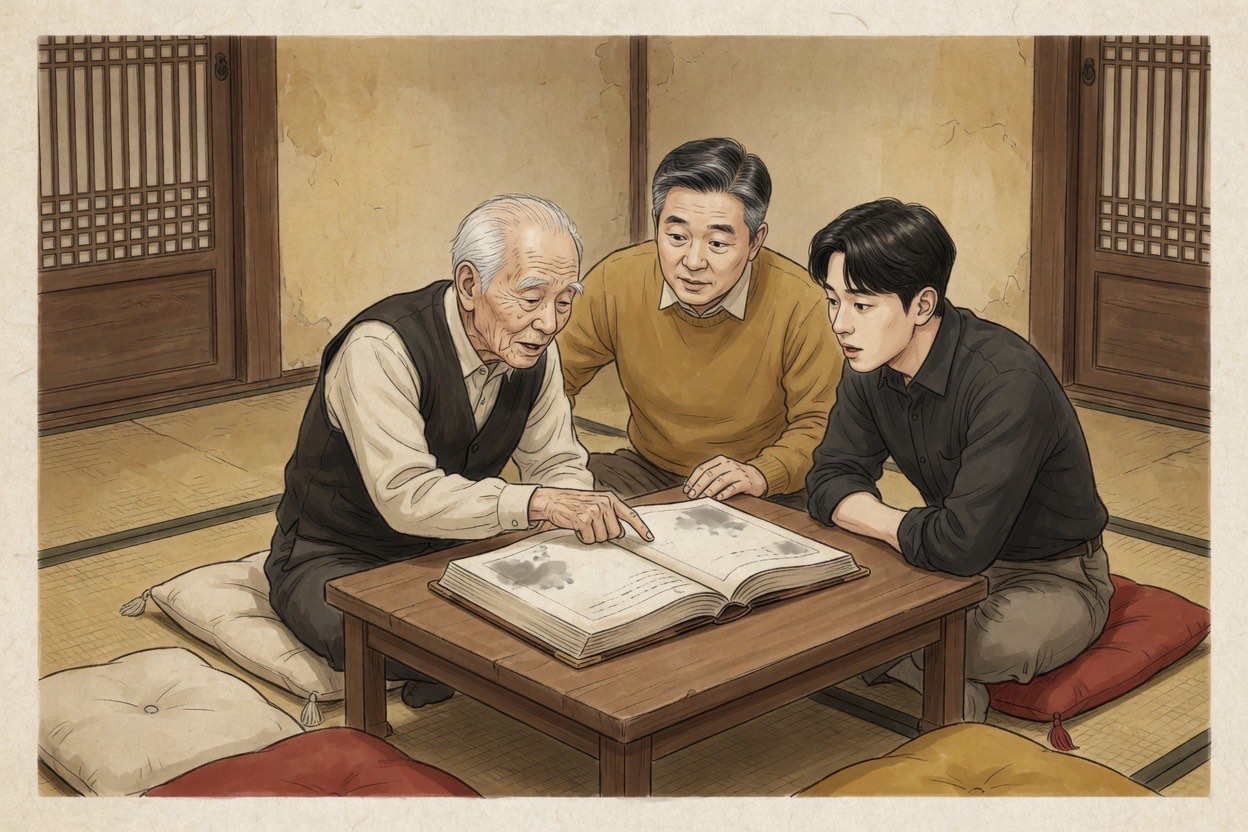
That is why “unique Korean boy names” is a slippery tourist goal. Inside a lineage, uniqueness is not always the virtue. Matching the generation can matter more than standing out on a poll.
Unisex syllables — why 서현 might be a man
English baby-name blogs often split lists as if hangul came with gender tags. Real Korean rooms do not.
Syllables that regularly appear for both boys and girls include:
- 지 (often “wisdom” energy when hanja is 智, among other options)
- 민
- 서 (often an “auspicious” flavor in common explainers, among other characters)
- 현
So a name like 서현 (Seo-hyeon / Suhyun), 지민 (Ji-min), 민서 (Min-seo), or 지현 (Ji-hyeon) is not a reliable gender signal by itself. You meet a Seo-hyeon who is a man and your English list lied by omission. You meet a Ji-min who is a woman and the same list did it again.
Practical habits: wait for pronouns, titles, or introduction context; read the full combination, not one fashionable syllable; let a courtesy title do more work than “vibe.” This matters for honorifics too. Before you decide whether someone is hyung material, you need age and relationship—not a Pinterest gender column.
Famous names and the constant-comment tax
Korea is dense with shared surnames and recycled given-name pairs. Add celebrities, athletes, politicians, and drama leads, and many ordinary men grow up answering “Like the singer?” or “Our manager has the same name.”
The practical effect is social friction with a smile: roll-call pauses, nickname patches, small talk that defaults to the famous namesake. Some men lean into it; others use an English nickname abroad or a childhood short form.
Rule of thumb: the more media-saturated a hangul pair becomes, the more often a real person pays a comment tax. Parents know this. Some dodge the week’s trend; some keep the sound because the kid will survive the jokes—the way kids survive being the maknae of every relative gathering.
Naming trends — from formal stacks to softer sounds
Without fake year-by-year charts, the arc still holds.
Mid-to-late 20th century male names often feel denser and more “document formal”—stacks with 훈, 철, 식, 용, 호 that read textbook-uncle to a 2020s teenager. Stereotype is unfair, but sound fashion moved.
Later decades favored brighter pairs: more 준, 민, 우, 현, soft vowels, less martial crunch. Parents still use hanja, but many talk first about how the name feels on a playground or a café cup. Pure-Korean names without Chinese characters are real—and still a minority next to the two-syllable mainstream. Stay humble on charts: hear the soft shift; do not invent “#3 boy name in 2019.”
What happens when a foreigner picks a generation-too-old name
A learner falls in love with a textbook name that, to native ears, carries kind father or grandfather energy—and prints it on a language-exchange profile. Korean friends pause. The pause is not hatred. It is chronological whiplash.
What goes wrong:
- Era mismatch. The name loads a different birth cohort, which collides with your face and your Korean age small talk.
- Role mismatch. Old-fashioned male gravity on a twenty-two-year-old exchange student becomes sitcom.
- Hanja cosplay. A blog-copied meaning feels serious to you and thin to them.
- Clan blindness. A rare surname picked for “uniqueness” can read as costume next to ordinary Kim–Lee–Park.
What goes right: ask a peer whether it sounds like your age or your uncle; accept a nickname they actually use; treat the name as a bridge, not bloodline; keep nunchi—if people gently offer alternatives, that is the feedback.

When you’ll hear the naming system in real life
- Registry week: soft sound vs grandparents’ dolimja.
- School roll call: three boys share a syllable; nicknames appear fast.
- Work chat: full name in the footer, short call name in the thread.
- Language exchange: foreigners wearing textbook-uncle display names.
- Weddings: “Which Lee?” answered with bon-gwan, not a DNA kit.
Example dialogues
1. Parents vs grandparents, half-banmal kitchen politics
Evening table. A newborn boy, two generations of opinions.
- Grandfather: 우리 항렬자 넣어야지.
Uri hangnyeolja neoeoyaji.
We should put in our generation character. - Father: 아버지도 알잖아요. 요즘 애들은 발음이 부드러워야 해요.
Abeojido aljanayo. Yojeum aedeureun bareumi budeureowoya haeyo.
You know how it is too, Dad. Kids these days need a softer-sounding name. - Mother: 준이랑 우 쪽은 어때요? 너무 흔하지만 않으면요.
Juni-rang u jjogeun eottaeyo? Neomu heunhajiman anheumyeonyo.
What about something with Jun or U—as long as it is not too common.
Gloss: Polite speech upward to the grandfather. Hangnyeolja is the generation-character idea behind many dolimja talks. Soft sound vs lineage duty in one kettle.
2. School hallway, banmal, unisex confusion
Two boys, after class. A transfer student’s name just got called.
- Min-jun: 야, 서현이 남잔 줄 몰랐지?
Ya, Seohyeoni namjan jul mollatji?
Hey—you didn’t know Seo-hyeon was a guy, right? - Ji-ho: 몰랐어. 이름만 들으면 헷갈리잖아.
Mollasseo. Ireumman deureumyeon hetgallijana.
I didn’t. If you only hear the name, it’s confusing. - Min-jun: 민이랑 지도 그렇고. 보고 말하자.
Mini-rang jido geureogo. Bogo malhaja.
Same with Min and Ji. Let’s talk after we see them.
Gloss: Casual banmal between classmates. The joke is structural, not mean: hangul did not print a gender stamp.
3. Language exchange café, polite reality check
A foreign learner shows a name card.
- Learner: 제 한국 이름은 병철이에요. 어때요?
Je hanguk ireumeun Byeongcheorieyo. Eottaeyo?
My Korean name is Byeong-cheol. How is it? - Friend: 의미는 괜찮은데… 조금 아저씨 같은 느낌이에요.
Uimineun gwaenchanheunde… jogeum ajeossi gateun neukkimi-eyo.
The meaning is fine, but it feels a bit middle-aged uncle. - Learner: 아, 그래요? 그러면 다시 찾아볼게요.
A, geuraeyo? Geureomyeon dasi chajabolgeyo.
Oh, really? Then I’ll look again. - Friend: 요즘 느낌으로 맞춰 봐요. 도와드릴게요.
Yojeum neukkimeuro matchwo bwayo. Dowadeurilgeyo.
Try matching a more current feel. I’ll help.
Gloss: Polite speech. Kind correction without humiliation—the gold standard for name feedback.
Good nunchi / Zero nunchi
Good nunchi
You need a Korean call name for class. You shortlist two-syllable options with male-leaning sounds, ask a peer whether any read a generation off, and accept that 민 or 현 will not prove gender in a group chat. You treat hanja meanings as “one possible reading,” not a mystical tattoo. When someone shares your name with a celebrity, you take the joke once and move on.
Zero nunchi
You invent a four-syllable fantasy name, claim a “rare royal surname,” and announce a blog-copied meaning as eternal truth. You correct a man named Seo-hyeon because your English list filed that spelling under girls. You refuse every soft modern option because an old drama uncle sounded manlier. The room smiles. The smile is not approval.
Do / Don’t
Do
- Learn the surname + two-syllable given name default before hunting “unique” outliers.
- Treat hanja as the usual meaning layer—and admit when you only know the hangul.
- Expect unisex syllables; wait for context before gendering a stranger by name alone.
- Ask about 돌림자 if you are naming inside a real Korean family, not only for aesthetics.
- Cross-check generational feel with a human, or sketch options in the Korean name generator.
Don’t
- Quote fake popularity percentages or “#1 boy name” trivia you cannot source.
- Assume every Kim, Lee, or Park shares one clan story—or a throne.
- Force a textbook uncle name onto a young profile for “authentic masculinity.”
- Stack English gender lists as if hangul were color-coded.
- Turn someone else’s famous namesake into their whole personality.
Nearby ideas on Have Nunchi
- Father in Korean — what you call dad once the baby-name debate ends
- Maknae — youngest in the group, often still on a childhood short name
- Hyung — older-brother title that needs age, not a baby-name blog
- Korean honorifics explained — how names sit next to titles and speech levels
- Korean age system — why relative age still sorts the room after the form
A closing line
A Korean boy’s name is not a mood-board sticker. It is short sound, optional hanja depth, family politics, and public reuse—shared with a cousin through dolimja, with a stranger through fame, or with a girl through the same two soft syllables.
Pick with ears, not just a meaning chart. The best “unique” choice is usually the one that still sounds like a real person when the teacher calls roll.
FAQ
What are the most popular Korean boy names in 2025?
A Namechart compilation of South Korean registration data placed 도윤 (Do-yun), 이준 (I-jun), 시우 (Si-u), 하준 (Ha-jun), 태오 (Tae-o), 도현 (Do-hyeon), 이안 (I-an), 이현 (I-hyeon), 서준 (Seo-jun), and 은우 (Eun-u) in its 2025 top ten. These are newborn rankings, not automatic recommendations for an adult.
How are Korean boy names structured?
Most modern Korean given names for boys are two hangul syllables, often written with hanja whose meanings combine into a hoped-for quality. The full legal name is usually a one-syllable surname plus that two-syllable given name.
What is dolimja in Korean names?
돌림자 (dolimja) is a generational syllable shared by brothers, cousins, or a whole generation of men in a lineage. It historically ran stronger on the male line and still appears in family discussions about naming.
Are Korean boy and girl names always different?
No. Syllables like 지, 민, 서, and 현 show up in both male and female names. Hangul alone often does not tell you gender; you need the full name, context, or the person in front of you.
Do Korean name meanings come from hangul or hanja?
Meanings usually come from hanja (한자). The same hangul syllable can map to several different characters, so two men both named 준 can carry different written meanings unless the family chose the same character.
Can a foreigner choose a Korean boy name?
Yes, but treat it like borrowing a real social object. Check generational feel, avoid cartoon-old textbook names unless you want that joke, and ask a Korean friend before you print business cards.
Do you have nunchi?
Get short Korean word lessons and social cues in your inbox.